
FEATURED INSIGHTS

Latest Insights
Explore news, thought pieces, stories and statements from the network.

Fabricia Nogueira da Penha
What does fishing mean for your community?
Fishing represents one of the main economic activities of the municipality, where fishing resources represent the main source of protein in the diet of a large part of the population.
What is the biggest challenge that fishermen face today?
Predatory fishing and, consequently, decreased fishing resources are the biggest challenges. Another challenge is the low number of registrations of municipal fishermen in the Professional Fisherman's Registry.
What can mayors and local leaders around the world accomplish by networking?
They can unify strategies to carry out the general records of fishermen and discuss public policies for carrying out fishery diagnosis. We also need permanent monitoring of stocks and socio-environmental support for the fishing community.
What do you want global leaders to know about small-scale fishermen and coastal communities?
The importance of supervision in industrial overfishing is one of the factors that most cause negative impacts for small-scale fishermen. I also want them to know the importance of specific aid for fishing communities in social vulnerability.
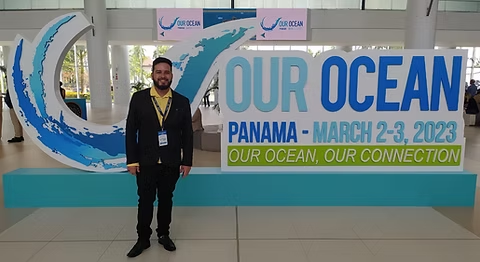
Silvano Costa da Silva
What does fishing mean to your community?
It is one of the main sources of income of the municipality, standing out as a human subsistence activity with the permanence of identity and tradition.
What is the biggest challenge that fishermen face today?
The biggest challenges are the absence of public policies, remaining an invisible category, and the constant marginality of information.
What can mayors and local leaders around the world accomplish by networking?
The connection of global leaders is essential to unify information by establishing support points. They can generate mitigation strategies and, above all, commitment to sustainable fishing.
What do you want global leaders to know about small-scale fishermen and coastal communities?
It is necessary to warn about the lack of supervision in predatory fishing, that is, industrial fishing, a destructive activity that compromises the entire biome and the natural path of existing aquatic life, directly impacting the artisanal fisherman. Furthermore, supporting this category, specifically small-scale fishermen in the off-term period, is essential. This recognition is extremely necessary, so there is an appreciation of performance.
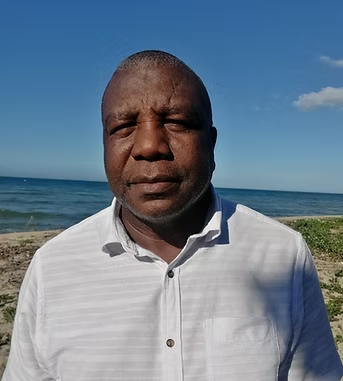
Noel Ruíz
What would you like to share at the Our Ocean conference about your municipalities and artisanal fisheries?
Savings clubs are community structures that act as a local investment for women and men whose main business is artisanal fishing and agriculture. The clubs make rational use of resources and contribute to group spirit, self-confidence, and financial education, which we need most in this country: accountability and transparency. Savings clubs are the petty cash of artisanal fishermen, a source of their seed capital to develop their artisanal fishing activities.
Also, I would like to share the protection process in development with Cayo Blanco. It is a source of life, a natural resource for artisanal fishermen, and a heritage for the Santafeños, which benefits the entire population.
The process covers over 12 nautical miles. Food availability is guaranteed for our fishermen and the population in general. It is a magnificent opportunity to put less pressure on the mountain sector, as agriculture connects with fishing and the forest. It also cares for our water sources.
What does fishing mean to your community?
Artisanal fishing is a tradition. It is culture. It is heritage. It is a source of life and community spirit. It is the safest and most reliable way to guarantee families' income. After remittances, it is the second most important economic activity. It is parallel to the activity of agriculture and livestock.
What is the biggest challenge facing anglers today?
The ravages of climate change are one of the biggest challenges. Also, there are no government policies to grant them rights. The promotion of trawling threatens food security, putting local families at risk.
What can mayors and local leaders around the world achieve by working together?
A lot. The same act of sharing experiences to make a common front to raise the voice in favor of the artisanal fishermen. Artisanal fishermen are seen as the lowest in the economy of the countries. As mayors and local leaders, we can promote public policies of municipalities and reach central governments. We can promote cooperation and twinning agreements focused on artisanal fishing and identify market niches and opportunities for commercial exchange in favor of artisanal fishing.
What do you want global leaders to know about small-scale fishers and coastal communities?
The people of my municipality go fishing in an atmosphere of harmony.
The artisanal fishermen in my municipality are organized. They have self-confidence, which is why they prosper. We have eliminated the issue of paternalism at the municipality level. Through savings, the savings clubs are generating a social fund to develop their communities.
The strategies of the pride campaigns that Rare implements, the competitions and incentives, and the sailing competition connect communities with their culture, serving as motivation to promote conservation actions in favor of artisanal fishing.
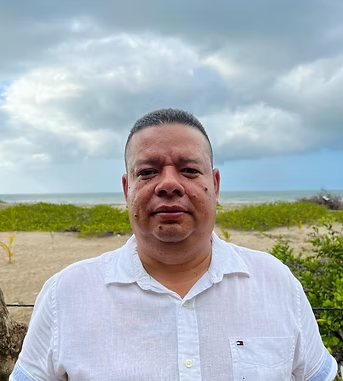
Wilmer Guzmán
What would you like to share at the Our Ocean conference about your municipalities and artisanal fisheries?
In Iriona, we have the seven Garífuna communities of artisanal fishermen looking for solutions to their needs, mainly to the challenges of artisanal fishing.
The declaration of the 12 nautical miles ensures that natural resources exist in the marine area for food security for present and future generations in the municipality of Iriona to benefit 1,500 families. As municipalities, we support the community proposals, and in this case, those of the artisanal fishermen, and we promise to support them in the management of this area.
Financial inclusion through savings clubs improves the economy of the families of artisanal fishermen. We have created 11 savings clubs, with 264 families benefiting from this initiative. We are making the economy more dynamic, and these invested resources remain longer in the municipality.
What does fishing mean to your community?
It means the whole life of our artisanal fishermen. Food is ensured every day on the tables by generating income through the commercialization of their products obtained from artisanal fishing.
What is the biggest challenge facing anglers today?
The main challenge is the scarcity of resources. There is no resource control over marine resources at the national level. Fishermen have to row many hours out to sea to get these resources. As a result of industrial fishing in the area, resources are running out.
Fishermen have to fish inland or move to other fishing banks and other municipalities. Industrial fishing takes the communities' food as they drag their nets and pots, taking everything.
Through the declaration of the marine zone of Iriona and Limón, we, the mayors, commit to supporting the communities of artisanal fishermen so that the industry does not fish in artisanal fishing waters.
What can mayors and local leaders around the world achieve by working together?
We can achieve better results in securing the families that live from artisanal fishing and improve the quality of life of each family in this area. If we all work for the common good, we will achieve the development of our communities and comprehensive management of marine resources.
Through our network of mayors, we can share experiences of what we are doing and how we can replicate it. We can also become a common front to influence central governments to make decisions favoring artisanal fishing and local communities.
What do you want global leaders to know about small-scale fishers and coastal communities?
Honduras is a benchmark at the national level for being a pioneer in granting rights to artisanal fishermen in my municipality and the rest of the municipalities of the Commonwealth of Garífuna Municipalities of Honduras.
Artisanal fishermen exist, and they are a vulnerable, forgotten sector that many governments do not take into account. They are made invisible. Since I started working on this process, I realized they are violated. I did not know about the risks of the activities that fishermen carry out in the sea, nor to everything they are exposed to. Sometimes it's nice to be served a fish dish at the table, but we don't realize how that fish got to our table. We don't know all the risks these fishermen take to bring us that food. We have not stopped to think about all this. For artisanal fishermen to achieve great changes in their lives, we must know how to listen to their problems and the solutions.
4 Takeaways from the UN Ocean Conference
The UN Ocean Conference (UNOC) concluded last week in Lisbon, Portugal. Originally scheduled for 2020, this long-awaited milestone brought the ocean community together to discuss implementation of Sustainable Development Goal 14: the conservation and sustainable use the ocean and marine resources. The political outcome of UNOC was the adoption of the “Our Ocean, Our Future, Our Responsibility: Lisbon Declaration,” which included a call for an ambitious, practical, and transformative post-2020 global biodiversity framework, and noted more than 100 countries have already committed to conserve or protect at least 30% of the global ocean by 2030 (30×30).
Together with partners, Rare used UNOC to make the case for more attention and resources for the territorial seas in achieving 30×30. This thin band of ocean extending 12 nautical miles from shore makes up just six percent of the ocean but is home to 70 percent of its biodiversity. The territorial seas are vital for livelihoods, food security, and climate resilience impacting millions of people. Rare and our partners are among the leading voices for empowering coastal communities, preserving territorial seas, and strengthening ocean climate action.
Here are four takeaways from UNOC:
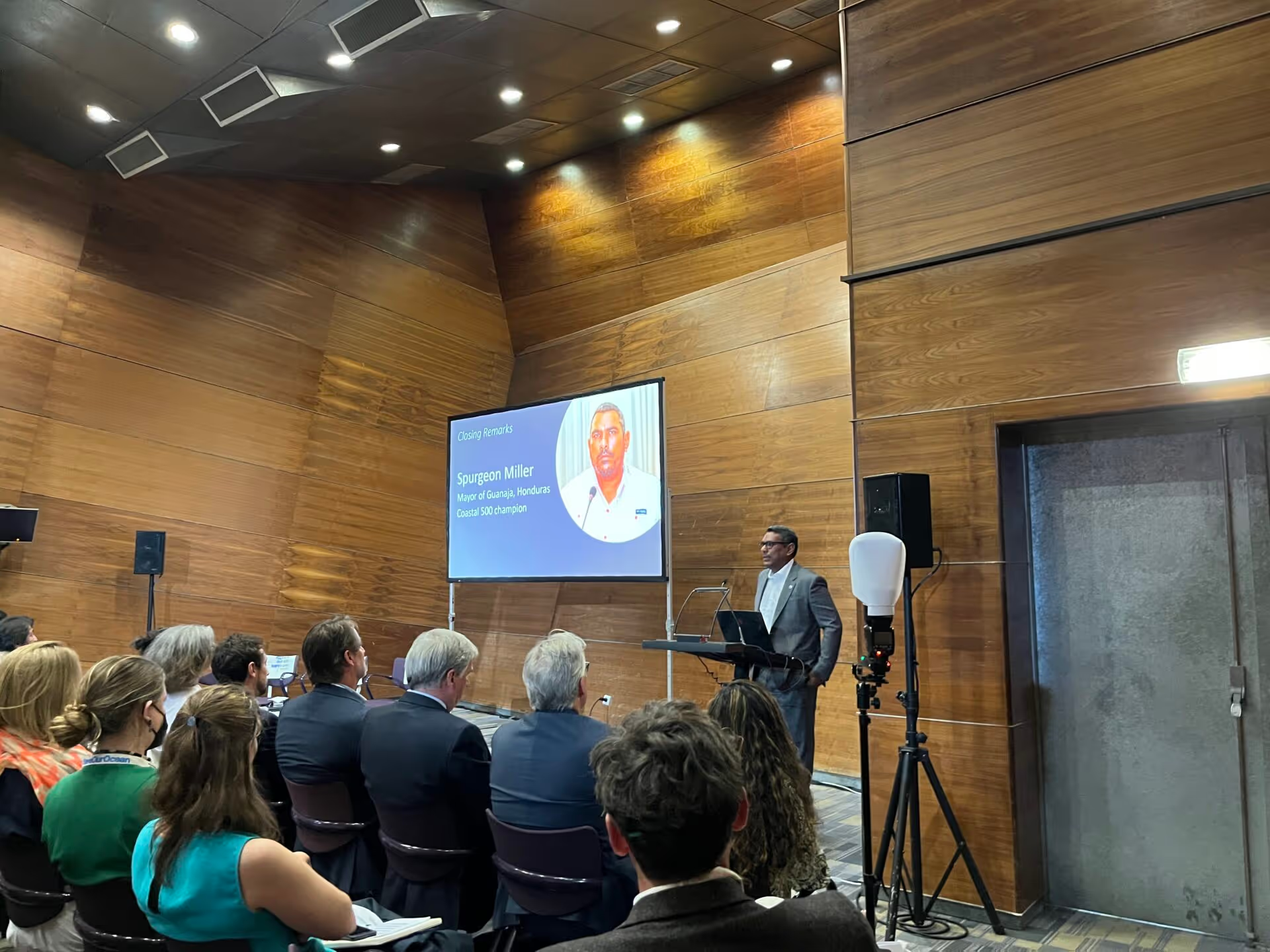
- Local leaders helped humanize the case for territorial seas. Spurgeon Miller, Mayor of Guanaja, Honduras and a Coastal 500 champion, joined Rare’s delegation in Lisbon and helped elevate the critical role municipal governments and local leaders play in safeguarding the ocean. Mayor Miller demonstrated how the Coastal 500 network harnesses the power of collective action from local leaders across the globe which increases action and awareness at the local level while driving greater ambition on key issues at the global and national level.
- Why it matters: The Coastal 500, which Rare helped launch last year, earned significant visibility. Mayor Miller spoke during the UNOC plenary session and a number of other events throughout the week. Governments, funders, and NGOs recognize the power and value of Coastal 500, as it establishes itself as a go-to representation of the local coastal community perspective.
- The case for territorial seas in achieving 30×30 resonated across the UNOC. The momentum for the territorial seas was palpable. Our side event on this topic, co-hosted with Wildlife Conservation Society, Environmental Defense Fund and Blue Action Fund, touched on key issues such as bringing marginalized voices to the table and engaging youth as a force for meaningful and sustainable change at the local level. These messages resonated throughout UNOC, and were reiterated by the recent G7 Ocean Deal, which included a commitment to supporting effective ecosystem-based approaches to fisheries management, as well as achieving 30×30 through Marine Protected Areas and Other Effective area-based Conservation Measures.
- Why it matters: While all ocean areas including those outside of national jurisdiction are important to protect, the territorial seas are key to successfully achieving SDG 14, as well as SDG 1 (no poverty), SDG 2 (zero hunger), and SDG 13 (climate action). Nearly 500 million people directly depend on the small-scale fisheries, most of which are found within these areas.
- Ocean is a MUST for climate action. On the heels of the first annual Ocean and Climate Change Dialogue under the UNFCCC, the UN Ocean Conference reaffirmed the linkage between action on climate change and action to protect the ocean. Ocean climate champions highlighted the ocean climate nexus and the protection and sustainable management of blue carbon ecosystems. Both mitigation and adaptation actions are both vitally important for ocean climate action. The link between ocean action and climate action is increasingly felt at the local level and acknowledged at the global level.
- Why it matters: Engaging small-scale fishers and fishing communities and empowering them with tools and resources for sustainable management is increasingly being recognized as critical to climate solutions. Rare’s expertise in community engagement and resilience building, like that of our Fishing for Climate Resilience initiative, will support this momentum on the road to Sharm el-Sheikh (UNFCCC COP27), Montreal (CBD COP15), and beyond. We must put coastal communities at the heart of the decision process to ensure these actions are good for people, nature and the climate.
- Ocean financing must increase and flow to local communities. While territorial seas are where high human use meets high biodiversity, less than 15% of ocean philanthropy is dedicated to community-based coastal habitat conservation and small-scale fishing issues. Throughout the conference, developing countries reiterated the need for more resources. Other stakeholders called for those financial resources to flow to the local coastal communities who feel the impact of inaction but are often responsible for implementation. Big coalitions of private foundations announced new funding to address this gap, such as the Protecting Our Planet Challenge announcing $1 Billion USD so support the “creation, expansion and management of MPAs and Indigenous and locally governed marine and coastal areas by 2030.”
- Why it matters: The increased attention about financing flows and what is needed to ensure they reach local communities creates a demand for organizations with a strong track record of engaging coastal communities. Rare calls on all Parties and other stakeholders to amplify how increased financial and technical resources are critical for effective implementation of locally-led MPAs in coastal, territorial waters.
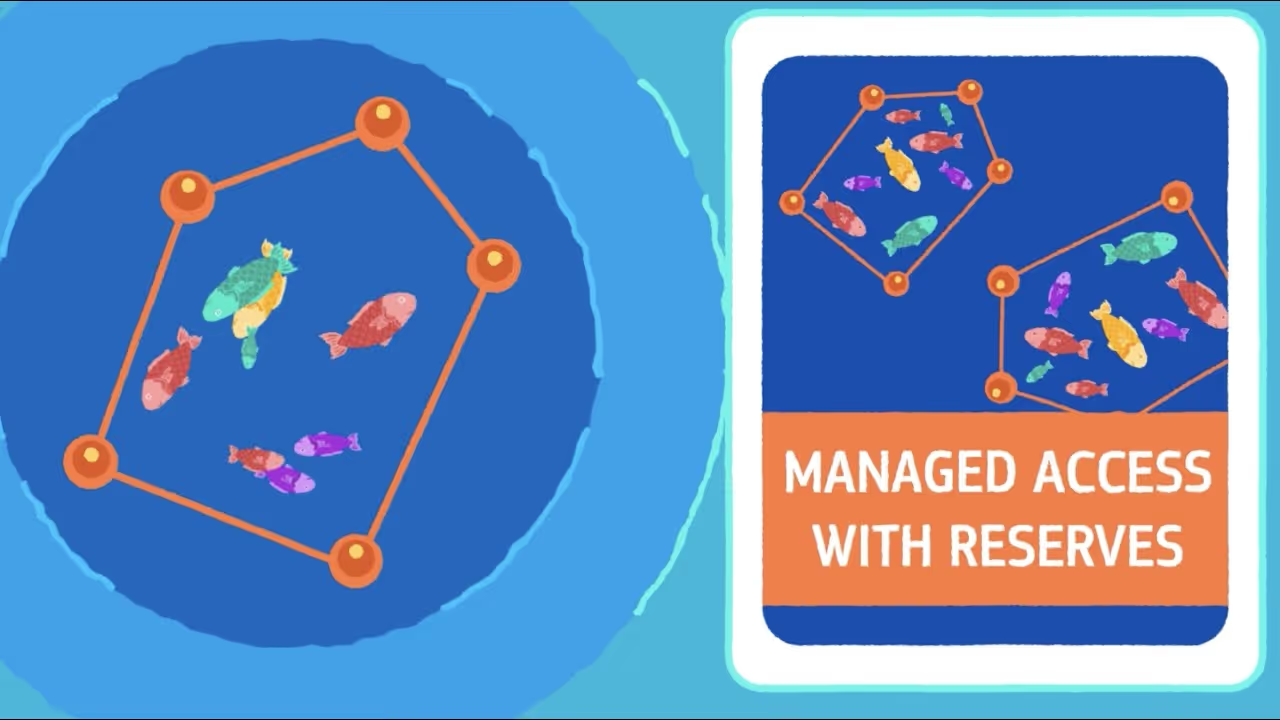
Managed Access with Reserves - A tool that benefits people and nature
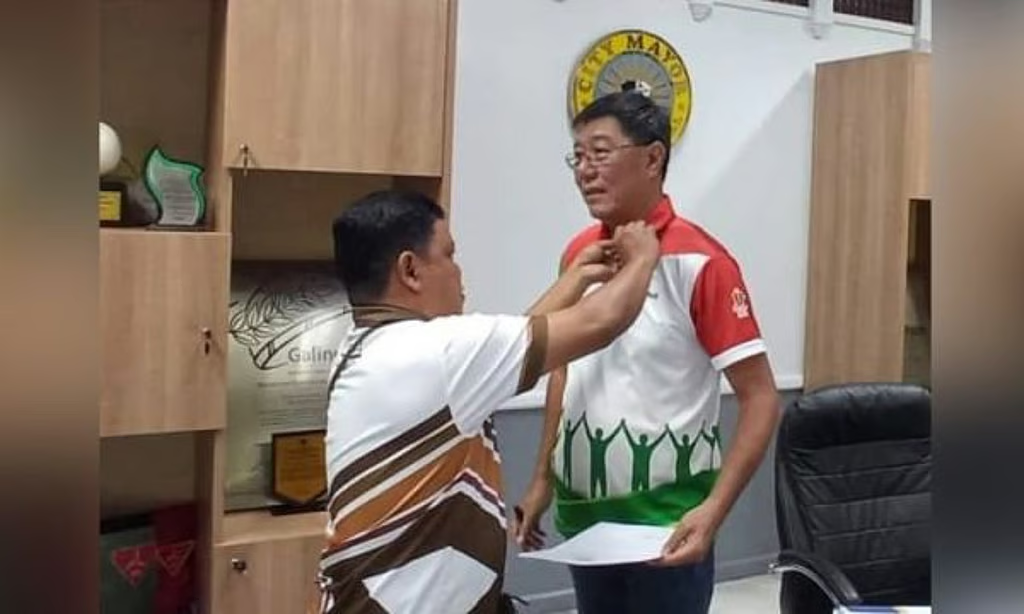
San Carlos mayor named among 500 coastal leaders
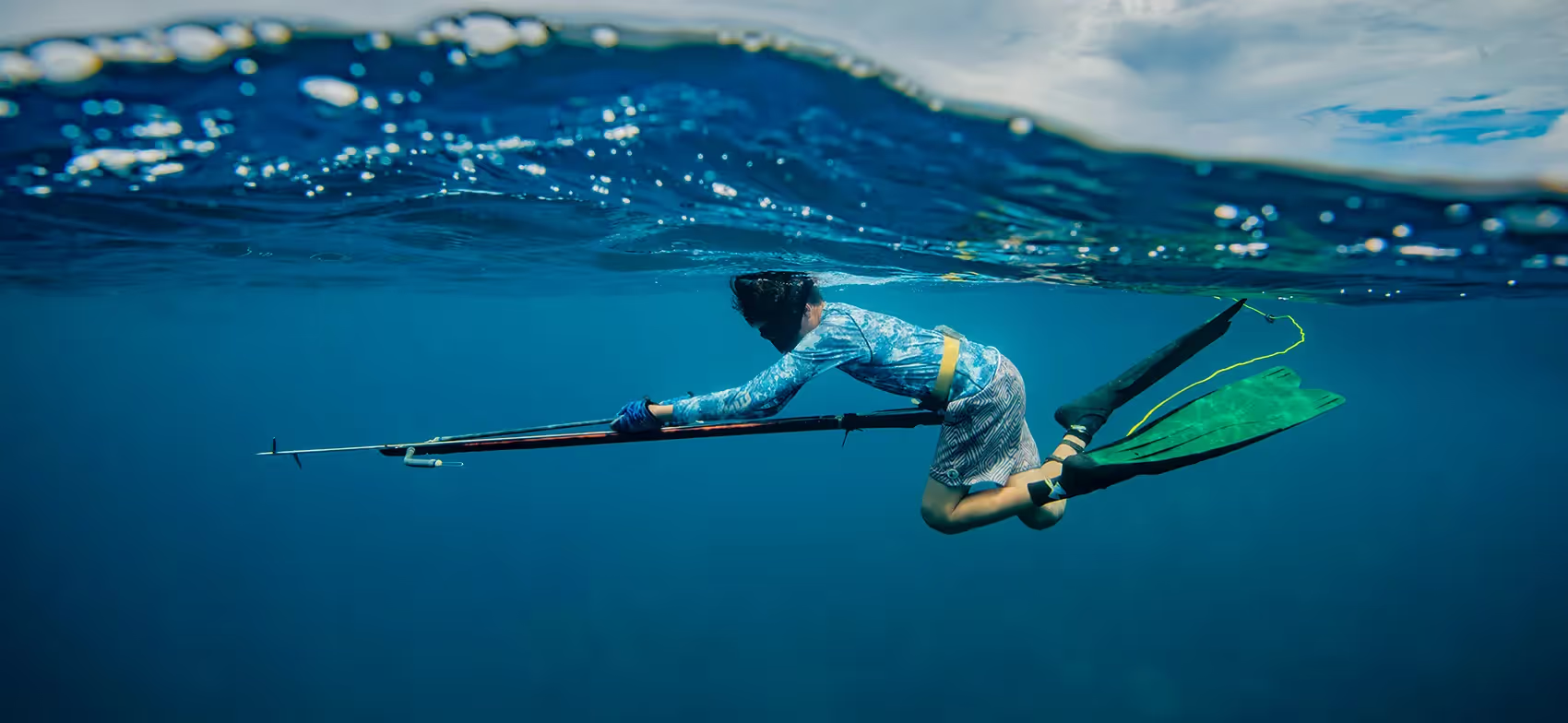
Rare at the 2022 Our Ocean Conference
The 2022 Our Ocean Conference in Palau brought together national government representatives, international organizations, and ocean advocates from around the world to make commitments in support of tangible progress for protecting the ocean. The Conference served as an important milestone for amplifying the growing drumbeat for ocean action and funding.
The Conference was also the first one hosted by a small island developing state (SIDS), providing a unique opportunity to demonstrate the important role of SIDS, indigenous peoples, and local fishing communities have in sustainably managing ocean and coastal resources and protecting it from threats like overfishing and climate change.
Even with a small delegation, Rare convened partners, hosted events, and even took center stage to highlight our community-led approach to ocean conservation, as well as the importance of focusing on the territorial seas and coastal communities.
Advancing Sustainable Fisheries Plenary
On April 13, Rare’s Managing Director of Fish Forever, Rocky Sanchez Tirona, joined a panel discussion on advancing sustainable fisheries. During the panel, Rocky spoke about the need to focus on the territorial seas and solutions that pair effective protection with sustainable use by communities who depend on them for food and livelihoods.
Elevating Fishers
Rare hosted two events to elevate small-scale fishers and their role in sustainably managing coastal ocean waters. First, Rare convened a roundtable discussion of small-scale fisher leaders from Palau to discuss challenges facing the sector and solutions for sustainable, community-led conservation of Palau’s coastal ocean waters.
Following the Palau fishers’ dialogue, and in partnership with EDF, Rare hosted a virtual discussion amongst small-scale fishing sector leaders representing coastal nations . The event was the latest in a series of dialogues that Rare and our partners are hosting this year, in connection with the 2022 International Year of Artisanal Fisheries and Aquaculture (IYAFA).
Download: Global Fisher Leaders' Dialogue Statement.docx
Bringing Together Ministers for Bold Commitments and Actions Towards Territorial Seas
Rare joined Palau’s Ministry of Agriculture, Fisheries and Environment (MAFE) and the Japan International Cooperation Agency (JICA) in convening a dialogue among ministers from several coastal nations discussing challenges facing small-scale fishers and coastal communities. The Ministers also responded to recommendations from fisher leaders, coastal mayors, and youth advocates, and discuss progress on commitments. During the Ministerial dialogue, the ministers watched the video below featuring highlights from the fishers’ roundtable.
Convening the Coastal 500 Champions
The Coastal 500 is a global network of mayors and other local leaders committed to thriving coastal communities. During the Our Ocean Conference, Coastal 500 Champions responded to the outputs of the fisher leader dialogue. Following the Dialogue, the Coastal 500 members produced a statement in support of small-scale fishers and their importance to coastal communities.
Download: Coastal 500 Statement in Support of Small-Scale Fishers
Engaging Youth Ocean Leaders
During the Conference, Rare hosted 40 youth delegates – half from Palau, half from elsewhere around the world – for a seaside salon to share perspectives and their passion for ocean advocacy. The event was an opportunity for the youth advocates to draft statements in support of ocean action to be delivered to the fisheries ministers of participating nations. Following the event, the Youth Leaders produced this statement in support of small-scale fishers.
Download: Youth Advocates Statement in Support of Small-Scale Fishers
Statement in Support of 30x30 Efforts
FOLLOW OUR MOVEMENt
Keep up with the leaders, ideas, and innovations advancing resilient coastal futures.