
FEATURED INSIGHTS

Latest Insights
Explore news, thought pieces, stories and statements from the network.
Earthshot Prize Names Coastal 500 Network of Coastal Mayors as Finalist
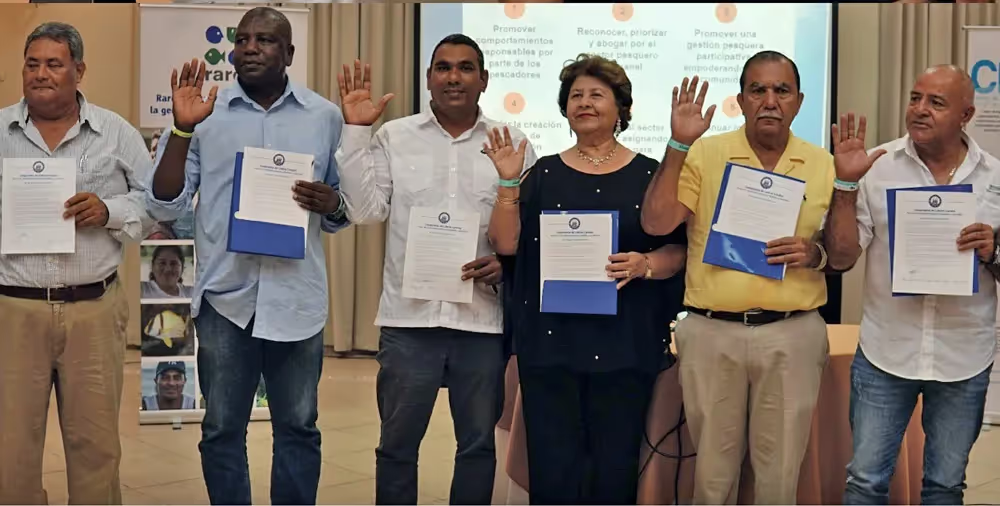
(New York City – September 19, 2023) Today, Prince William and The Earthshot Prize named the Coastal 500, a global network of mayors and local government leaders committed to healthy, prosperous, and thriving coastal communities, as one of the 15 Finalists for the 2023 Prize. The Earthshot Prize is a prestigious global environmental award that celebrates and champions innovators focused on solving our most pressing global climate challenges. The Coastal 500, which Rare helped launch in 2021, is among three finalists in the Revive Our Oceans category.
The Coastal 500, along with the 14 other Earthshot Finalists, were chosen from more than 1,100 nominees. Each of the Finalists will be in the running to receive one of five £1 million prizes awarded at the third-annual Earthshot Prize awards ceremony in Singapore on November 7. Learn more about the Earthshot Prize here.
Currently, the Coastal 500 consists of more than 160 mayors or their equivalent from communities in Brazil, Guatemala, Honduras, Indonesia, Micronesia, Mozambique, Palau, and the Philippines. These leaders represent communities adjacent to coastal waters, which are high in biodiversity and critical habitats, but are under enormous pressure from climate change, overfishing, pollution, and other human activity. The Coastal 500 leaders commit to protecting and restoring coastal ecosystems to safeguard ocean biodiversity, which improves the livelihoods and food security for half a billion people worldwide, while curbing climate change.
“Healthy oceans are vital to the livelihoods, food security, and climate resilience of coastal communities around the world,” said Rocky Sanchez Tirona, Managing Director of Rare’s Fish Forever program. “Rare nominated the Coastal 500 for the Earthshot Prize because we know the best way to restore and protect our ocean is to give the communities closest to them the tools, resources, and rights to care for them. The Mayors and local government leaders of the Coastal 500 are inspiring their fellow local leaders to commit to thriving coastal communities through ocean protection and turning local action into global impact.”
Since its inception, the Coastal 500 network has been a global leader in influencing stakeholders within the fisheries sector to ensure positive shifts in public opinion, political will, and government policies impacting coastal ocean waters and coastal communities. It has also served as a valuable platform for peer-to-peer learning, technical and network support, and advocacy development for coastal leaders from all over the world.
“The concept of the Coastal 500 is rooted in Rare’s belief that locally-led solutions achieve the greatest impact for people and nature,” said Brett Jenks, CEO of Rare. “We are thrilled to see the spotlight shine on these local leaders and the communities they serve in hopes that it inspires even greater support for locally-led conservation. And we are grateful to the Earthshot Prize Council for recognizing the value of local leadership in tackling our planet’s greatest environmental challenges.”
The principal aspect to the Coastal 500 is the Participant Pledge, where members publicly commit to take specific actions to build healthy, prosperous, and thriving coastal communities through activities focused on:
- Promoting responsible fisher behaviors
- Advocating for the rights of local fishers to access local waters
- Encouraging participation in fisheries management
- Endorsing no-take reserves
- Investing in community-based fisheries management
- Sharing lessons and experiences with other local leaders from around the world.
Rare, through its Fish Forever program, is the main facilitator of the Coastal 500. Rare’s Fish Forever program works to empower coastal communities to sustainably manage coastal resources and prevent overfishing. The program has engaged over 1,700 communities across eight countries and is helping place over 5,500,000 hectares of ocean water under sustainable management. Rare and the Coastal 500 are made possible with generous support from Bloomberg Philanthropies’ Bloomberg Ocean Initiative and the Swedish Postcode Lottery Foundation.
For more information about the Coastal 500, visit rare.org/coastal500.
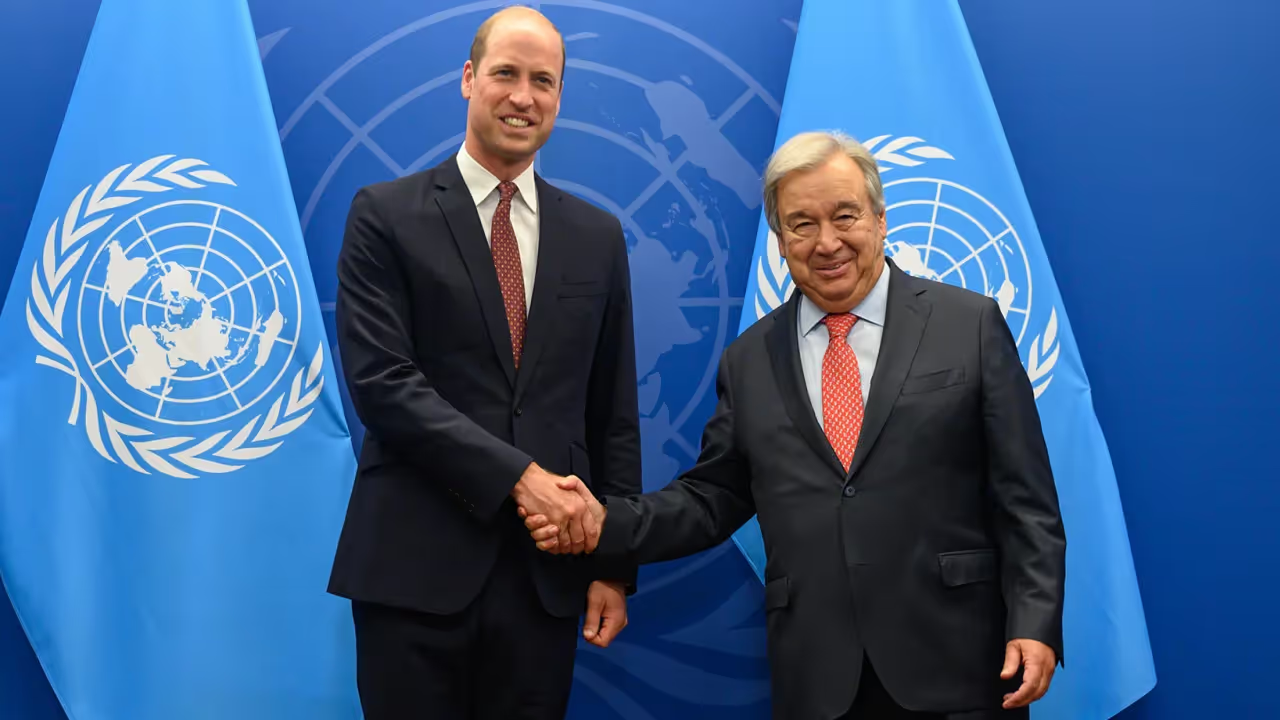
Prince William announces his 2023 Earthshot finalists
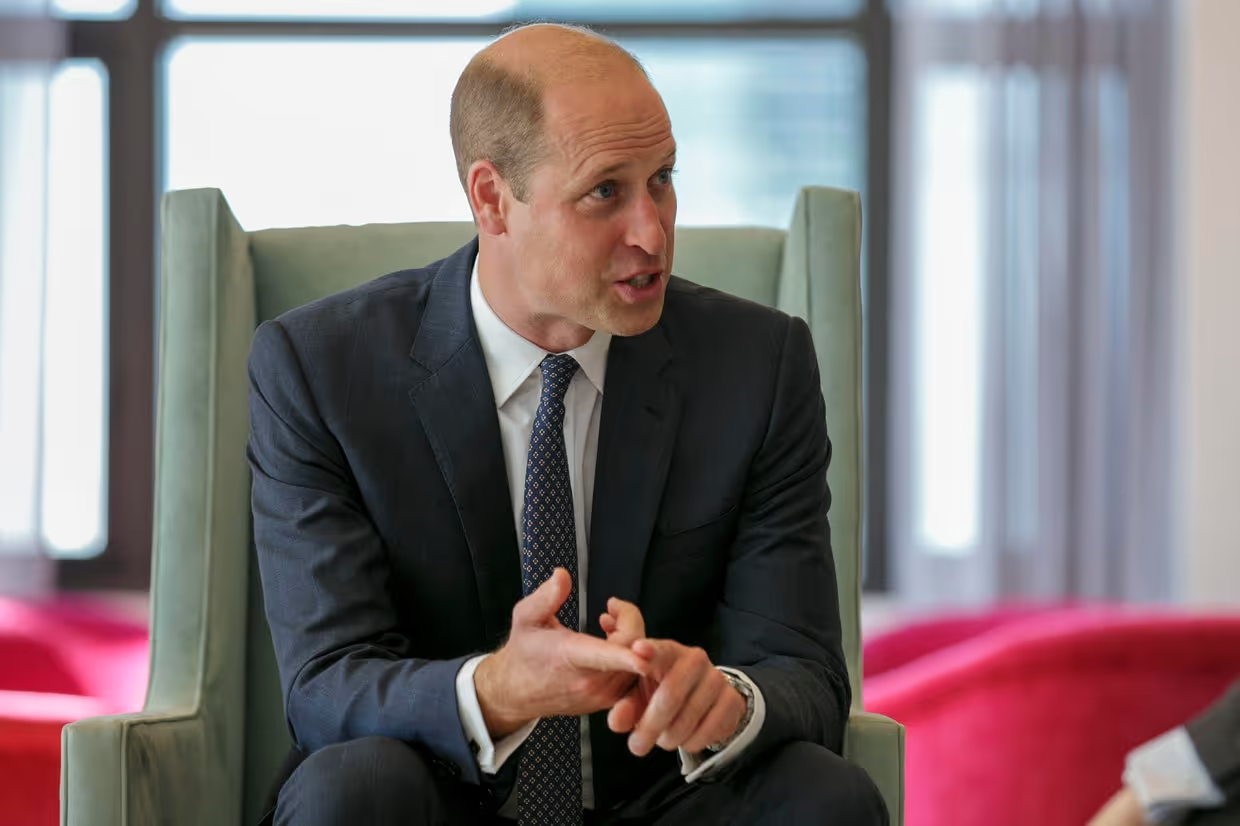
Prince William's Earthshot Prize announces finalists for 2023 awards

Prince William's Earthshot Prize Finalists Revealed! Meet Who Is in the Running for the $1.2 Million Prizes

Earthshot Finalist Rare President Caleb McLennen on Coastline Protection

Finalists Announced For Prince William's Earthshot Prize in Singapore

Coastal 500 receives grant from Swedish Postcode Foundation
Arlington, VA—Today, Rare announced a 2,650,000 SEK (€239,556) grant from the Swedish Postcode Foundation in support of the Costal 500 initiative, the largest global network of coastal mayors and local government leaders committed to prosperous and thriving coastal communities. The grant will help expand and strengthen the Coastal 500 and elevate the voices of coastal communities on the global stage.
“Local government leaders are key decision-makers in using, managing, and protecting coastal resources,” said Rocky Sanchez Tirona, Managing Director of Rare’s Fish Forever program, which supports the network. “This grant will strengthen and expand the ability of these local leaders to become strong advocates for fisheries reform and significantly help advance policy and financial commitments for the sector.”
“Strengthening the ability of local decision-makers to preserve and protect the oceans and its coastal areas is key to contributing to marine biodiversity and to combat climate change,” says Marie Dahllöf, Secretary General to the Swedish Postcode Foundation. “We are proud to support Rare, whose work at the intersection of sustainable development, conservation, and social-behavioral science is an effective method for change. We are excited to see what they will accomplish.”
Launched in 2021, the Coastal 500 initiative enables mayors and local leaders to take visible action in support of coastal communities through a catalog of tools and resources delivered through a mix of learning, communications, and peer-to-peer exchanges. Network members collaborate to influence stakeholders in the fisheries sector, achieving global leadership for small-scale fisheries and positive shifts in public opinion, political will, and government policies. It also monitors and tracks local actions to demonstrate the power of local governance and serves as an inspiration to others.
Local leaders of coastal communities will play a crucial role in achieving the goals of the Global Biodiversity Framework (GBF) signed last December at the UN Conference (COP15) of the Convention on Biodiversity in Montreal. To protect global biodiversity, the GBF included the target of protecting 30 percent of the world’s land and water by 2030, known as 30×30. With most of the ocean’s biodiversity living in coastal waters just offshore, local government leaders are instrumental in implementing measures to protect marine biodiversity. In March, six members of the Coastal 500 network joined Rare’s delegation to the Our Ocean Conference to highlight this vital role local government leaders play in reviving and sustaining coastal waters.
About Rare
Rare is an international non-profit organization specializing in social change for people and the planet. For nearly 50 years, Rare has partnered with individuals, communities, and local leaders on the frontlines of conservation to promote the adoption of sustainable practices. With a behavior-based approach, Rare empowers individuals and communities to better manage and protect nature on which we all depend. Learn more at rare.org.
About Swedish Postcode Foundation
The Swedish Postcode Foundation is a beneficiary of the Swedish Postcode Lottery and provides support to projects that foster positive social impact or search for long-term solutions to global challenges. Since 2007, the foundation has distributed over 2 billion SEK in support of more than 900 projects in Sweden and internationally.
Contact: Kristi Marciano (Rare) – kmarciano@rare.org

Rare Elevates Local Leaders at Our Ocean
From the 30×30 agreement to the High Seas Treaty, we’ve seen a recent run of remarkable global progress toward protecting the oceans. But success on the global stage hinges on implementation at the local level.
At the recent Our Ocean Conference in Panama, Rare took the opportunity to bring together leaders from communities on the frontlines of ocean conservation.
“Elevating local leaders and supporting community-led solutions is core to Rare’s mission. At Our Ocean, we were determined to do both,” stated Rare President Caleb McClennen after his trip to Panama. “Not only were we pleased to provide attendees the opportunity to hear from local leaders, but also create an opportunity for the leaders to hear and learn from each other.”
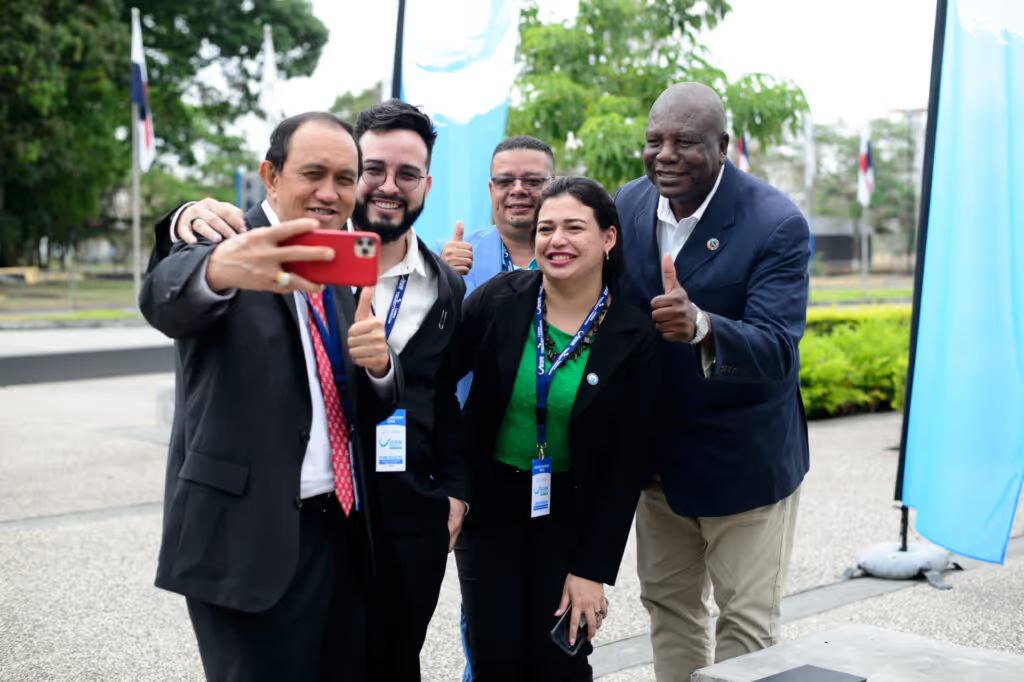
Rare’s delegation to Our Ocean included six mayors and local leaders representing communities at the intersection of climate change and ocean health: Indonesia’s Royke Octavian Roring and Basiran, Honduras’ Mayor Wilmer Guzman and Noel Ruiz, and Brazil’s Fabricia Nogueira da Penha and Silvano Costa Da Silva.
The leaders joined representatives from national governments, foundations, advocacy organizations, academia, and local communities at Our Ocean Conference in Panama City from March 2-3.
The cohort of mayors are members of the Coastal 500, the largest global network of mayors and local government leaders committed to working towards thriving and prosperous coastal communities.
Local leaders headline event on small-scale fisheries
Rare hosted an event titled “Local Governments and Small-Scale Fisheries: Fostering Partnership for Co-Management” that explored the role of local government leaders working with communities to revive and sustain their coastal waters. The Coastal 500 leaders spoke about their work to support small-scale fishers and highlighted how co-management and local leadership has been successful in their communities in Brazil, Honduras, and Indonesia.
When asked about the impact of fishing in his community, Mayor Noel Ruíz answered,
Artisanal fishing is a tradition. It is culture. It is heritage. It is a source of life and community spirit.”
The event also featured Vanuatu’s Special Envoy for Climate, Hon. Bakoa Kaltonga, who highlighted the importance of ocean protection to help communities fight the effects of climate change.
“Thank you for helping coastal communities. It is absolutely essential to help communities fight the effects of climate change, including protecting our oceans,” Bakoa Kaltonga explained in closing remarks.
Coastal 500 leaders learn from fishers and each other
Rare facilitated a workshop with Coastal 500 leaders from three countries to share their experiences, challenges, and successes with each other and discuss ideas to strengthen the Coastal 500 network. The leaders also met with small-scale fishers from Colombia, where they heard first-hand about the challenges these fishers face and discussed how they supported fishers in their own communities.
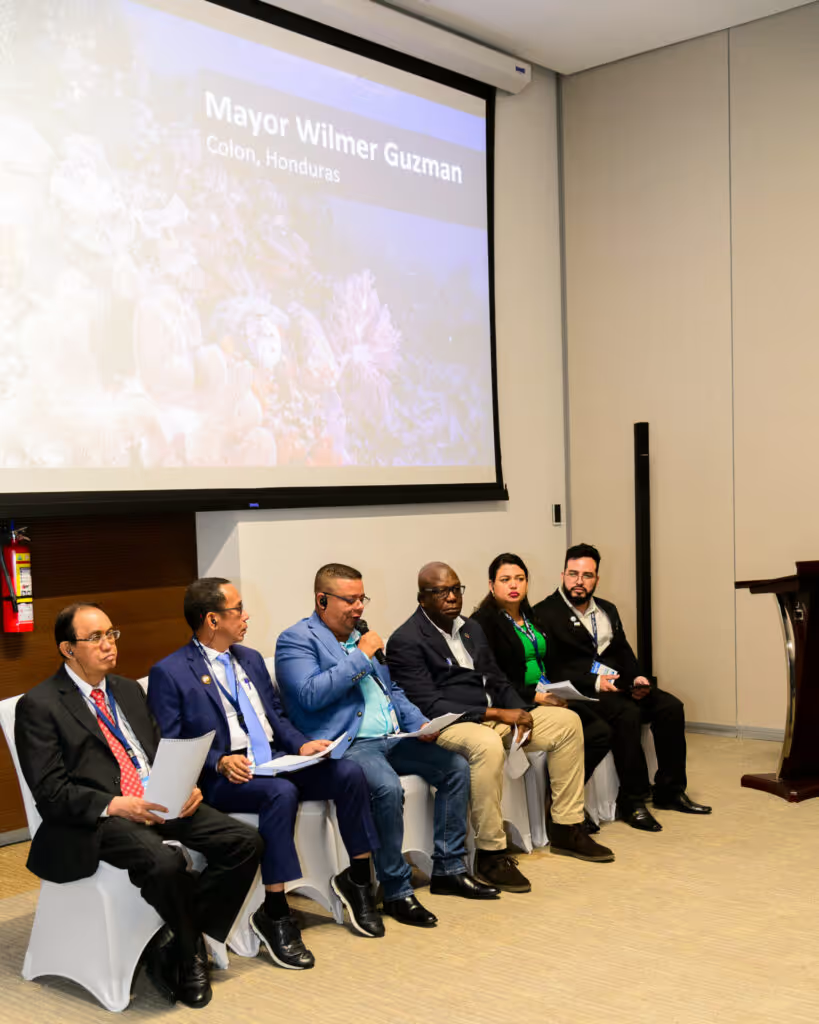
“Through our network of mayors, we can share experiences of what we are doing and how we can replicate it,” exclaimed Mayor Wilmer Guzmán. “We can also become a common front to influence central governments to make decisions favoring artisanal fishing and local communities.”
Delegates pledge over 300 commitments worth $20 billion
This year was the eighth annual Our Ocean conference and the first to be hosted by a Latin American country. Participants made 341 commitments worth nearly $20 billion, including funding for expanding and improving marine protected areas and biodiversity corridors. Panama announced MPA expansions that bring the total ocean protection in the country’s waters to more than 54%.
Rocky Sanchez, Rare’s Managing Director of Fish Forever, views the conversations at Our Ocean as an important step towards advancing the rights of sustainable small-scale fishers and protecting coastal seas to meet 30×30 targets.
“It is critical for global leaders to hear the local perspective of coastal community leaders,” explains Rocky. “We must all work together to create long-lasting solutions for food security, biodiversity, and sustainable livelihoods in the face of climate change.”
Looking ahead to Our Ocean Conference Panama with reflections from Honduras
This week, I am headed to Panama for the 8th Our Ocean Conference. Our Ocean focuses on commitments and comes on the heels of last December’s landmark UN Conference on Biodiversity (COP15), where 200 nations came together to commit to a new framework for protecting biodiversity globally, including the target of protecting 30 percent of land and water by 2030.
Our Ocean 2023 provides an opportunity for governments, civil society, the private sector, and ocean advocates to demonstrate commitment to community-centered, locally-led solutions as critical for delivering on the new Global Biodiversity Framework. At Rare, we are focusing on supporting the conservation of the ocean’s territorial seas (out to 12 nautical miles) where high biodiversity meets high human dependance.
Personally, I’m headed to Panama motivated by what I saw on my first field visit to the region as President of Rare. Just a couple weeks ago, I traveled to Honduras to meet our Fish Forever program team there. The team was strong, their energy infectious. Not surprising for a group of community engagement experts!
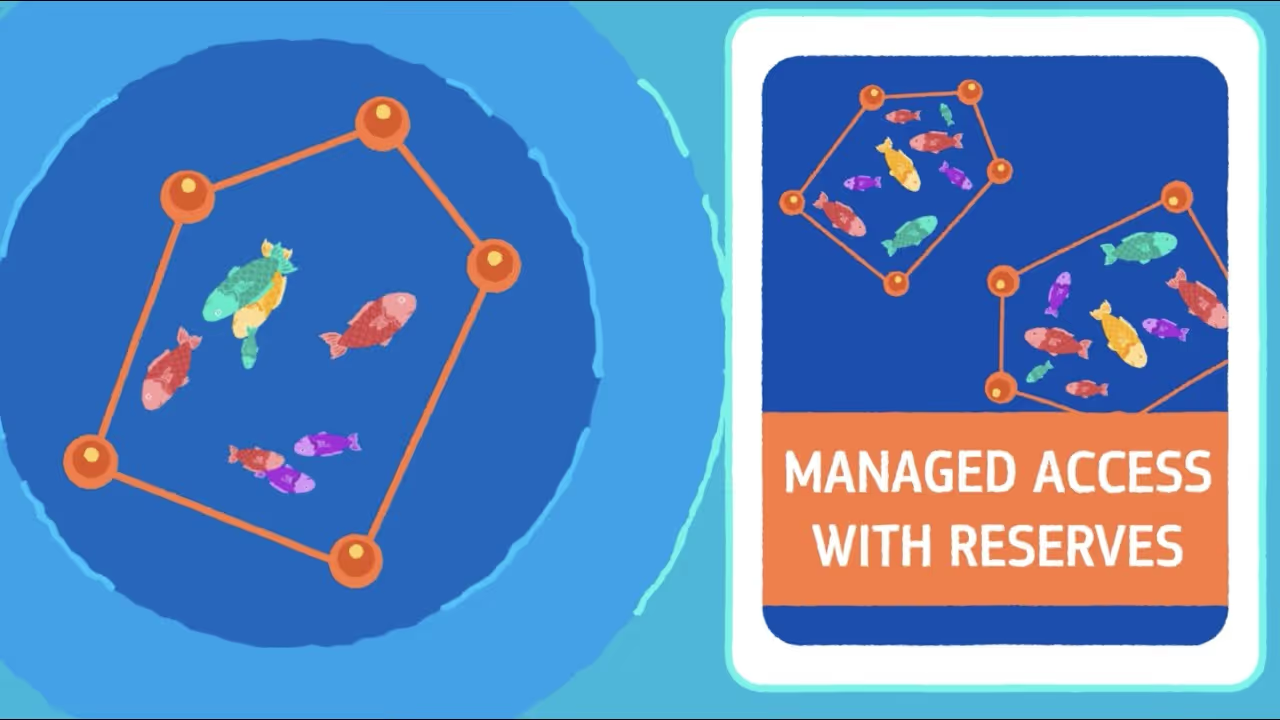
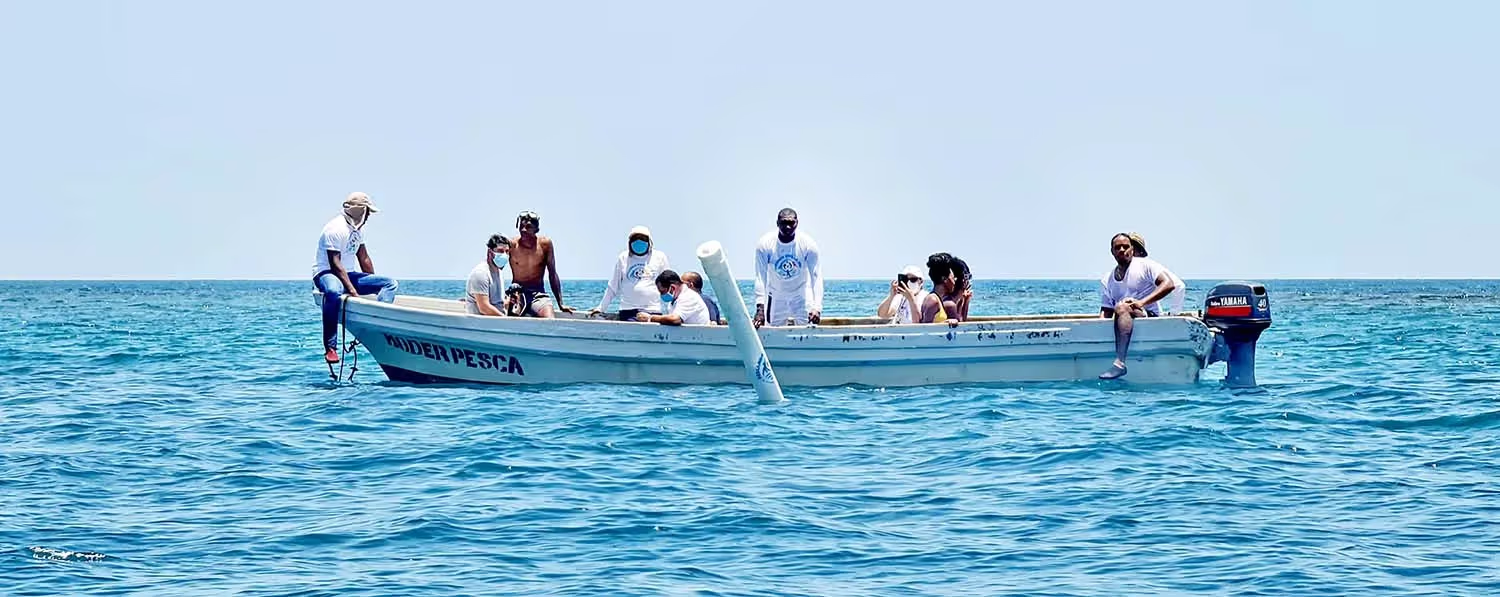
The Rare Honduras model is to scale community managed fisheries in an exclusive zone, including no-take zones, extending 12 nautical miles (nm) from shore along the entire Caribbean coast of Honduras. In 2017, a three-mile exclusive artisanal fishing zone was eliminated, so the program has found a new tool through designation of “sites of importance for wildlife.” In 2021, after years of work with local, regional, and the national government, local NGOs like the Center for Marine Studies, and champion Mayors, this new pathway was used to create the first community-led “managed access” area in coastal waters. Now, there are two more managed access areas to the west that are up for nomination to the government. In total there will be seven of these areas to cover the whole north coast. The team is also working at the national level to change the fishery law, which would provide an extra level of protection.
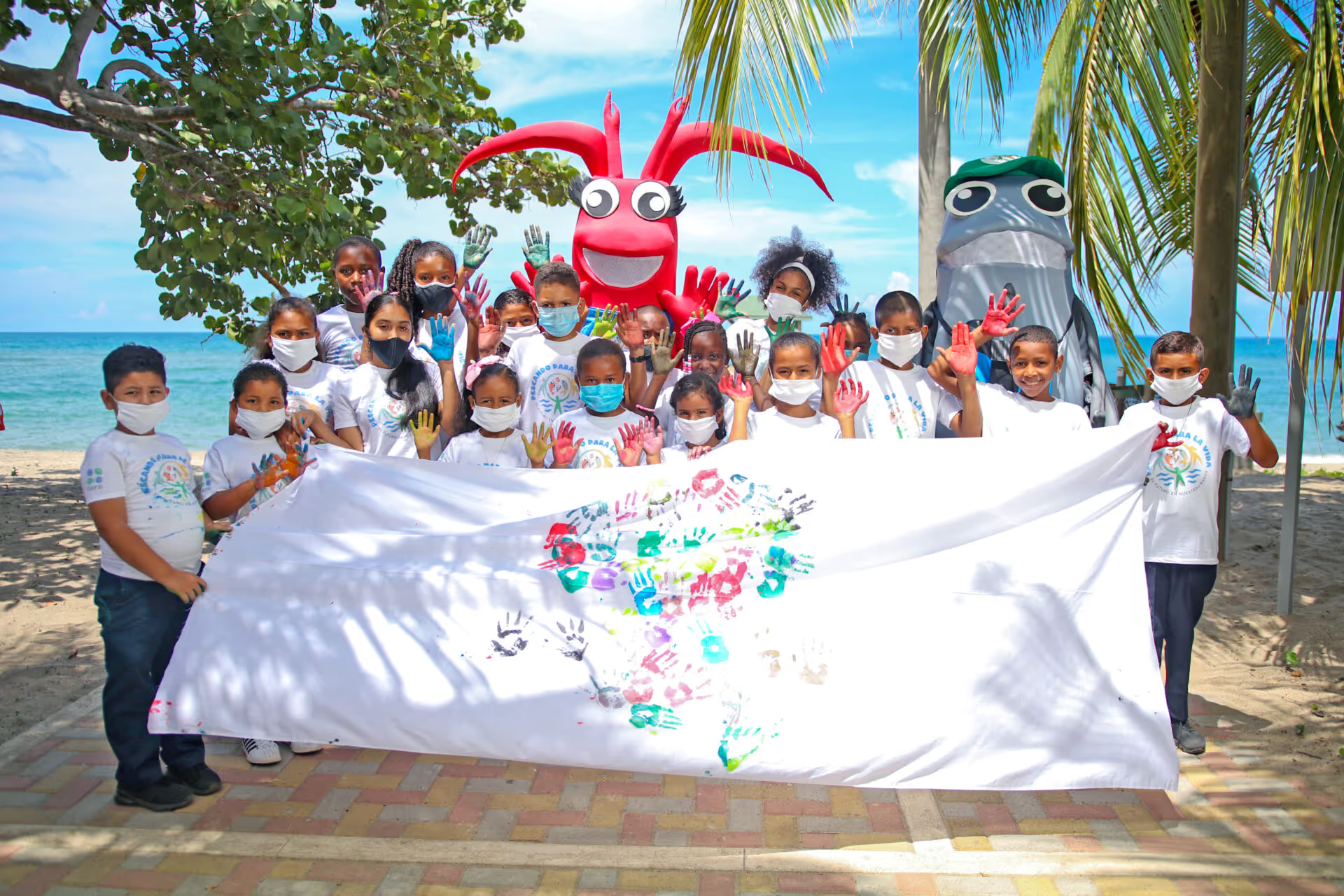
Within the communities, the work is super interesting. Rare has found a way to build social cohesion across fishers and their broader communities through savings clubs. The savings clubs, originally piloted in the Philippines, are important because small scale fishers are traditionally marginalized from the formal financial system and cannot access banking or credit. The clubs provide an alternative to informal lenders who charge outlandish interest rates and make fishing even more expensive, challenging, and less sustainable.
In the community of Santa Fe I talked with the Mayor Noel Ruiz, who is now partnering with Rare on the 12nm community-led managed access area. Local leaders like Mayor Ruiz are critical to success. That is why Rare has launched the Coastal 500, a global network of coastal mayors and local leaders dedicated to thriving and prosperous coastal communities. Rare is supporting the attendance of seven mayors, including Mayor Ruiz, at the Our Ocean Conference. At the conference, we will host an event at which these mayors will discuss challenges and successes in protecting the ocean while meeting the needs of fishers.

Elevating local leaders and supporting community-led solutions is core to Rare’s mission. At Our Ocean, we’ll do both. After the conference, I look forward to sharing more about what we achieve there – and what work remains. Be sure to follow Rare’s social media channels (@rare_org on Twitter and Instagram) for updates from the Conference.
FOLLOW OUR MOVEMENt
Keep up with the leaders, ideas, and innovations advancing resilient coastal futures.