
FEATURED INSIGHTS

Latest Insights
Explore news, thought pieces, stories and statements from the network.
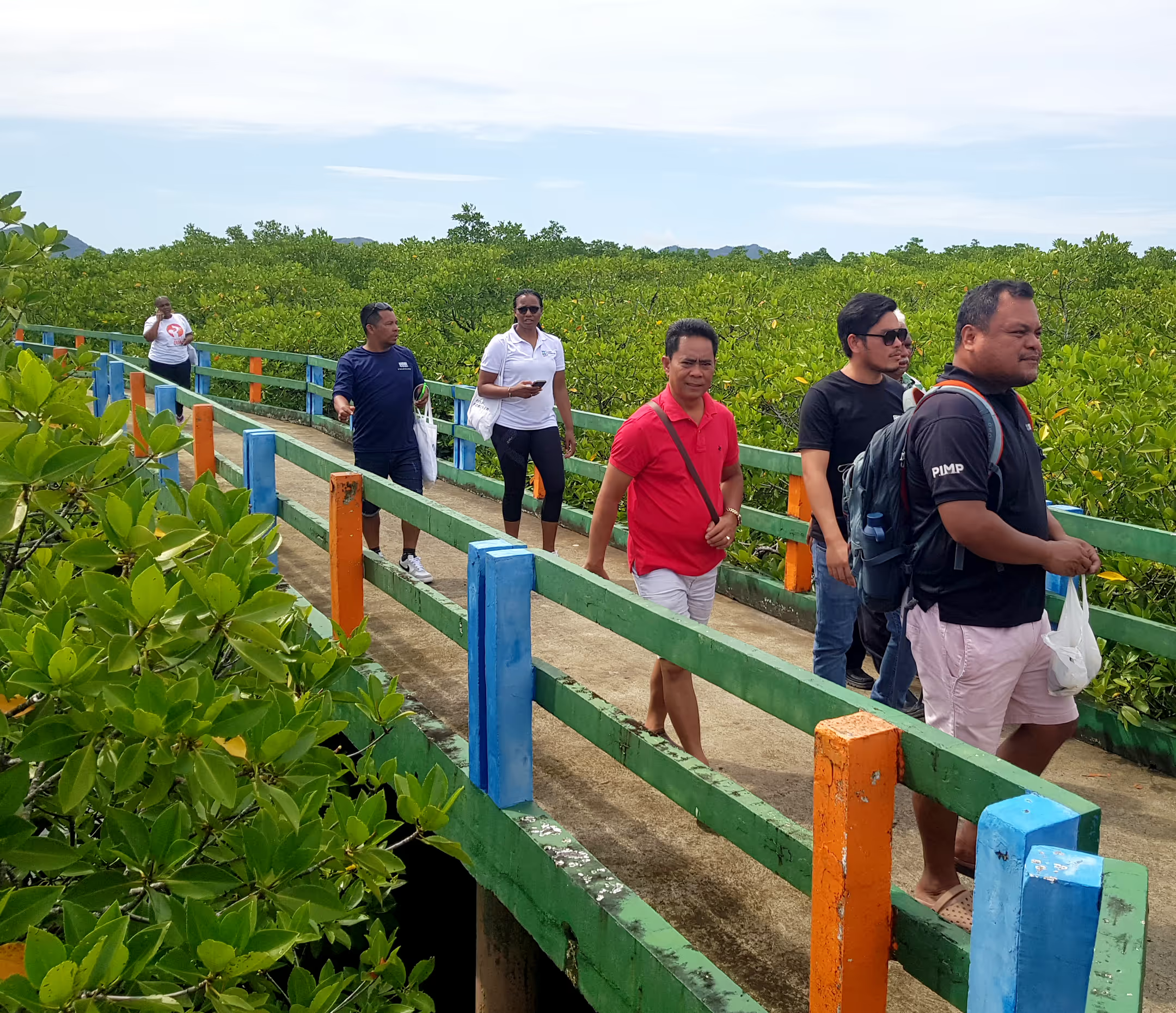
Coastal 500: Mayors from 8 nations swap ideas, best practices
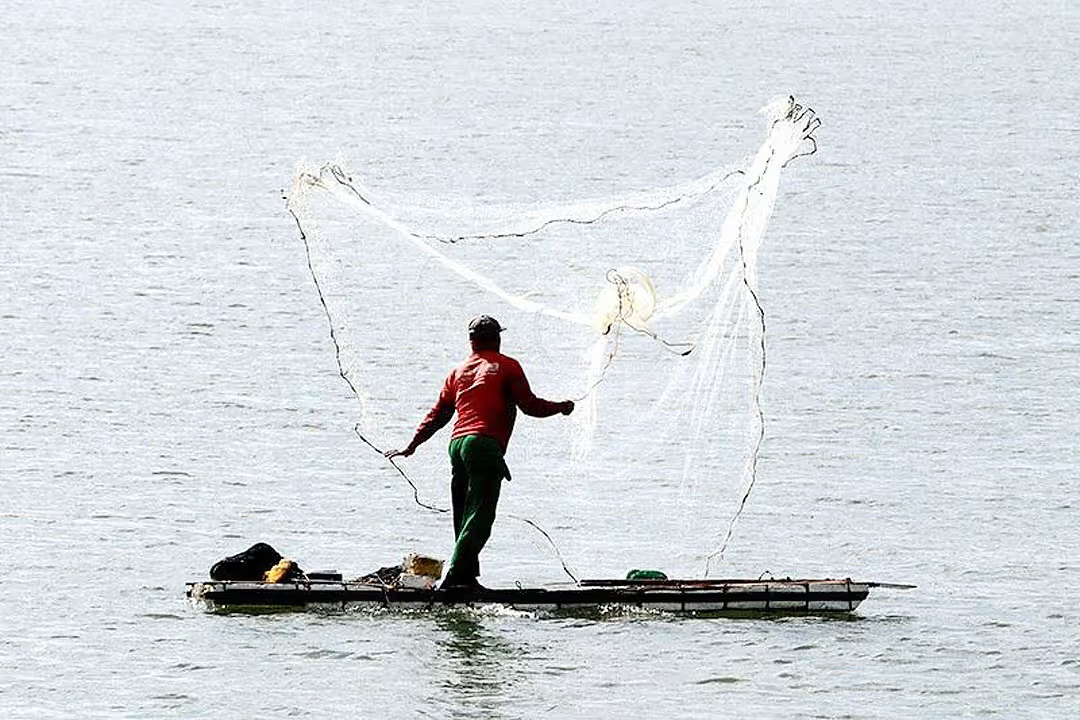
More information and educational programs needed to get fisherfolks insured
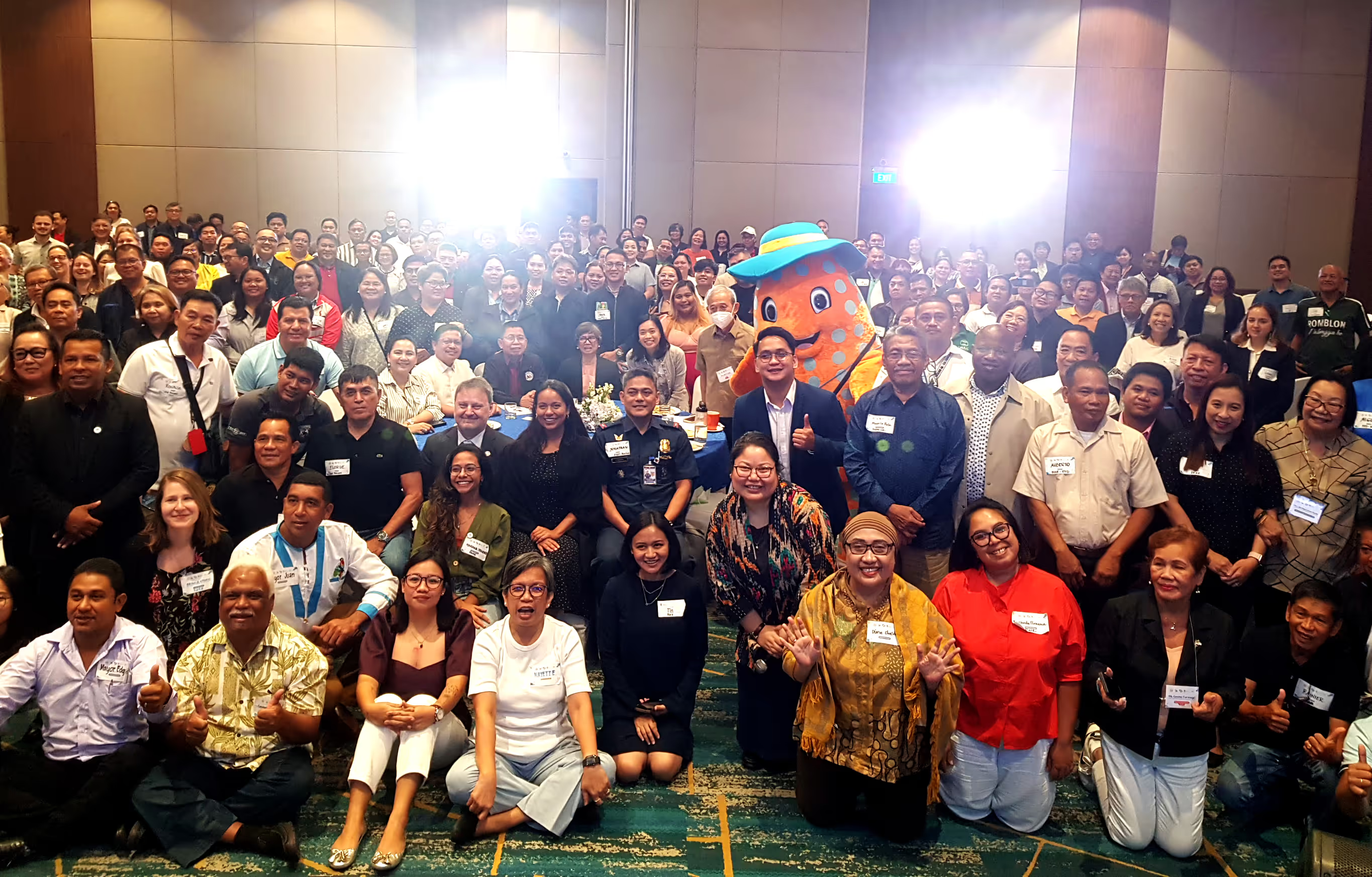
National Coastal and Inland Fisheries Summit: A Vital Gathering Organized by Rare
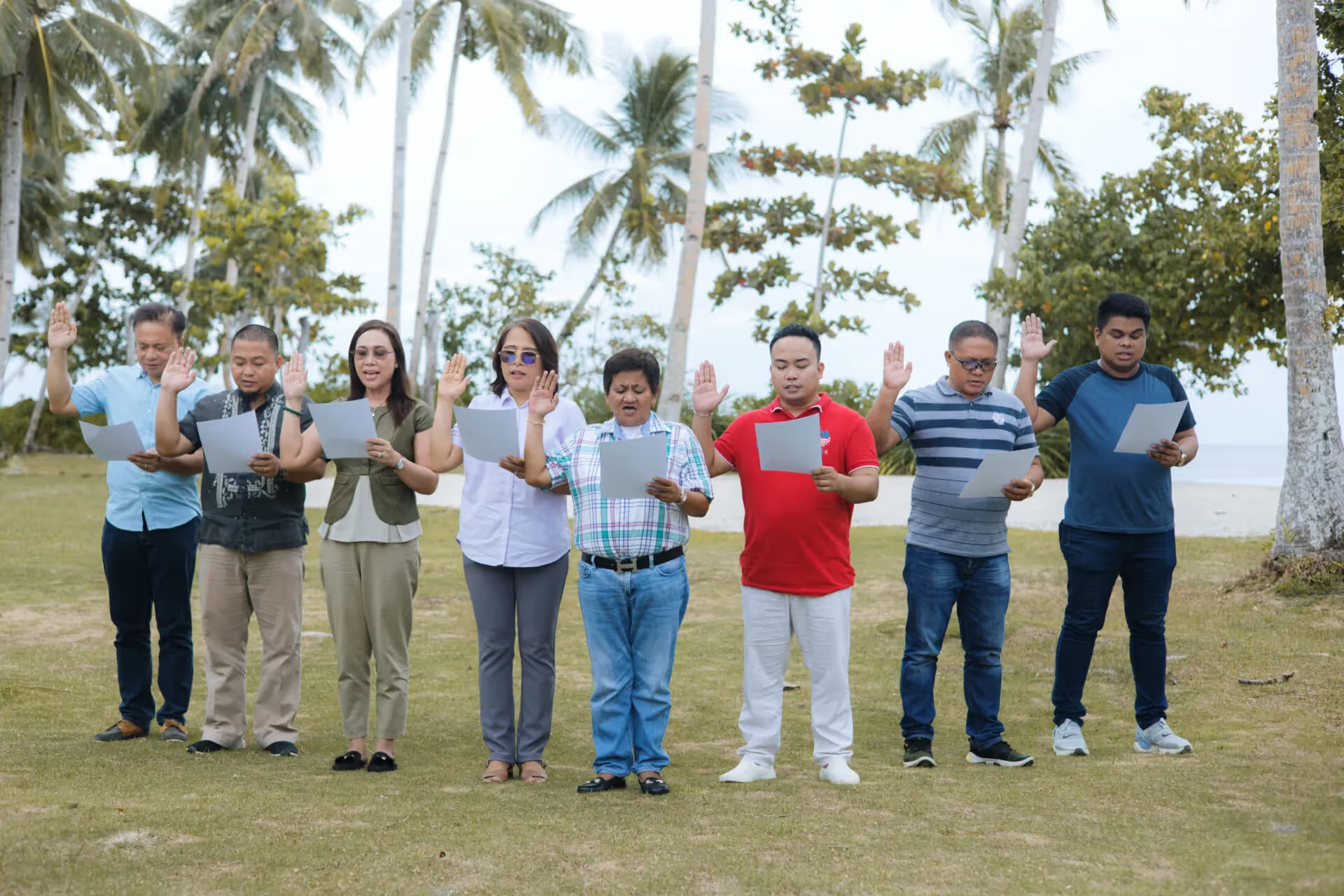
It takes a village

When I was a young boy, my family and I would take the boat from Surigao City to Siargao Island, spending weeks exploring its natural wonders. The hot, rocky beach, the crystal clear ocean, the seafood, the people…they all left me with beautiful memories of growing up.
Fifteen years later, I returned to Siargao Island to serve three consecutive terms as Mayor of the municipality of Del Carmen. In the years between my childhood and my election, Del Carmen faced many challenges because of climate change and a growing tourism industry. As Mayor, I am proud of my municipality’s progress and success: we improved health service delivery, achieved education reforms, implemented sustainable fisheries management, developed community-based tourism, and improved local governance.
Our progress and resilience were made with a lot of support from multiple partners, allowing us to appreciate the science, understand our desired future, and work to develop Del Carmen’s sustainable development. In time, our small coastal community became a global model of how local governance can influence positive change.
The replicability of the opportunity to share our success with other municipalities is what drove me to engage more with Coastal500, a global network of Mayors and local government leaders committed to working towards thriving and prosperous coastal communities. The network presents an opportunity to empower more local leaders, governments, and communities to access replicable solutions, policies, and innovations that support sustainable development and equitable growth.
In August 2023, we learned that the Coastal 500 was nominated for the Earthshot Prize, considered one of the world’s biggest environmental prizes, organized by Prince William, Prince of Wales. Earthshot commissioned a media team from Manila to film in Del Carmen and tell the municipality’s story of transformation.
To my surprise, one of the photos taken that day was shown on the LED wall of London’s Piccadilly Square. By November 2023, I was in Singapore for the Awards ceremony. While the Coastal 500 didn’t take home a prize that evening, it was the only program originating from Southeast Asia and the first to be nominated from the Philippines.
During the event, I witnessed the amazing innovations presented by talented and committed organizations from around the world. It was truly a privilege to see and learn about various approaches to addressing the challenges of climate change. Many of the solutions I learned about could be scaled for use in fisheries. For example, I met with GRST, the Earthshot Clean Air Winner, to learn more about their progress in developing a new e-battery-driven engine for small-scale fisheries to address health issues, like fishers’ hearing loss due to loud engines. This particular solution reduces the cost of fishing operations and the use of fossil fuels, and it would benefit not only Del Carmen’s fishers but potentially all small-scale fishers worldwide. GRST’s win and solution encouraged me to explore other solutions within the Earthshot Prize Awards portfolio that could be replicated and scaled by the Coastal 500’s members.
Energized by our experience in Singapore, we next brought Coastal500 mayors to the UN Climate Change Conference of Parties (COP) 28 held in Dubai in December 2023 to share the network’s global progress and explore new partnerships and collaborations with donors, NGOs, and INGOs, and others working on marine conservation issues. I met fishers worldwide, advocates of human rights and climate migration, and those representing social determinants influencing fisher behavior. We brought our local stories to a broader audience by speaking at multiple events. We amplified the situation of similar coastal municipalities and villages at risk – from increasing frequency and strength of storms, warming temperatures resulting in drought, and a lack of time and resources to mitigate or adapt to the current impacts.

At COP, I spoke about the Category 5 Super Typhoon of 2021, which made landfall in Del Carmen in December, and how our 10-year journey of rehabilitating the Del Carmen Mangrove Forest saved our people’s lives and properties. Listening to others tell their stories, I wondered why we were still talking when we all knew the actions were needed already. I responded to inquiries about how small-scale coastal communities can be heard on global platforms and assert their voices beyond national governments as direct representatives of the people. I shared with the audience how our policy in the Philippines protects a 15-kilometer shoreline based on food security science – and how it’s now being replicated in Honduras by their local communities.
These experiences, with the Earthshot Prize and COP28 in Dubai, made me realize the collective power of the leaders of neglected small fishing villages and municipalities to drive change in their communities – if their leaders have access to appropriate information, replicable action, and localized scientific narratives. Coastal500 aims to empower these leaders, their local governments, and the people they serve.
Our mission to sustain our fisheries and oceans reminds me of the little boy who would regularly travel the seas, from Surigao to Siargao, full of possibilities for what lies ahead. I can now confidently tell that little boy that those of us living on coasts and islands have the power to shape our future – regardless of the challenges that climate change and other uncertainties may throw our way.
Directing our Earthshot to a critical part of the ocean
By Emily Owen, WildAid; Serge Raemakers, Abalobi; and Rocky Sanchez Tirona, Rare and the Coastal 500
Coastal fisheries around the globe are at risk of collapse. Increasing human pressures mean fish may disappear from waters where they once flourished. It’s an unfolding crisis that threatens our ocean ecosystems and the well-being of the vast number of people living in coastal communities.
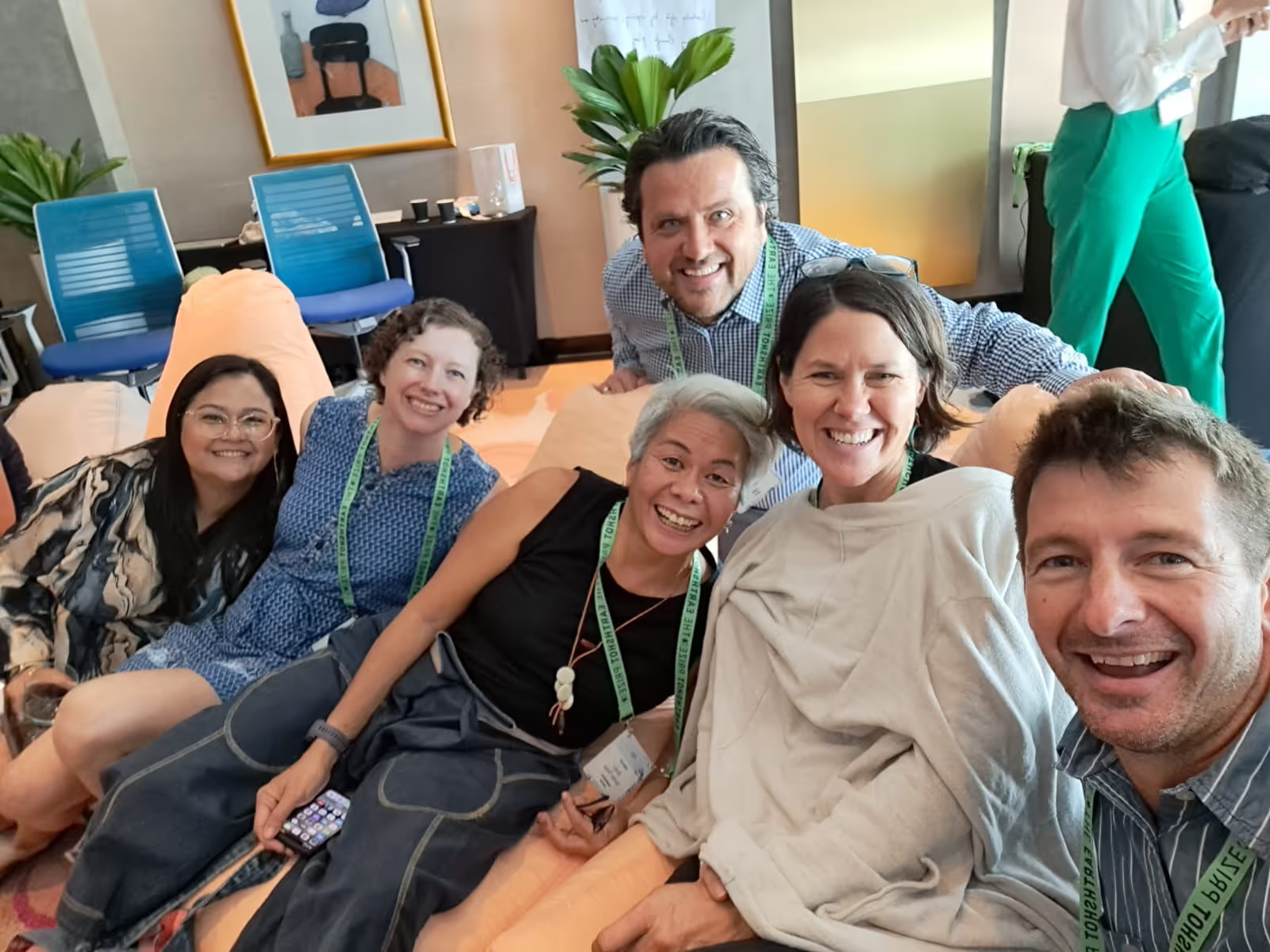
This is a moment marked by urgent optimism as we gather in Singapore this week for the 2023 Earthshot Prize awards ceremony. His Royal Highness Prince William and the Earthshot Prize, named our three organizations Finalists for our work to “Revive Our Oceans.” We are honored by this recognition, but dutifully aware that our nominations reflect the scale of the challenges ahead. To that end, we found it critical to come together here to bring urgent attention to the needs of our planet’s coastal waters.
Coastal fisheries are the parts of our ocean accessible to small-scale fishers, lying within 50 km from shore and up to depths of 200 meters. Coastal waters are some of the richest parts of the ocean in terms of biodiversity. One hundred percent of mangroves, seagrass beds, and kelp forests occur here, as well as more than 80% of coral reefs — all vital habitats for fish and other marine life, and critical ecosystems to protect against climate change.
Healthy coastal fisheries are also critical to the livelihoods, food security, and climate resilience of communities and countries. Small-scale fishers represent the largest group of ocean users on our Blue Planet. The waters in which they fish account for one-third of the global marine catch, and they support more than 100 million direct livelihoods.
Read more about the Coastal 500 here
Not surprisingly, coastal waters are also intensely exploited by humans and face a barrage of anthropogenic changes. Over 35% of fisheries globally are fished at unsustainable levels. A rapidly growing population further strains coastal and marine resources.
These pains are exacerbated by poor or ineffective management of coastal fisheries, leaving them vulnerable to chronic overfishing and to widespread illegal, unreported, and unregulated (IUU) fishing that fuels a lucrative black market.
The collapse of coastal fisheries and ecosystems is felt most acutely by those who can least afford it across the globe, and not only in fishing communities. While one in five people globally depend on fish for a significant part of their protein requirements, that is closer to 50 percent in many of the least developed countries of Africa and Asia.
In unique ways, each of our organizations is working to combat the decline in coastal fisheries. As we strive to scale our individual solutions, we urge the international community to take three critical steps to revitalize the coastal waters on which so many people depend.
First, we need stronger governance, robust protection, and greater prioritization of coastal fisheries. Policies and laws are often unenforceable, unclear, or completely absent, leaving coastal communities and ecosystems vulnerable. While increasing swaths of ocean are being designated as marine protected areas (MPAs), most are not adequately safeguarded. That needs to change, because properly implemented MPAs and coastal fisheries have outsized benefits for marine species, including fish stocks. MPAs can contain four times more fish within their boundaries than highly fished areas, increasing species’ resilience to climate change.
Second, we must empower local leaders, who are more familiar with the specific challenges and appropriate solutions for their communities. Let’s increase the rights of local fishers to access local waters and support enforcement of regulations. Let’s equip local communities with the resources and technologies to manage fisheries sustainably, while supporting the proper enforcement of fishing restrictions in protected areas.
Third, we need a data-driven approach to rebuilding fisheries that prioritizes ocean life and livelihoods. Data collection tools, designed and led by coastal communities, can leverage local ecological knowledge to inform adaptive fisheries management and nurture ocean stewardship. Community-led, data-driven fisheries management can deliver sustainable seafood systems, while improving the livelihoods of communities. By shifting markets to embrace three-dimensional sustainability – social, economic and ecological – we can address the root causes of overfishing, including poverty, food insecurity, and social inequity.
When managed effectively, coastal fisheries are the foundation of local economies in coastal communities, especially in developing nations. With proper management, fisheries have the potential to become the most sustainable and climate-friendly way to feed the world, support local livelihoods, and protect the natural systems that are among our best defenses against climate change.
In the past year, we have seen tremendous momentum for protection of the ocean: a “30×30” strategy to protect 30% of the ocean by 2030 and a High Seas Treaty to implement protected areas. But amidst the progress, coastal seas and communities face unique challenges, and they offer tremendous solutions that benefit people around the globe. We challenge leaders and communities across the planet to appreciate the impact of these fisheries and to take steps to help them thrive.
The authors represent WildAid’s Marine Program, ABALOBI, and Coastal 500, the three Finalists for The Earthshot Prize’s ‘Revive Our Oceans’ category. On November 7, one of them will earn the £1 million prize for the category.
.avif)
Earthshot Prize 2023 finalists - everything you need to know
Read here: https://www.bbc.co.uk/newsround/66922244

(Video) Coastal 500 Named as an Earthshot Finalist
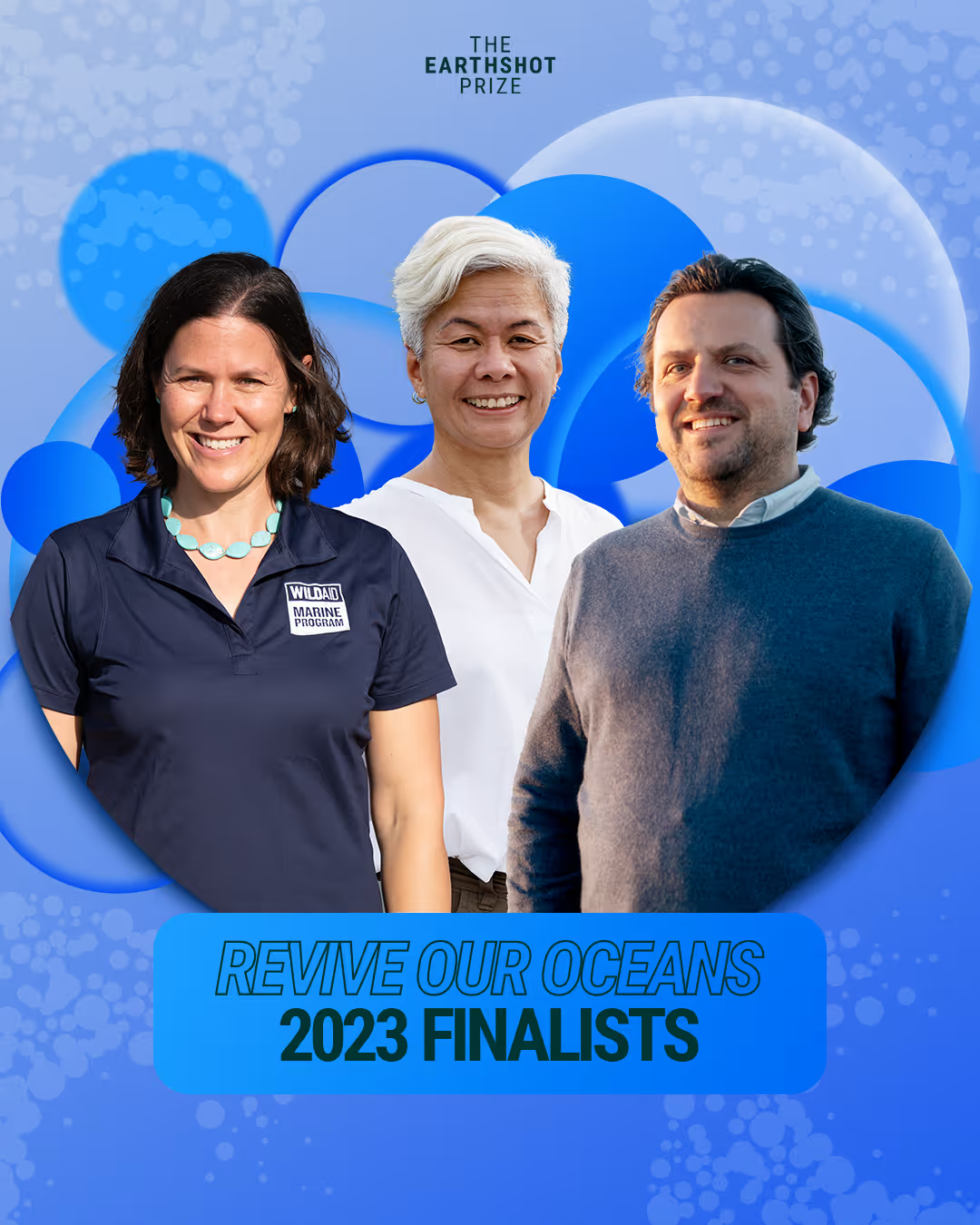
Prince William, Earthshot Prize name Coastal 500, with PHL, among finalists
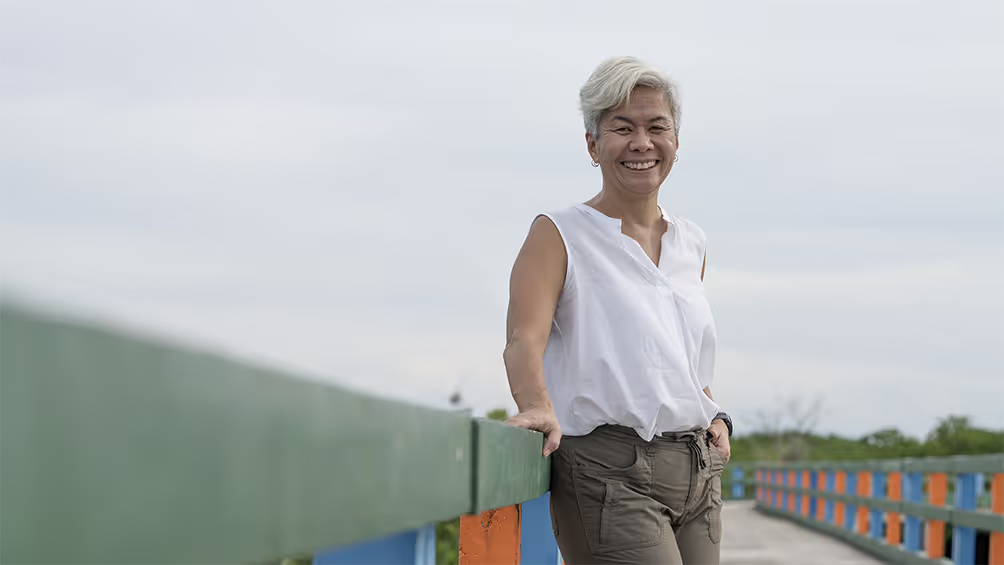
Coastal 500 named Earthshot Prize finalist
FOLLOW OUR MOVEMENt
Keep up with the leaders, ideas, and innovations advancing resilient coastal futures.