
FEATURED INSIGHTS

Latest Insights
Explore news, thought pieces, stories and statements from the network.
UNOC: To Meet Global Ocean Ambitions, Fund Local Solutions
Coastal rural communities across the Global South are home to some of the world’s most climate vulnerable populations. They face diverse threats – from rising seas and extreme weather to declining fish stocks and habitat degradation – and often lack critical resources, tools, and the technical expertise needed to respond effectively. Compounding these challenges is the fact that most climate adaptation financing, resources, and available guidance prioritize major cities and metropolitan areas, leaving smaller cities and rural municipalities behind.
Yet these frontline communities also hold critical solutions. Their rich shoreline biodiversity, smaller geographic footprints, tightly woven social fabrics, and agile governance structures provide essential building blocks for resilience and effective adaptation.
Approximately 22 million square kilometers of territorial waters globally contain our most vital coastal habitats. They are home to mangrove forests that dot the coastlines of coastal nations, as well as vital seagrasses and coral reefs, which thrive in the shallow, well-lit waters just offshore. Importantly, nearly 500 million people directly depend on the small-scale fisheries within these areas,making our coastal communities critical agents of change.
Resilience is built from the ground up, with the most important decisions and interventions occurring at the local level. In coastal communities worldwide, effective local governance is key to protecting, restoring and sustainably using marine ecosystems and fisheries that underpin livelihoods, wellbeing, and food security, while building social, environmental, and economic resilience in a changing climate. Local action is not only where global commitments come to life – it is where adaptation must happen first, and fast.
Coastal 500 is the largest global network of mayors and local government leaders committed to thriving coastal communities across the Global South. We are united in taking action to recover and sustain near-shore seas, sharing best practices, learning from each other, and advocating for our constituents’ access to coastal fisheries. The coastal communities we represent are already piloting innovative and scalable solutions – what we need now is a path to accelerate and expand them.
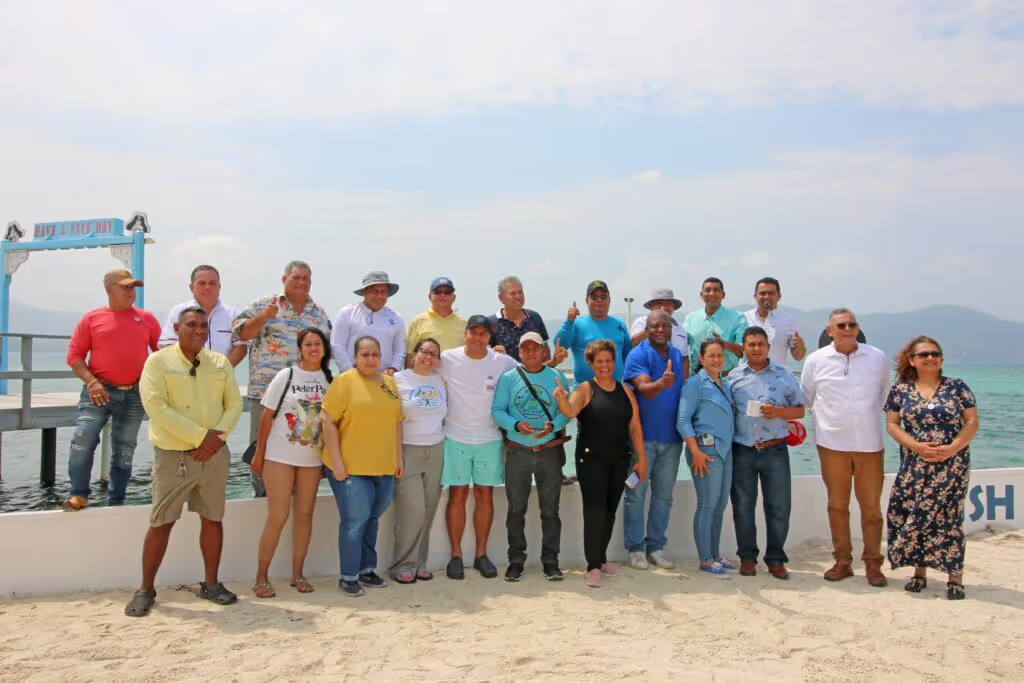
UNITED NATIONS OCEAN CONFERENCE: A SPOTLIGHT ON COASTAL COMMUNITIES
In June 2025, members of Coastal 500 will attend the United Nations Ocean Conference (UNOC) to elevate the voices of over 2.6 million people living along the coasts and bring our unique challenges and perspectives into the spotlight. As coastal municipal leaders, we understand the importance of coastal habitats for our communities and families. We are closest to our constituents’ needs, set local priorities, and can mobilize resources locally to drive change, making us essential partners in delivering global ocean and climate goals.
Our message is simple and urgent: Global and national marine conservation and climate resilience targets cannot be achieved without our collective engagement, commitment, and action. We call on the international community and national governments to recognize and empower local governments and communities as the first line of defense against climate threats. On behalf of our fellow Coastal 500 local leaders, we are urging for:
- Increased and diversified financing for local governments and frontline communities, along with strengthened capacity to access, absorb, and deploy funds effectively.
- Access to technical support, critical data, and proven practices from similar contexts to guide effective local interventions.
- Meaningful inclusion of local leaders and community perspectives in decision-making around national and global financing and the design and implementation of adaptation and ocean conservation initiatives that directly affect us.
- Creation and implementation of enabling legal and policy frameworks to secure local management rights over coastal and fishing resources so that local governments and communities can actively contribute to meeting global goals.
On behalf of our fellow Coastal 500 local leaders, we look forward to engaging with global policymakers, national government representatives, and civil society partners at UNOC to elevate this message and advance shared priorities. Together, we can accelerate local action, strengthen coastal resilience, and make real progress toward SDG 14 and a sustainable ocean future.
Header image: Local fishers sorting their catch. Santa Monica, Siargao Islands, Philippines. Photo Credit: Ferdz Decena for Rare.

Rare joins Revive Our Ocean coalition, pushing for community-led ocean conservation
With five years left to protect 30% of the ocean by 2030 (30×30), only 8% of the ocean is currently under protection. The creation of the traditional marine protected area (MPA) has been too slow and fragmented to meet the 30×30 goal.
To rapidly achieve 30×30 goals, governments, nonprofits, and philanthropists are looking to expand the ocean conservation toolbox to include locally-led solutions for protecting the ocean. And Rare is helping lead the way.
In May 2025, Rare announced its role as part of a newly-launched initiative called Revive Our Ocean, a collective of best-in-class organizations working to create effective locally-led marine protected areas. Led by Dynamic Planet and in coordination with the National Geographic Society’s Pristine Seas program, the initial members of the collective include COAST, the Oceano Azul Foundation, Cyclades Preservation Fund, the Mediterranean Conservation Society, and Atlas Aquatica.
.avif)
Revive Our Ocean is also a co-producer of noted documentarian David Attenborough’s latest film, Ocean. The film’s release coincides with his 99th birthday and World Ocean Day on June 8.
“Rare brings lessons from over 2,000 communities in eight countries, including the Philippines and Indonesia, to Revive Our Ocean,” said Rocky Sanchez Tirona, Managing Director of Rare’s Fish Forever coastal fisheries program. “This initiative allows us to reach many more countries where coastal ecosystems are so tied to the livelihoods and well-being of thousands of communities.”
One of Revive Our Ocean’s main goals is to build a global community of practice, united by a vision to restore the ocean by those who know their waters best. The coalition equips communities to share best practices and access a global network of top marine protection experts.
“Reviving marine life revives local economies and communities,” said Kristin Rechberger, founder of Dynamic Planet. “Effective MPAs are the building blocks of the regenerative blue economy. The world committed to quadrupling ocean protection in the next five years, and coastal communities know their waters best. Revive Our Ocean is a new model for coastal prosperity, inspiring communities to take action and helping make coastal marine conservation scalable and effective.”
As a core Revive Our Ocean collective member, Rare will accelerate community-led marine protected areas in the Philippines and Indonesia, supporting local leaders and communities to scale sustainable fisheries management and coastal protection.
“Rare is an important member of the Revive Our Ocean Collective,” added Rechberger. “Rare shows that small-scale fishing communities that include no fishing areas are helping revitalize coastal fisheries and ecosystems, making coastal marine protection good business.”
Rare also aims to leverage the collective power of the Coastal 500, a global network of mayors and local government leaders who share best practices on protecting their coastal waters and advocating for locally led solutions, as an enabler for scaling geographic reach and impact.
“As a mayor, Coastal 500 member, and an advocate for good local governance, I believe in the power of collective progress and resilience,” said Mayor Alfredo Coro II, Mayor of Del Carmen, Siargao, Philippines. “Our small actions leading towards working together with all stakeholders can influence positive change at the national and international levels.”
Revive Our Ocean also produced a series of powerful, cinematic short films to accompany the campaign’s rollout. These films illustrate the transformative impact of MPAs through real-world success stories and compelling testimonies. They will spotlight four key groups—fishers, tourism leaders, mayors, and heads of state—all critical to advancing ocean protection. Mayor Coro is featured in the ‘Mayor’ short film.
While 30×30 commitments are negotiated at the national and international levels, its impact is felt locally. The Revive Our Ocean coalition recognizes that global change will not be possible without investment in local leadership and effective local coastal governance by communities on the frontlines.
“Being a part of Revive Our Ocean will strengthen, not just Del Carmen’s waters, but the waters of all frontline coastal communities,” said Coro. “This is local action for global impact.”
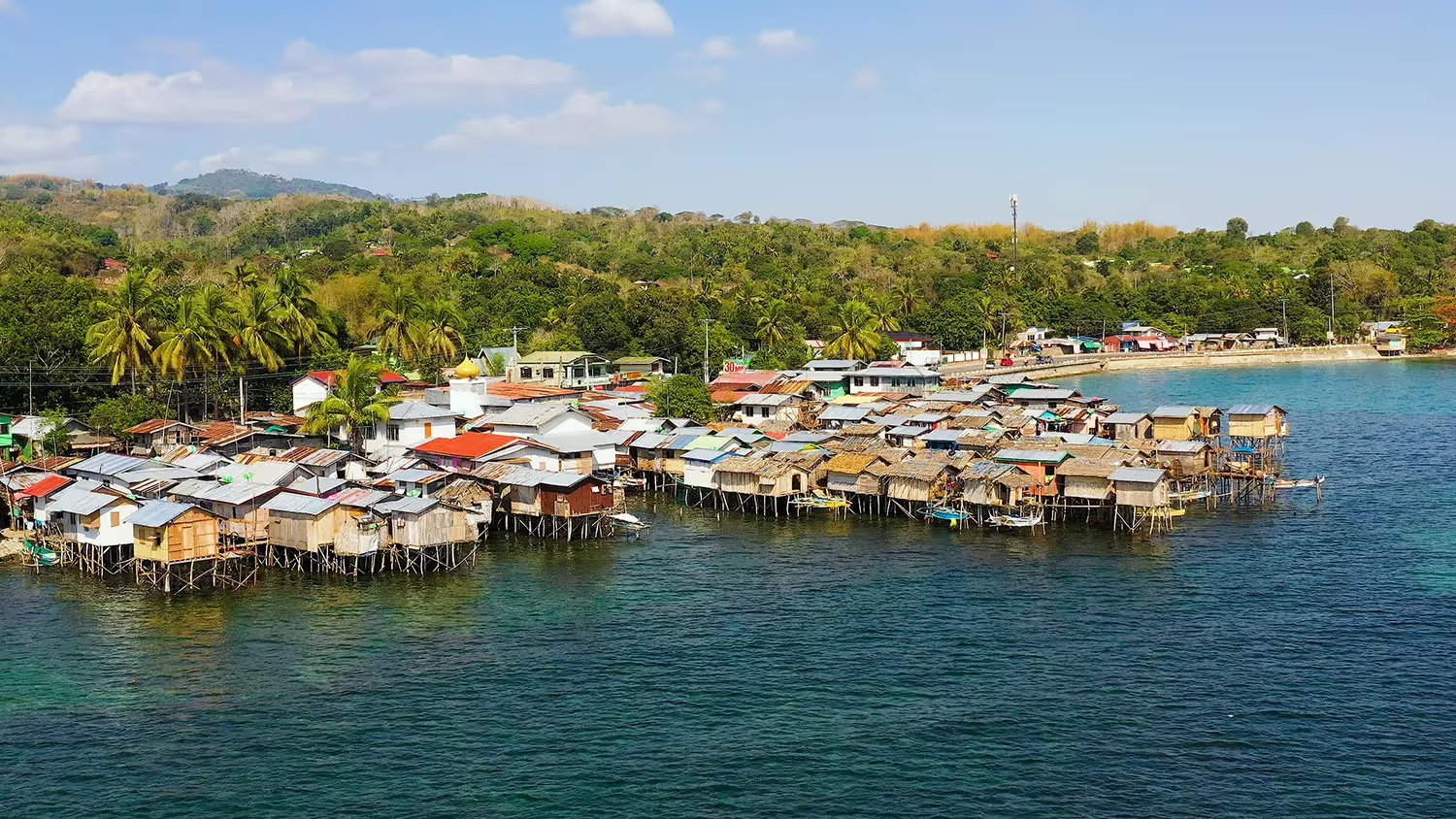
Five reasons why local leaders hold the key to community resilience
1. Local leaders are in touch with their community’s needs
Through local councils, community events, and daily casual chit chat, mayors deeply engage with the community they serve. This close connection fosters a rich understanding of community members’ everyday challenges, needs, and aspirations. Mayors and other local leaders leverage their awareness of community needs and build cross-sector partnerships to drive community resilience from the ground up.

2. When disaster strikes, it’s local leaders who answer the call
When disasters like coastal flooding, drought, crop failure, or powerful storms strike, communities look to mayors for immediate action and leadership. From coordinating emergency services to rallying local resources and crafting rapid response strategies, it’s often mayors on the frontlines who respond first. “Why not listen to mayors at the global level, or at the national and international level? Because we mayors are the ones at the forefront of every problem and situation,” says Juan Ramón Manaiza, Mayor of the municipality of Limón in Honduras, and a member of the Coastal 500.
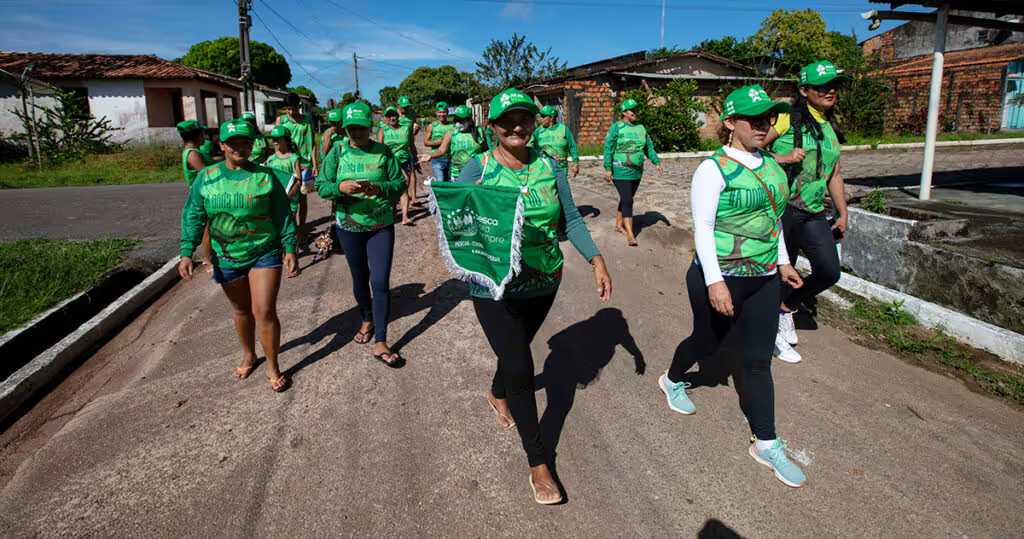
3. Mayors and local leaders serve in the sweet spot between community and national-level bureaucracy to amplify solutions
Mayors and local leaders are uniquely positioned to drive impactful solutions as they work in the middle ground between local communities and national governments. They are embedded in their constituents’ day-to-day realities, which helps them craft tailored and responsive policies. Local leaders also often have the administrative reach and political visibility to scale successful initiatives and influence broader systems.
“Our communities, our municipalities, depend on our ability to articulate not only among ourselves as local governments, but also with the private sector and international cooperation,” says Brayhann Camilo Velasquez Suarez, Mayor of Cubarral in Meta, Colombia and a member of the Ariari Sustainable Mayors Network, which Rare helped launch. “Today, it’s important to have collaborative platforms like the ones Rare is working with through its network of mayors. These platforms allow us to raise proposals built from a local perspective but with a regional scope.”

4. Local leaders spark local action
“Real climate solutions have to be rooted in local leadership because that’s where the change actually happens,” says Heather McTeer Toney, former Mayor of Greenville, Mississippi and member of Rare’s Board of Trustees. Mayors are trusted messengers who can shape norms, inspire action, and create the enabling conditions for communities to adopt sustainable practices to combat climate change. From reducing chemicals in farming to fishing sustainably and joining savings clubs to build financial resilience, mayors help turn values into daily actions and scale individual change for collective impact.
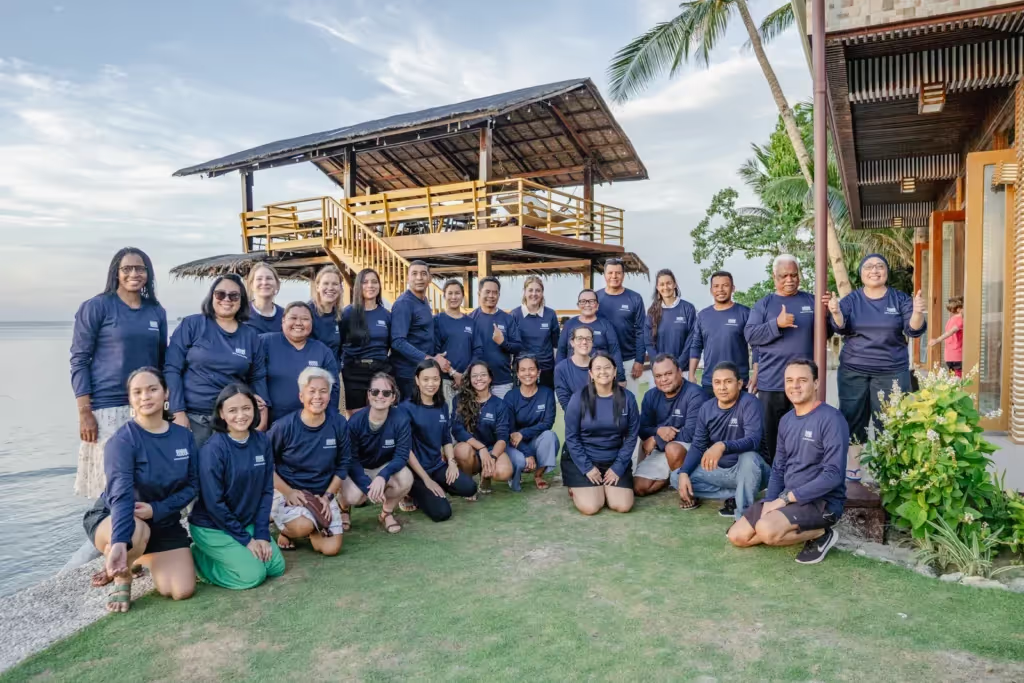
5. Mayors and local leaders don’t stand alone
Local leaders can be powerful agents of change, but they shouldn’t have to act alone. Rare understands what makes mayors effective — deep community ties, frontline urgency, and an ability to scale local solutions — and is building networks and tools to support them. Through initiatives like the Coastal 500 and the Ariari Sustainable Mayors Network, Rare unites mayors across fishing and farming communities to champion sustainable management, exchange best practices, and amplify their collective voice on national and global stages. From technical training to peer learning, Rare’s people-centered approach strengthens local leadership and fuels community-driven resilience.
Five reasons to protect the community seas
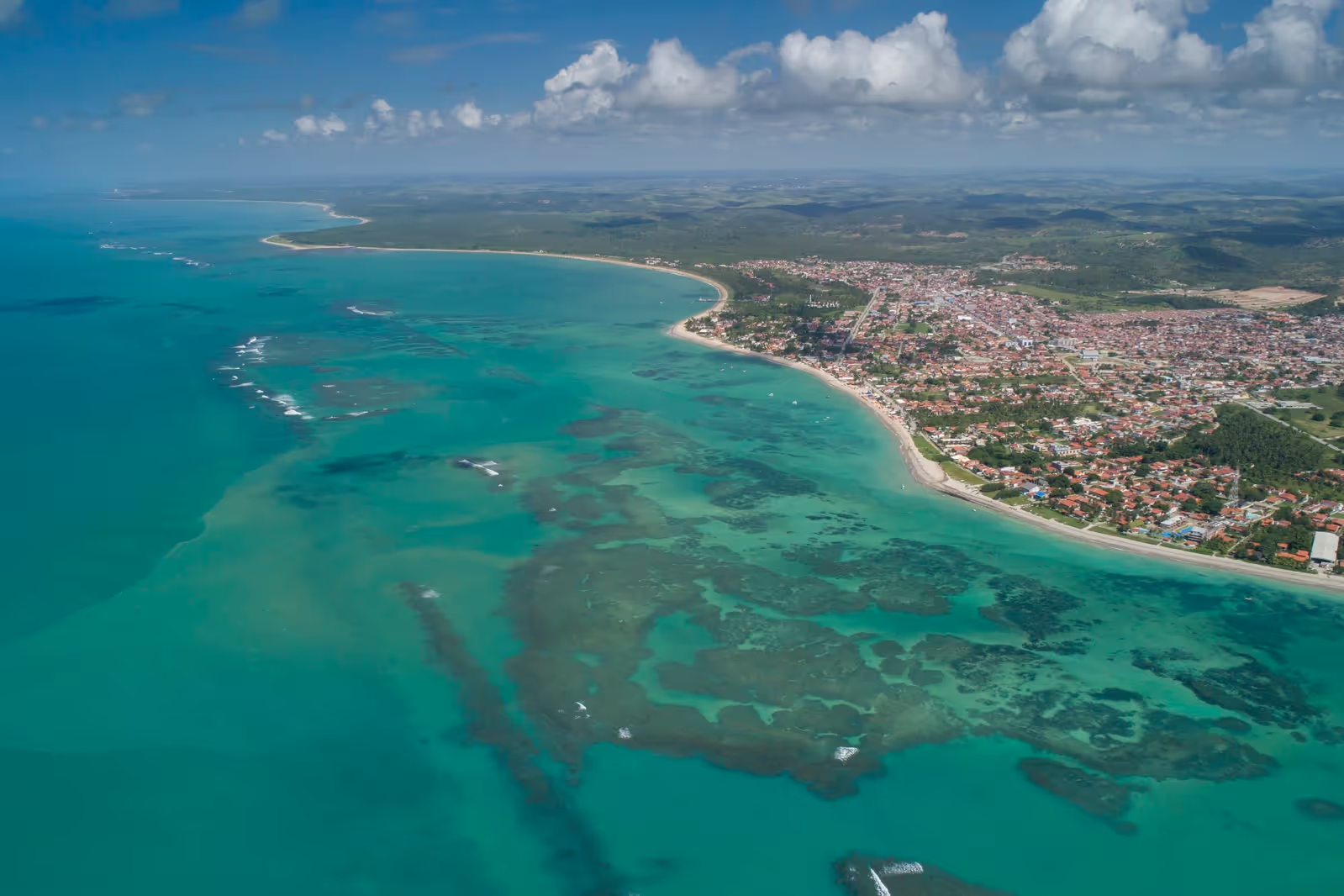
Unsurprisingly, our oceans are essential to our planet's health and global well-being. But did you know that a small, yet mighty portion of the ocean is especially critical for human livelihoods and marine biodiversity? The community seas — the coastal waters extending up to 12 nautical miles from shore — make up only 6% of the ocean. Yet, they're where the highest concentrations of marine biodiversity intersect with the highest human needs. Despite their importance, this ocean belt is drastically overlooked and underfunded.Rare is a global leader in managing and protecting our community seas to revitalize our oceans and support the coastal communities that depend on them. Here are five urgent reasonsto protectthe community seas:

1. They support the livelihoods of 500 million people
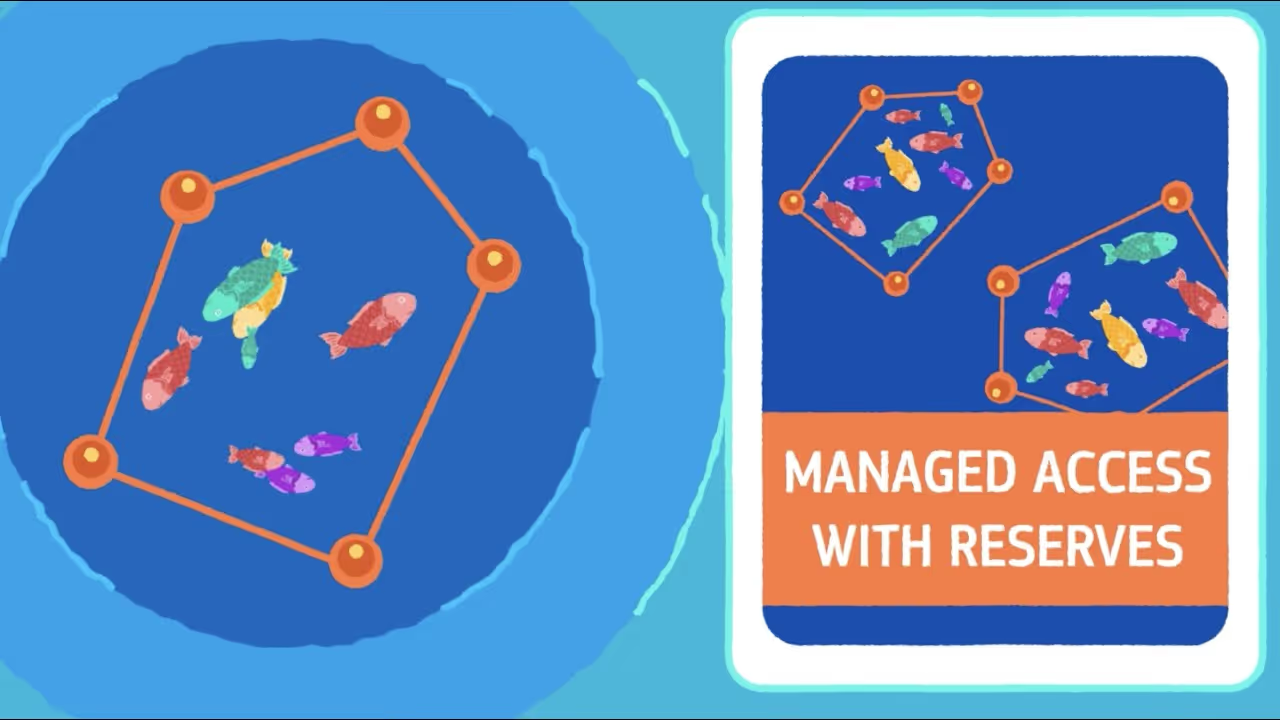
Nearly 500 million people at least partially depend on small-scale fisheries for livelihood, and most cast their nets in the community seas. But alarmingly, only 8% of the ocean is protected, and the vast majority of that protection excludes the waters that sustain coastal communities, particularly in the Global South. Investing in community-led fisheries management — like Managed Access with Reserves and Other Effective Area-Based Conservation Measures (OECMs) — ensures both people and marine ecosystems can thrive together.
2. They are vital for global food security
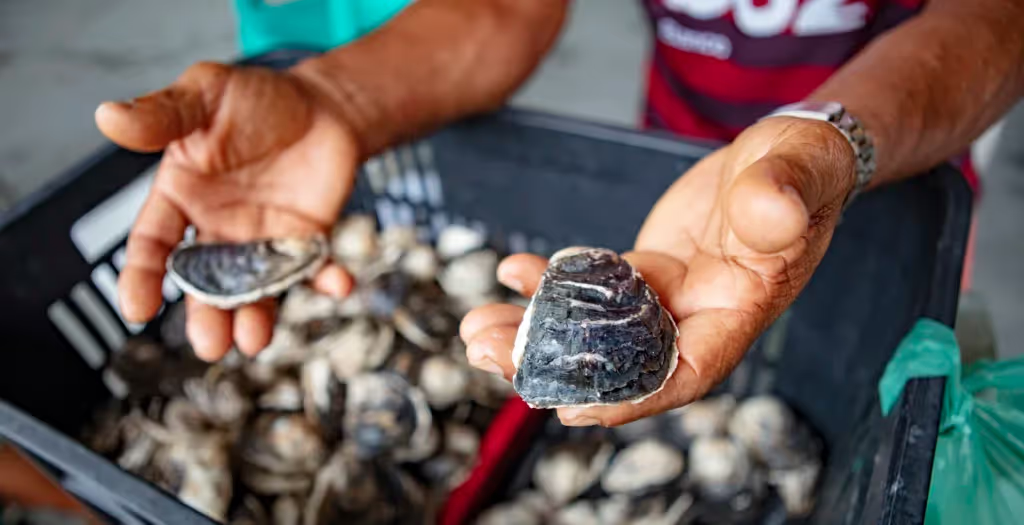
Small-scale artisanal fishers produce 40% of the world’s total fish catch and help feed 429 million people worldwide. But here’s the not-so-great news: over 35% of the world’s fisheries face overfishing or overexploitation, putting food security at risk. By protecting the community seas and promoting sustainable fisheries practices, we can ensure millions of people continue to have access to nutritious seafood while keeping ocean ecosystems healthy for future generations.
3. They safeguard biodiversity and blue carbon ecosystems
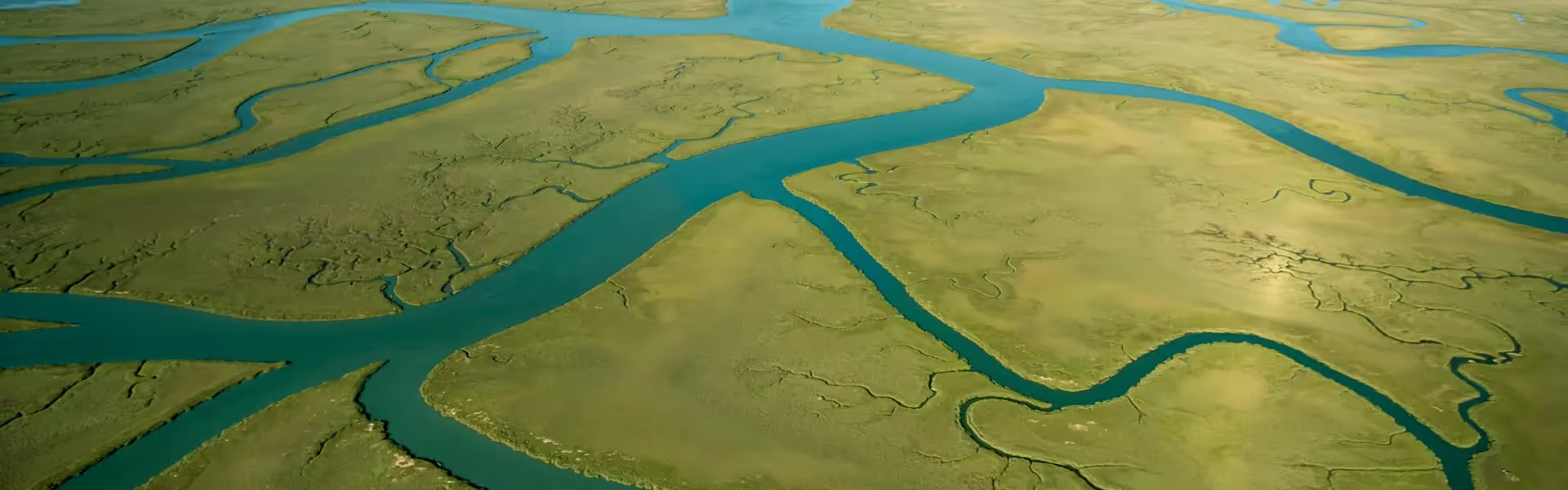
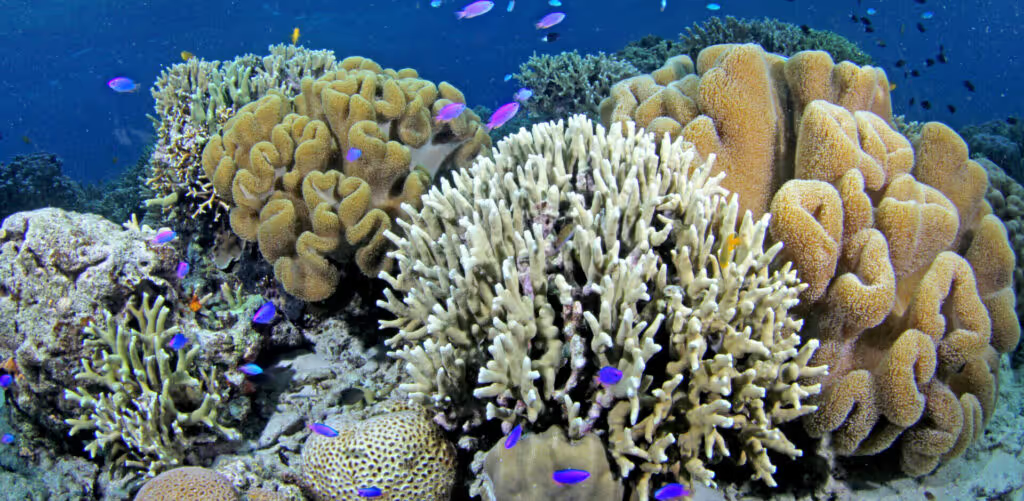
Don’t let the community seas’ small size fool you. From microalgae and crustaceans to sea turtles and whales, coastal waters house nearly 90% of all marine life and 83% of coral reefs. This vital beltline also contains all the world’s mangroves, seagrass beds, and tidal salt marshes — “blue carbon ecosystems“ that filter pollutants, serve as nursing grounds for vibrant ocean life, and sequester and store carbon dioxide. Protecting these ecosystems is one of the most effective ways to fight climate change and protect biodiversity at the same time.

4. They are key to advancing gender equity
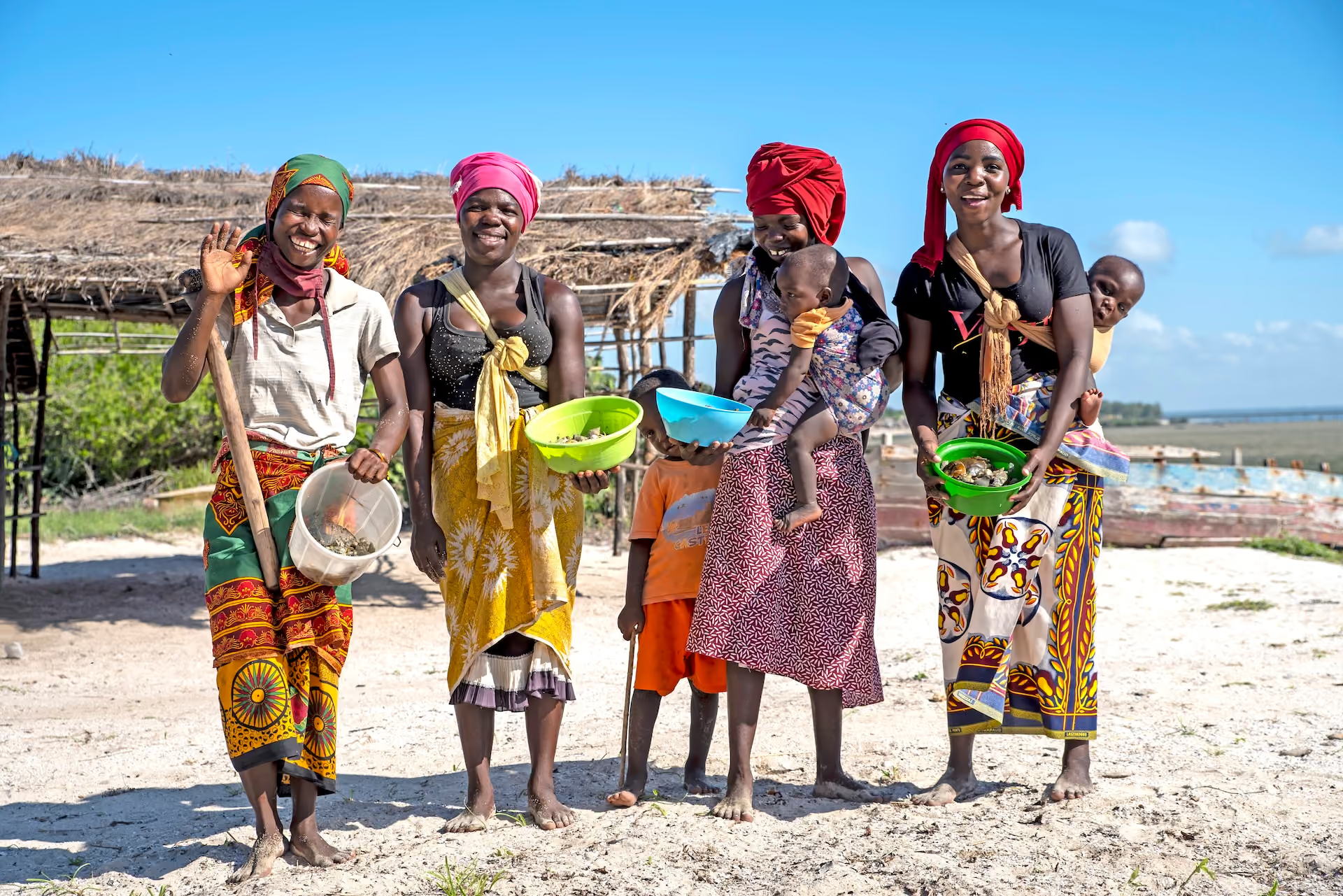
Women are the unsung heroes of small-scale fishing. They harvest crustaceans, process fish, and sell seafood at the market, fueling food security and income for their families and communities. But here’s the catch: women’s contributions to the fishing sector have been historically undervalued and overlooked, leaving them with little decision-making power. Protecting and investing in the community seas unlocks a vital opportunity to advance gender equity. Strengthening women’s voices and enhancing their decision-making power in fisheries management can help the community seas flourish for generations.
5. They strengthen climate resilience
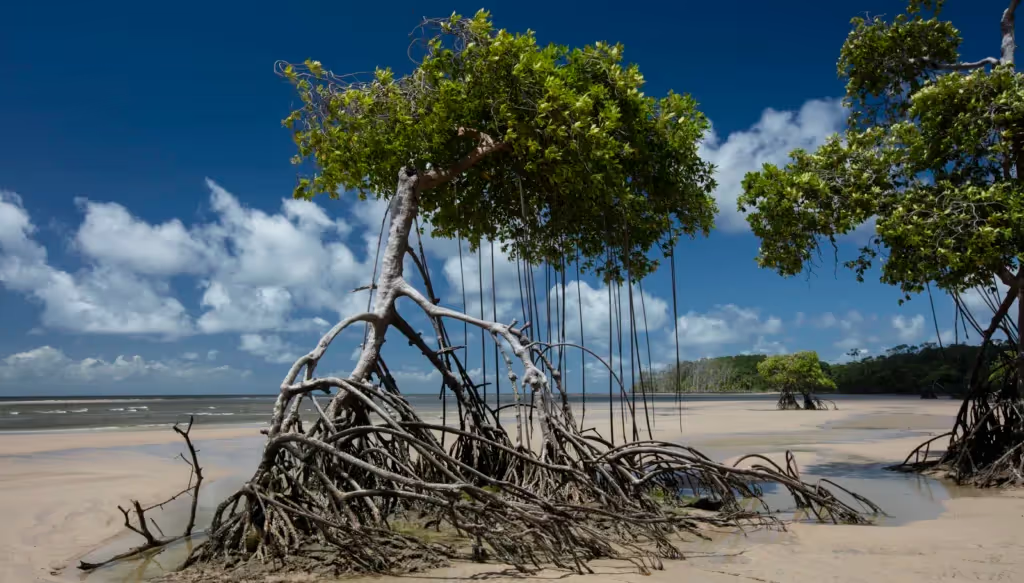
Coastal communities are among the most vulnerable to climate change. Rising sea levels and growing natural disasters endanger coastal communities like never before, while ocean acidification, coral bleaching, and rising sea temperatures threaten fisheries and food security. Sustainable fisheries and healthy marine ecosystems strengthen climate resilience and help coastal communities adapt to a changing environment. When we protect the community seas, we safeguard mangroves that buffer storm surges, coral reefs that house biodiversity, and blue carbon ecosystems that sequester carbon dioxide.
Take action today
The community seas sustain life above and below the surface — but they need our help. Join Rare in protecting these vital waters and those who depend on them.
Nine big wins for ocean conservation in 2024
The year 2024 marked a pivotal moment for ocean conservation, as nations and stakeholders from the global to local level accelerated efforts to tackle the interconnected challenges facing coastal communities worldwide. New initiatives, including blue carbon ventures, innovative policy frameworks, and strategic climate investments, are advancing sustainable solutions with the livelihoods of those who depend on them.
Below, we highlight nine major ocean conservation achievements from 2024, showcasing the growing momentum for ocean conservation.
1. Pacific Island countries and territories unite to protect one billion hectares of ocean
At the 28th UN Climate Conference in Dubai on December 3, 2023, Tonga and Palau announced “Unlocking Blue Pacific Prosperity (UBPP),” a bold initiative among Pacific Island countries and territories to conserve and sustainably manage 100% of the Blue Pacific Continent – more than one billion hectares of ocean. Led by Pacific Island Leaders, UBPP unlocks high-impact investment to scale ocean action and supports the prosperity, food security, climate resilience, health, and cultural identity of Pacific Islanders. Seed funding of US $100 million from the Bezos Earth Fund will support efforts to raise US $500 million by 2030.
Why it matters: The impacts of climate change, like ocean acidification, rising temperatures, and powerful storm surges, disproportionately impact the Blue Pacific despite island nations doing the least to cause the problem. Protecting and managing the Blue Pacific Continent prioritizes achieving conservation outcomes and leveraging the return on investment into Pacific Island economies.

2. Greece bans bottom trawling in marine protected areas
At the Our Ocean Conference on April 16, Greece announced a ban on bottom trawling in its national parks and marine sanctuaries. This historic ban will take effect in national parks by 2026 and all marine protected areas by 2030. In addition to banning bottom trawling, Greece also created the Ionian Marine National Park and the South Aegean Marine Protected Area, two new areas that will protect vital marine mammals, including the common dolphin, Cuvier’s beaked whale, and Mediterranean monk seal.
Why it matters: Greece is the first European country to ban bottom trawling in marine protected areas and sanctuaries. To ensure the effective implementation of the global 30×30 target of protecting 30% of the ocean by 2030 — and ensure that protected areas are more than paper parks — more nations must champion similar legislation to protect marine ecosystems from damaging industrial fishing.
3. The International Tribunal for the Law of the Sea declares that nations must protect oceans from greenhouse gas emissions
In a historic court ruling on May 21, 2024, the International Tribunal for the Law of the Sea (ITLOS) ruled that anthropogenic atmospheric greenhouse gases absorbed by the ocean constitute “pollution of the marine environment” under the United Nations Convention on the Law of the Sea (UNCLOS). The first-ever climate advisory opinion from an international court also determined that UNCLOS member states have a legal obligation to prevent, reduce, and control greenhouse gas emissions.
Why it matters: 2024 is set to be the hottest year on record for the ocean, as greenhouse gas emissions spiked temperatures on land and sea. The ITLOS ruling marks a significant milestone in recognizing nations’ legal obligations to manage their greenhouse gas emissions for the ocean’s health. It sets a precedent for reinforcing nations’ legal accountability in mitigating climate change, which will likely influence future decisions by international bodies and domestic courts.
4. Coastal 500 strengthens community-led ocean protection
Coastal 500 is the largest global network of mayors and local government leaders committed to protecting and restoring coastal ecosystems to curb climate change and safeguard ocean biodiversity. On September 9, Coastal 500 welcomed 48 new leaders from Southeast Sulawesi, Indonesia. When local leaders join Coastal 500, they commit to leading their constituencies toward practices that empower communities with clear access rights to fisheries and sustainable governance. Since its launch in 2021, the network has grown to over 340 mayors. The network aspires to reach 500 coastal champions by the end of 2025.
Why it matters: The Community Seas, extending up to 12 nautical miles from shore, contain the ocean’s highest concentration of biodiversity intersecting with human activity. Nearly 500 million people worldwide depend on these coastal waters and small-scale fisheries for livelihood and food security. Coastal 500 elevates small-scale fishing communities globally to strengthen social capital, increase climate resilience, and protect coastal resources.
5. The US announces a National Ocean Biodiversity Strategy
On June 3, 2024, the White House Office of Science and Technology Policy announced the United State’s National Ocean Biodiversity Strategy to unite scientists and share knowledge for ocean conservation. Created by the Smithsonian and National Oceanic and Atmospheric Association (NOAA), the new strategy establishes a procedure for collecting, managing, and applying ocean biodiversity data for evidence-based protection, conservation, restoration, and sustainable use.
Why it matters: The United States has one of the largest ocean territories in the world, which creates challenges in documenting and understanding marine species and ecological systems. The U.S. National Ocean Biodiversity Strategy will support greater collaboration among federal, Tribal, state, territorial, local, and non-governmental partners, helping to unite data documentation and inform decision-making.
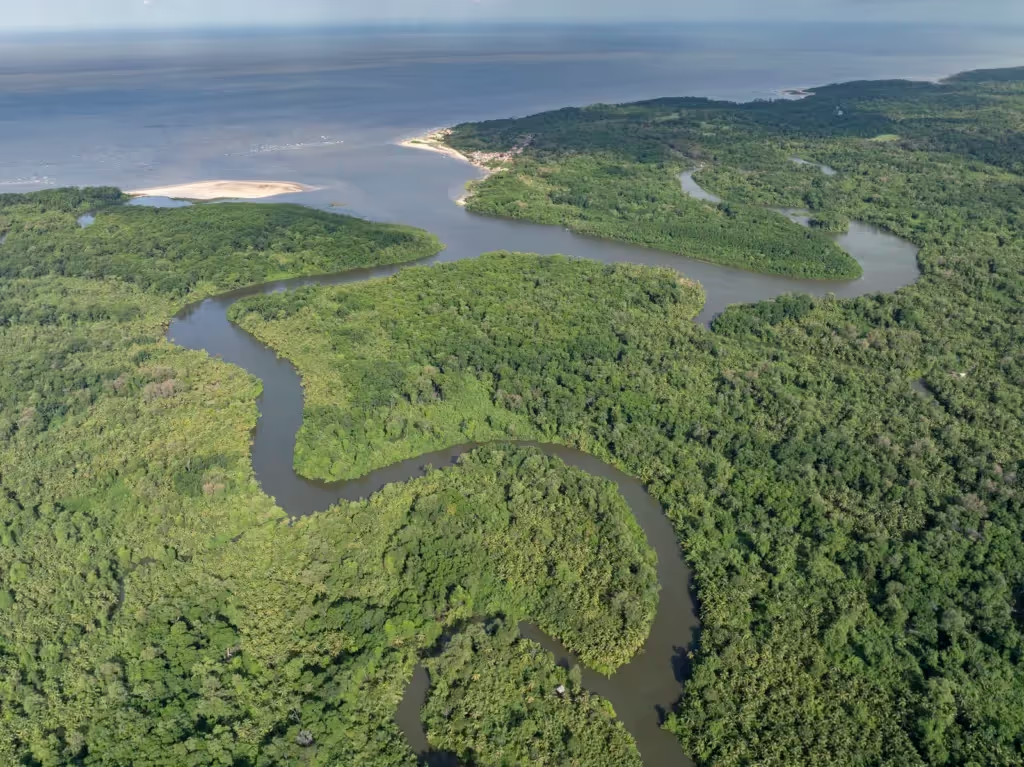
6. IUCN adds Brazil’s RESEX Soure to the Green List
The IUCN Green List of Protected and Conserved Areas recognizes sites achieving effective and equitable outcomes for people and nature. On October 15 at the Global Biodiversity Conference (COP16), Brazil’s Soure marine extractive reserve (RESEX) became the country’s first conservation area added to the list. Located on Marajó Island in Pará at the Amazon River’s mouth, the reserve’s success is bolstered by Rare Brazil, which has supported its governance since 2023. Rare facilitates stakeholder coordination, identifies needs, and ensures the management body operates effectively, including organizing regular, structured meetings in partnership with the Chico Mendes Institute for Biodiversity Conservation.
Why it matters: More than half of the world’s mangrove ecosystems are at risk of collapse, according to IUCN’s first global mangrove assessment. Brazil is working towards protecting its mangrove ecosystems, some of the world’s most extensive mangrove forests, which are essential to local economies, food security, community livelihood, and climate resilience. Just seven months prior, in March 2024, Brazil declared two new marine extractive reserves in Pará state, placing about 75,000 hectares of mangroves and other coastal ecosystems under protection. Recognizing RESEX Soure on the Green List site draws global attention to Brazil’s Amazon coast leading to UNFCCC COP 30 in Belém in November 2025. Brazil’s marine extractive reserves are a shining example of the importance of supporting financial investment in mangrove ecosystems for climate resilience and the livelihoods of coastal communities.
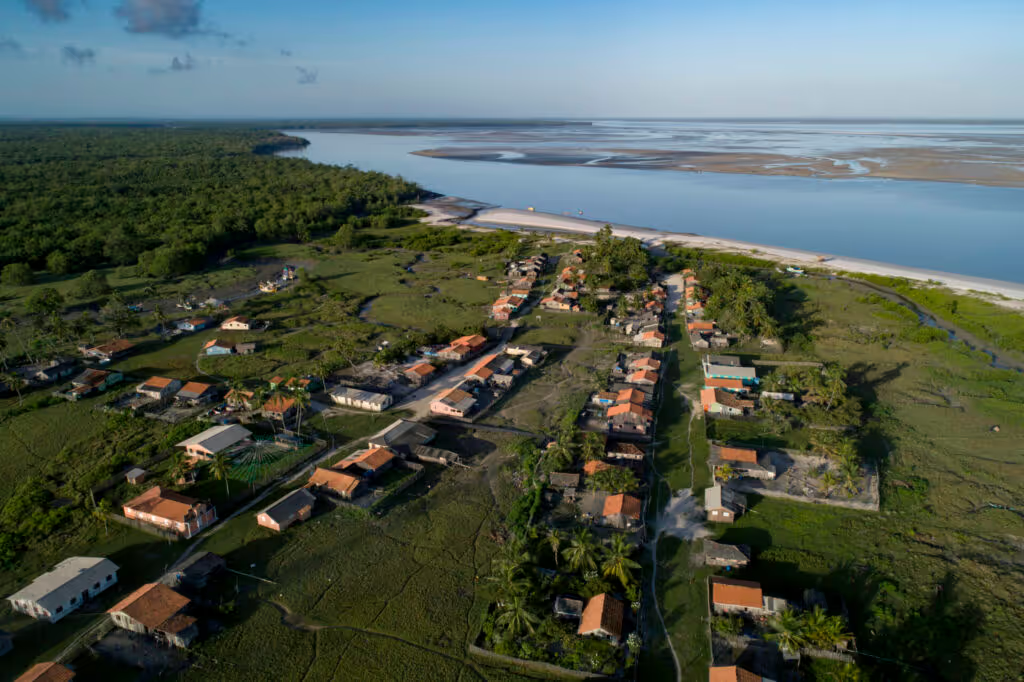
7. France and Brazil join forces to center ocean-climate action on the international diplomatic agenda for 2025
On November 19, 2024, Brazil’s President Luiz Inácio Lula da Silva and France’s President Emmanuel Macron committed to a multi-lateral strategic framework to protect the ocean, biodiversity, and coastal ecosystems. They also renewed their commitment to accelerating ocean-climate action as part of the global agenda in 2025.
Why it matters: France will host the 3rd UN Ocean Conference (UNOC) in Nice in June 2025, while Brazil will host the 30th UN Climate Conference in Belém in late 2025 — two monumental conventions that will help set the stage for global ocean-climate action through 2030. France and Brazil call on all countries to review their national climate and biodiversity strategies to include ocean action and strengthen coastal communities’ resilience to climate change.
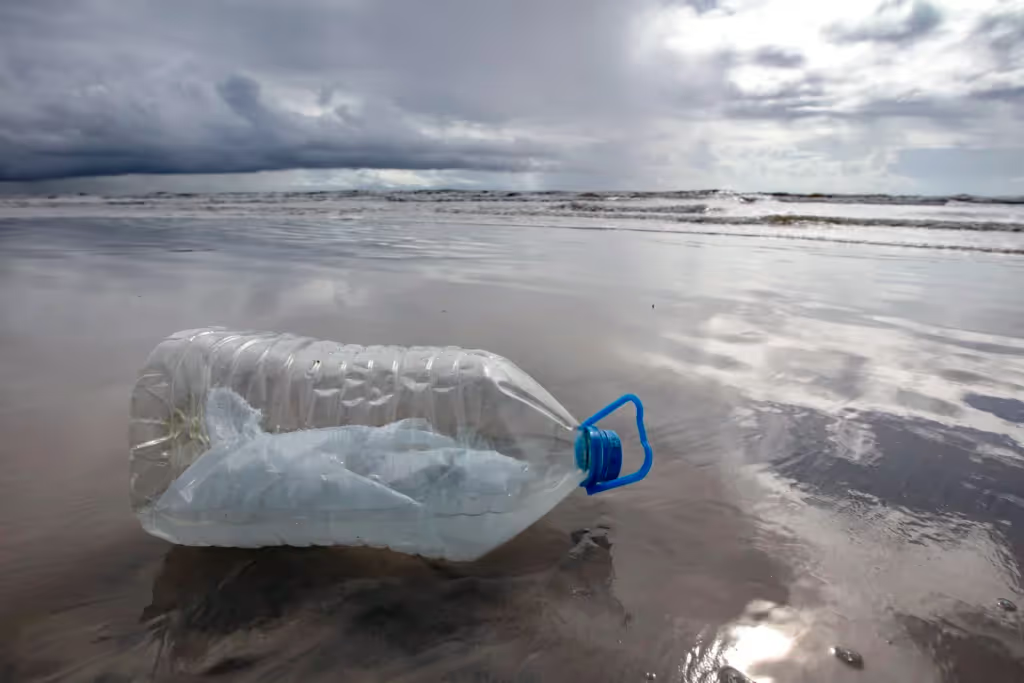
8. Global leaders debate a new Global Plastics Treaty to turn off the plastic tap in the oceans
In November 2024, 175 countries met for the fifth time to continue negotiating a global treaty addressing plastic pollution, with debates on regulating plastics throughout their life cycle. The treaty aims to tackle microplastics, fishing gear, and ghost gear while bridging financial gaps for Small Island Developing States, which are disproportionally impacted by marine plastic pollution. While countries could not reach a final decision in 2024, they will reconvene in 2025.
Why it matters: By 2050, more plastic will be in the ocean than fish. Globally, plastic production and use is set to reach 736 million tonnes by 2040, up 70% from 435 million tonnes in 2020. The burden of marine plastic pollution has historically fallen on coastal communities disproportionately impacted by plastic that washes on their shores. The Global Plastics Treaty can address and mitigate the plastic crisis by addressing the root causes of marine plastic pollution.

9. Progress towards 30×30 in the ocean: The High Seas Treaty gains momentum, with the first 15 countries ratifying it
The High Seas Treaty, a landmark agreement from 2023 aimed at conserving marine biodiversity and sustainably using resources in areas beyond national jurisdiction, saw significant progress in 2024. Palau and Chile were the first to ratify the treaty in January 2024, with 13 additional countries following suit for 15 ratifications.
Why it matters: Two-thirds of the ocean lies beyond one country’s jurisdiction. This area is critical for ocean biodiversity, fish stocks, carbon storage, and global connectivity. The High Seas Treaty closed a legal vacuum in managing this area, including opening up the possibility of establishing new marine protected areas for high seas. While countries agreed on the treaty’s text in 2023 after a decade of negotiations, at least 60 countries must formally ratify it to go into effect. National governments must accelerate action for ratification ahead of the 3rd UN Ocean Conference in June 2025. Achieving the 30×30 target in the ocean requires a suite of ocean management tools, from high-seas MPAs to coastal protections that balance conservation with communities’ sustainable use of resources.
Looking ahead
From local communities to global treaties, 2024 demonstrated the power of collective action in ocean conservation. As we look to 2025 and beyond, these achievements remind us that the future of our oceans depends on continued collaboration among nations, communities, and individuals. Together, we can ensure a sustainable future for our planet and its oceans.
Photo Credits: Jessie Alpert, Enrico Marone, and Bernice Beltran for Rare, Jeremy Bishop for Pexels, Francesco Ungaro for Pexels

Coastal 500 welcomes 48 new local leaders from Indonesia into its global network
SEPTEMBER 9, 2024 (S.E. SULAWESI, INDONESIA) Today, the Coastal 500, a global network of mayors and local government leaders committed to working towards thriving and prosperous coastal communities, welcomed 48 new local leaders from Southeast Sulawesi, Indonesia.
The new members, which include village leaders from coastal communities as well leaders outside the Marine Access and Reserves (MA+R) area, attended a pledging event in Southeast Sulawesi’s Muna District, held in partnership with the Muna District Government’s Village Leader Partnership.
“Village leaders are an integral part of life in Indonesia,” says Diana Chaidir, Senior Manager of Policy in Indonesia at Rare. “Their inclusion in Coastal 500 helps to solidify the role that local leaders play in the protection of vital marine ecosystems and resources.”
In 2014, Indonesia adopted a new Village Law to reinforce local self-government, which recognized the importance of the village as the governmental unit closest to the community. The Village Leader Partnership in Muna showcases how collective efforts can strengthen harvest control strategies, protect marine ecosystems, and effectively utilize village funds.
“Village Heads outside the MA+R area are fully aware that their communities are largely dependent on the availability of marine resources,” says Chaidir. “The most important thing for them is that a shared and broader awareness will be built to guard their respective areas.” The cohort plans to work together to strengthen village planning development regarding the marine and fishing sectors on common interests, such as the need to have joint surveillance.
Mr Bachrun Labuta, Regent of Indonesia’s Muna District, was inspired to develop this cohort of local leaders after attending the first international convening of Coastal 500 leaders this past June. He saw an opportunity to strengthen village planning development by utilizing the village funds within the constraints of Indonesian law, which limits the district and village governments’ authority in marine waters.
“We know from experience that a mayor who is motivated and inspired can move a community to action,” said Rocky Sanchez Tirona, Managing Director of Fish Forever at Rare. “We’re thrilled that these 48 local leaders will be joining our international partnership to learn from each other, share their challenges and solutions, and get support from others who understand the challenges that are unique to coastal communities.”
When local leaders pledge to join the Coastal 500, they commit to leading their constituencies toward practices that empower communities to have clear access rights to their fisheries, while promoting sustainable fishing practices and good governance. Rare and the Coastal 500 are made possible with generous support from Bloomberg Philanthropies’ Bloomberg Ocean Initiative and the Swedish Postcode Lottery Foundation.
The 48 inductees will join Mr Bachrun Labuta in the second week of September for an official celebration and signing of the Coastal 500 pledge. The addition of these 48 local leaders brings the Coastal 500’s global growing network to over 340 members.
###
About Coastal 500
The Coastal 500 consists of more than 340 mayors or their equivalent from communities in Brazil, Guatemala, Honduras, Indonesia, Micronesia, Mozambique, Palau, and the Philippines. These leaders represent communities adjacent to coastal waters, which are high in biodiversity and critical habitats but are under enormous pressure from climate change, overfishing, pollution, and other human activities. The Coastal 500 leaders commit themselves and their communities to protecting and restoring coastal ecosystems to safeguard ocean biodiversity, which improves the livelihoods and food security for half a billion people worldwide, while curbing climate change. Learn more at coastal500.org.
About Rare
Rare is an international non-profit organization specializing in social change for people and the planet. For nearly 50 years, Rare has partnered with individuals, communities, and local leaders on the frontlines of conservation to promote the adoption of sustainable practices. With a behavior-based approach, Rare empowers individuals and communities to better manage and protect nature, on which all of us depend. Learn more at rare.org.
Bahasa
Coastal 500 Menyambut 48 Pemimpin Lokal Baru dari Indonesia ke dalam Jaringan Global
Para anggota baru ini bergabung dengan jaringan pemimpin pemerintah daerah di seluruh dunia yang berkomitmen untuk memajukan dan menyejahterakan masyarakat pesisir
9 SEPTEMBER 2024 (SULAWESI TENGGARA, INDONESIA) Hari ini, Coastal 500, sebuah jaringan global yang terdiri dari para walikota dan pemimpin pemerintah daerah yang berkomitmen untuk bekerja demi masyarakat pesisir yang berkembang dan sejahtera, menyambut 48 pemimpin lokal baru dari Sulawesi Tenggara, Indonesia.
Para anggota baru yang terdiri dari para pemimpin desa dari masyarakat pesisir dan juga para pemimpin di luar wilayah Marine Access and Reserves (MA+R) ini menghadiri acara pengikraran di Kabupaten Muna, Sulawesi Tenggara, yang diselenggarakan melalui kerja sama dengan Kemitraan Pemimpin Desa (Village Leader Partnership) dari Pemerintah Kabupaten Muna.
“Para pemimpin desa merupakan bagian yang tidak terpisahkan dari kehidupan di Indonesia,” ujar Diana Chaidir, Manajer Senior Kebijakan di Indonesia di Rare. “Keikutsertaan mereka dalam Coastal 500 membantu memperkuat peran yang dimainkan oleh para pemimpin lokal dalam melindungi ekosistem dan sumber daya laut yang vital.”
Pada tahun 2014, Indonesia mengadopsi Undang-Undang Desa yang baru untuk memperkuat pemerintahan lokal, yang mengakui pentingnya desa sebagai unit pemerintahan yang paling dekat dengan masyarakat. Kemitraan Kepala Desa di Muna menunjukkan bagaimana upaya kolektif dapat memperkuat strategi pengendalian panen, melindungi ekosistem laut, dan memanfaatkan dana desa secara efektif.
“Para Kepala Desa di luar kawasan MA+R menyadari sepenuhnya bahwa masyarakat mereka sangat bergantung pada ketersediaan sumber daya laut,” kata Chaidir. “Yang terpenting bagi mereka adalah terbangunnya kesadaran bersama dan lebih luas untuk menjaga wilayah masing-masing.” Kelompok ini berencana untuk bekerja sama untuk memperkuat pengembangan perencanaan desa terkait sektor kelautan dan perikanan untuk kepentingan bersama, seperti kebutuhan untuk melakukan pengawasan bersama.
Bachrun Labuta, Bupati Kabupaten Muna, terinspirasi untuk mengembangkan kelompok pemimpin lokal ini setelah menghadiri pertemuan internasional pertama dari 500 pemimpin Pesisir pada bulan Juni lalu. Ia melihat adanya peluang untuk memperkuat perencanaan pembangunan desa dengan memanfaatkan dana desa dalam batasan hukum di Indonesia yang membatasi kewenangan pemerintah kabupaten dan desa di perairan laut.
“Kami tahu dari pengalaman bahwa seorang walikota yang termotivasi dan terinspirasi dapat menggerakkan masyarakat untuk bertindak,” ujar Rocky Sanchez Tirona, Managing Director Fish Forever di Rare. “Kami sangat senang bahwa 48 pemimpin lokal ini akan bergabung dengan kemitraan internasional kami untuk belajar dari satu sama lain, berbagi tantangan dan solusi, dan mendapatkan dukungan dari pihak lain yang memahami tantangan yang unik bagi masyarakat pesisir.”
Ketika para pemimpin lokal berjanji untuk bergabung dengan Coastal 500, mereka berkomitmen untuk memimpin konstituen mereka menuju praktik-praktik yang memberdayakan masyarakat agar memiliki hak akses yang jelas terhadap perikanan mereka, sambil mempromosikan praktik penangkapan ikan yang berkelanjutan dan tata kelola yang baik. Rare dan Coastal 500 dapat terlaksana berkat dukungan yang besar dari Bloomberg Philanthropies’ Bloomberg Ocean Initiative dan Swedish Postcode Lottery Foundation.
Ke-48 orang yang dilantik akan bergabung dengan Bachrun Labuta pada minggu kedua bulan September untuk perayaan resmi dan penandatanganan ikrar Coastal 500. Bergabungnya 48 pemimpin lokal ini membuat jaringan global Coastal 500 berkembang menjadi lebih dari 340 anggota.
###
Tentang Coastal 500
Coastal 500 terdiri dari lebih dari 340 walikota atau yang setara dari komunitas di Brasil, Guatemala, Honduras, Indonesia, Mikronesia, Mozambik, Palau, dan Filipina. Para pemimpin ini mewakili komunitas yang berdekatan dengan perairan pesisir, yang memiliki keanekaragaman hayati dan habitat kritis yang tinggi, tetapi berada di bawah tekanan besar dari perubahan iklim, penangkapan ikan yang berlebihan, polusi, dan aktivitas manusia lainnya. Para pemimpin Coastal 500 berkomitmen untuk melindungi dan memulihkan ekosistem pesisir demi menjaga keanekaragaman hayati laut, yang dapat meningkatkan mata pencaharian dan ketahanan pangan bagi setengah miliar orang di seluruh dunia, sekaligus menekan perubahan iklim. Pelajari lebih lanjut di coastal500.org.
Tentang Rare
Rare adalah organisasi nirlaba internasional yang berspesialisasi dalam perubahan sosial bagi manusia dan planet ini. Selama hampir 50 tahun, Rare telah bermitra dengan individu, komunitas, dan pemimpin lokal di garis depan konservasi untuk mempromosikan adopsi praktik-praktik berkelanjutan. Dengan pendekatan berbasis perilaku, Rare memberdayakan individu dan masyarakat untuk mengelola dan melindungi alam dengan lebih baik, yang menjadi tempat kita semua bergantung. Pelajari lebih lanjut di rare.org.
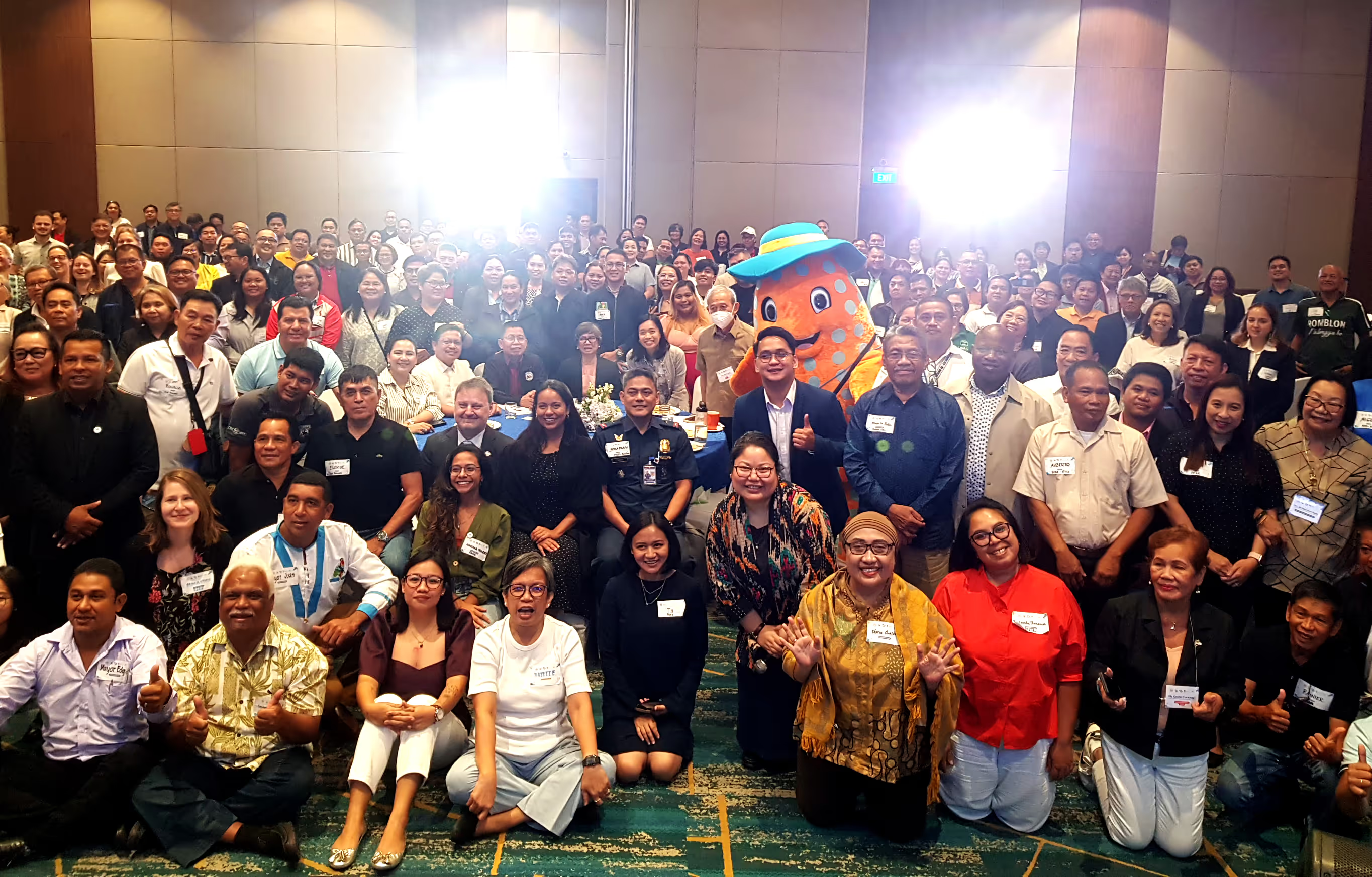
Over 200 Leaders Meet for National Coastal and Inland Fisheries Summit
Mayors from Eight Nations Discuss Coastal Solutions in Siargao
On World Ocean Day, I am celebrating these three milestones
Every World Ocean Day, we raise awareness of the challenges facing our ocean and the people who depend on it for food, jobs, and protection from the impacts of climate change. But it is also a day to celebrate milestones on the road to protecting and restoring the ocean that sustains us. In that spirit, here are three recent milestones that serve as inspiration for what our work together can accomplish.
- Community-led conservation in Palau. In May, legislation passed by the Melekeok State government in Palau placed a marine area under community-led management for the first time. The legislation adopted the Melekeok community-managed access plan and put the 172-hectare Ngeschisauisa Managed Access area off the nation’s eastern coast under sustainable, community-led management. Read the full story here.
- Why it matters: The global Biodiversity Plan stresses the importance of meeting ambitious protection targets while recognizing and respecting the rights of Indigenous and local communities. Approval of this new Managed Access area in Palau is an important step towards community-led conservation.
- A growing global network of ocean champions. Last week, I joined 13 mayors and local leaders of the Coastal 500 from seven different countries in Siargao, Philippines, for the largest in-person gathering to date of members of the global network. Together, we visited local municipalities to see the elements of community-led conservation of the Community Seas come together—ecologically, financially, and socially. The leaders spent their days trading ideas, best practices, and challenges related to protecting biodiversity and meeting the needs of their local and Indigenous communities. In the evenings, we ate, danced and built lasting friendships. It was truly inspirational. Read media coverage of the summit.
- Why it matters: The long-term viability of our Community Seas relies on engaged local leaders prioritizing sustainable management and inspiring other leaders to do so. Spending time together and learning from each other strengthens the foundation of this global network, sets the stage for its growth, and expands the reach of its mission to support thriving coastal communities and ecosystems around the world.
- Why it matters: The long-term viability of our Community Seas relies on engaged local leaders prioritizing sustainable management and inspiring other leaders to do so. Spending time together and learning from each other strengthens the foundation of this global network, sets the stage for its growth, and expands the reach of its mission to support thriving coastal communities and ecosystems around the world.
- A massive move for mangroves in Brazil. In March, Brazil declared two new Resex in Pará state along the country’s Amazon coast placing about 75,000 hectares of mangroves and other coastal ecosystems under protection. But what is so special about this milestone is that it was led by the local communities in an effort initially launched sixteen years ago. Read the full story here.
- Why it matters: Brazil’s Amazon coast is home to a massive mangrove forest, which is essential to local economies and food security and is one of nature’s best tools for fighting climate change. With UNFCCC COP 30 scheduled in Belém, just about 200km away from these new Resex, there is a shining example of how we can build climate resilience while helping people.
- Community-led conservation in Palau. In May, legislation passed by the Melekeok State government in Palau placed a marine area under community-led management for the first time. The legislation adopted the Melekeok community-managed access plan and put the 172-hectare Ngeschisauisa Managed Access area off the nation’s eastern coast under sustainable, community-led management. Read the full story here.
These are just three of the most recent examples of the impact Rare and our partners have had in protecting our ocean. And there are many more on the horizon, whether it is elevating women leaders in Mozambican fishing communities, securing investment for the establishment of new managed access areas in Indonesia, or helping implement the new protections for local small-scale fishers in Honduras. And I am certain that by the next World Ocean Day, we will have many more milestones to celebrate.
FOLLOW OUR MOVEMENt
Keep up with the leaders, ideas, and innovations advancing resilient coastal futures.