
FEATURED INSIGHTS

Latest Insights
Explore news, thought pieces, stories and statements from the network.
Coastal 500 Surpasses Goal of 500 Local Leaders
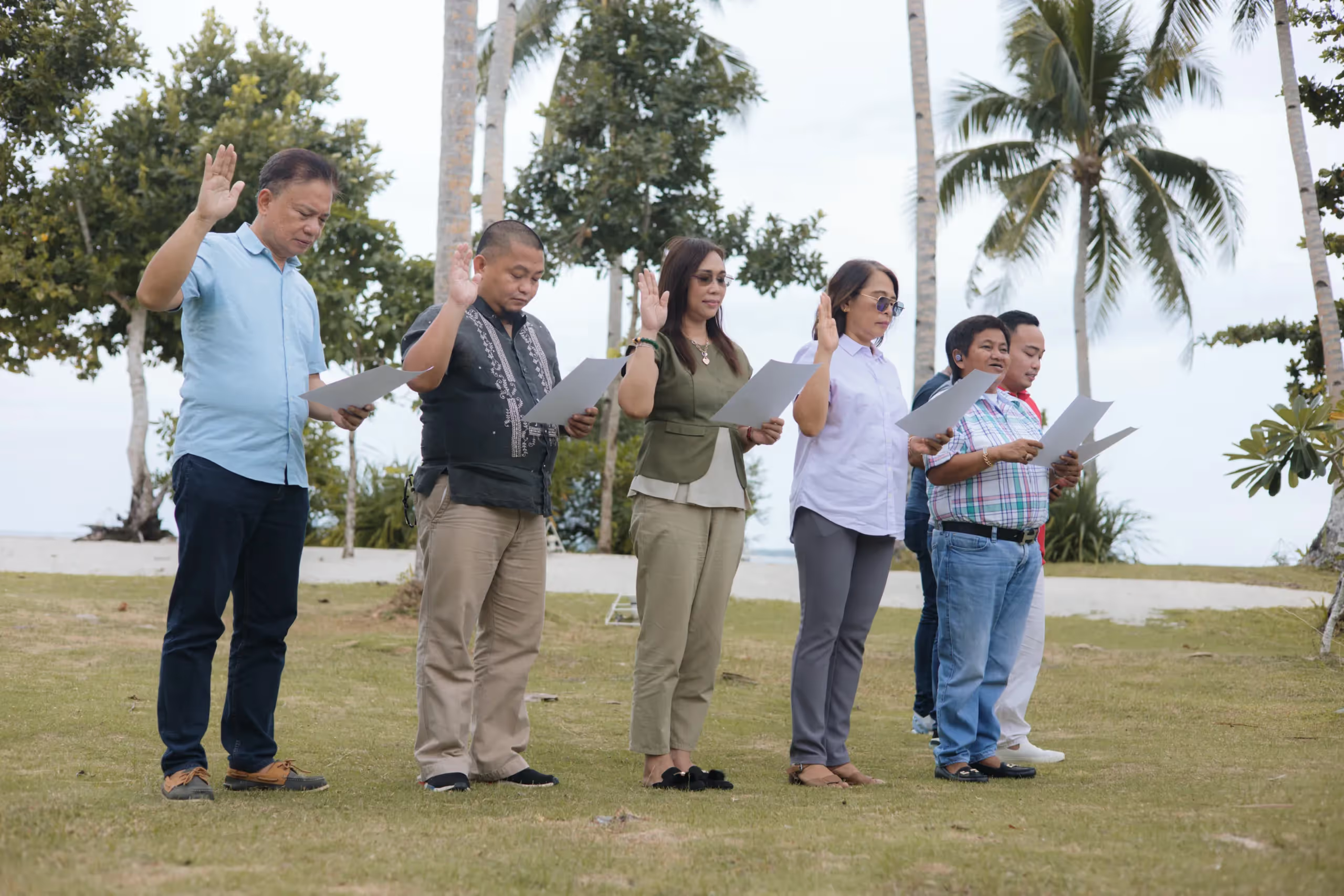
(SANGIHE, INDONESIA): Coastal 500, the world’s largest network of local government leaders committed to thriving seas and prosperous coastal communities, has surpassed its goal of 500 members, marking a major milestone for locally-led ocean action. The milestone was reached on March 30th, 2026, with the addition of 105 local government leaders from Indonesia’s Sangihe Islands in North Sulawesi.
“While reaching 500 members was our initial goal, it’s not just a number; it’s a signal,” said Rocky Sanchez Tirona, Managing Director of Regional Programs for Rare, which serves as Coastal 500’s main facilitator of Coastal 500. “It tells us there is growing momentum among local governments to take action. It shows that this model of investing in networks, peer leadership, and locally grounded solutions is working.”
Launched on World Oceans Day in 2021, Coastal 500 is grounded in the belief that locally led solutions deliver the greatest impact for both people and nature. Today, the network brings together leaders from eight highly biodiverse coastal countries—Brazil, Guatemala, Honduras, Indonesia, Micronesia, Mozambique, Palau, and the Philippines—who are working collectively to influence policy, unlock financing, strengthen governance, and protect critical coastal and marine ecosystems while enhancing community resilience.
Collectively, Coastal 500 members represent over 2,000 communities responsible for stewarding almost 100,000 square kilometers of coastline and marine ecosystems that nearly 4 million people depend on for food security, livelihoods, and climate resilience.
“This is about a movement to protect our oceans not only by working with fishers and communities, but also by working with the leaders who shape the future of coastal regions,” said Hari Kushardanto, Vice President of Rare in Indonesia. “Limited local budgets and national development priorities often constrain how much a district can do alone. By networking through Coastal 500, local leaders in Indonesia and around the globe can create stronger, lasting impacts together.”
In 2023, Coastal 500 was named a finalist for the Earthshot Prize, recognizing its innovative approach to scaling local leadership for global impact for our oceans.
“Coastal 500 shows the powerful impact that can be achieved when people come together to protect our planet,” said Rachel Moriarty, Executive Director of Prize and Portfolio at The Earthshot Prize. “Surpassing its goal of 500 local leaders is a testament to its importance as a forum for sharing ideas, strengthening conservation policies, and advancing coastal protection globally. The Earthshot Prize is proud to champion our Finalists like Coastal 500 to accelerate action for our coastlines and oceans.”
When local leaders join Coastal 500, they commit to empowering their communities with clear access rights to their fisheries, while promoting sustainable fishing practices, building resilience, advancing transparent, effective and collaborative governance and sharing best practices with peers across the globe.

“As local leaders, the challenges we face are immediate, but so are the solutions,” said Mabuhay Mayor, Edreluisa “Lulu” Calonge, in the Philippines. “Through Coastal 500, we’re able to learn from each other and apply what works. I’m excited to be part of what comes next, working together to scale solutions, strengthen our communities, and ensure our coastal resources thrive for generations to come.”
Coastal 500’s growth has been powered by generous support from Bloomberg Philanthropies’ Bloomberg Ocean Initiative, The Swedish Postcode Lottery, Rumah Foundation, Djinda Foundation and other funders. The network also continues to expand its impact through partnerships with leading global and regional organizations
“Local leaders are on the frontlines of the climate crisis and play a critical role in protecting the ocean,” said Antha Williams, who leads the Environment Program at Bloomberg Philanthropies. “We’ve seen that when they’re connected through strong networks, they can move faster and deliver results. Now, with more than 500 leaders, Coastal 500 is driving local action to protect the ocean and support the communities that depend on it.”
Gabriela Polo, Global Lead for Coastal 500, reflected on the network’s growth and future ambition: “When we first set out to build this network, the vision was ambitious: to connect local leaders across geographies who are on the frontlines of ocean and coastal conservation, and to create a platform where they could lead, learn from one another, and drive collective impact,” said Polo. “Crossing the 500 mark is the beginning of the next chapter, where we will deepen collaboration, accelerate impact, and bring this movement to more communities across the globe.”
Press contact: Kristi Marciano (kmarciano@rare.org)
#
About Coastal 500
Coastal 500 is the world’s largest network of local government leaders committed to thriving seas and prosperous coastal communities. With over 500 members across 8 countries, Coastal 500 represents over 2,000 communities that steward almost 100,000 square kilometers of coastline and marine ecosystems on which nearly 4 million people depend for food security, livelihoods, and climate resilience. When local leaders join Coastal 500, they commit to empowering their communities with clear access rights to their fisheries, while promoting sustainable fishing practices, building resilience, advancing transparent, effective and collaborative governance and sharing best practices with peers across the globe.
About Rare
Rare serves as the Secretariat for Coastal 500 and is responsible for the day-to-day management of the network. Rare supports members by coordinating network activities and communications, helping deliver programs, tools, and learning opportunities, and supporting engagement with partners and at international fora.
The tide is rising – and so are we: An op-ed from Curuçá
The Amazon Coast and me
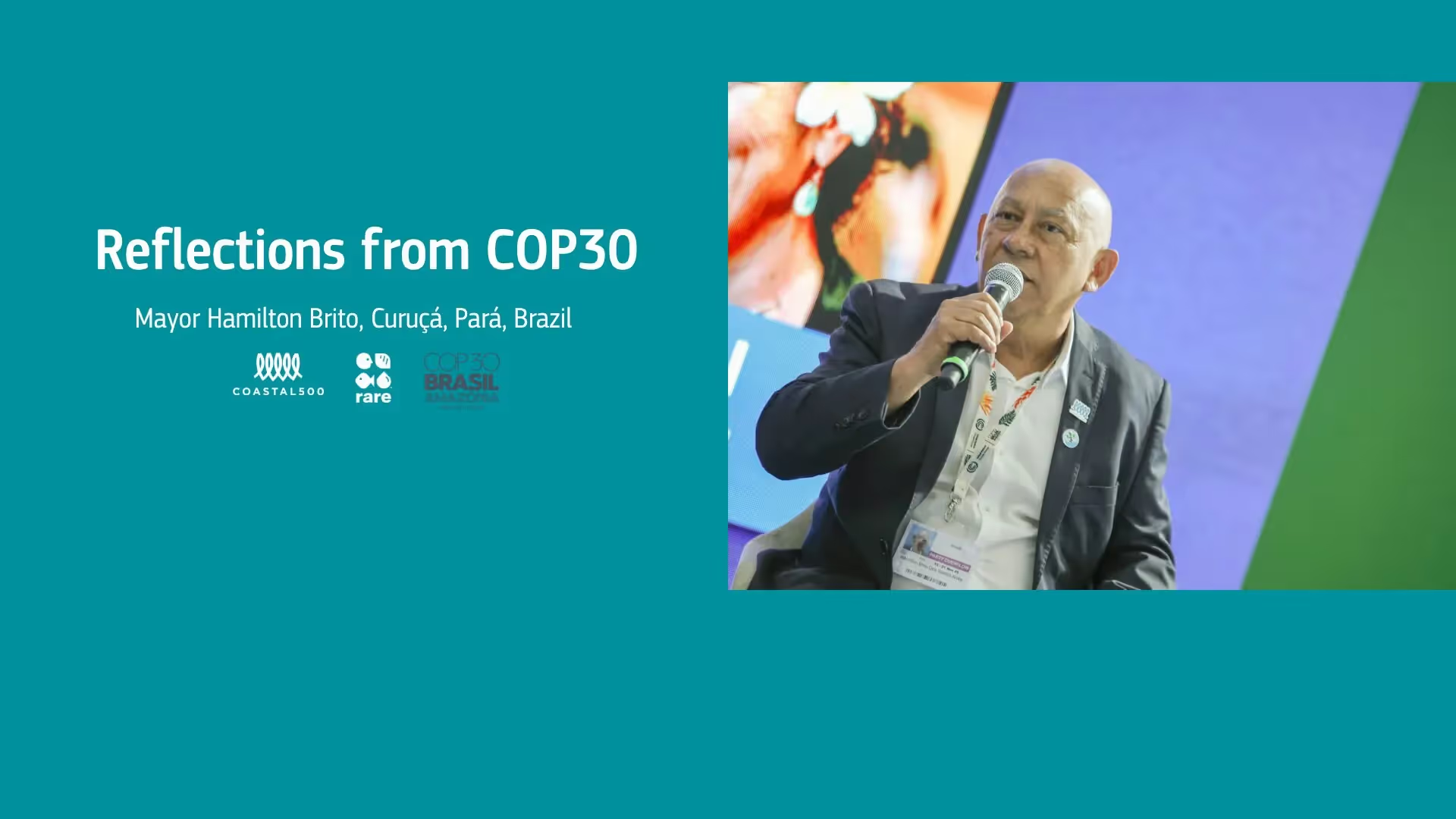
This past November, the world’s eyes turned to Pará, Brazil, as global leaders convened in Belém for the 30th Conference of the Parties to the UN Framework Convention on Climate Change (COP30). For me, Pará is more than the host state of COP30; it is my home. It is the heart of the Amazon, the heart of our people’s identity, culture, and strength.
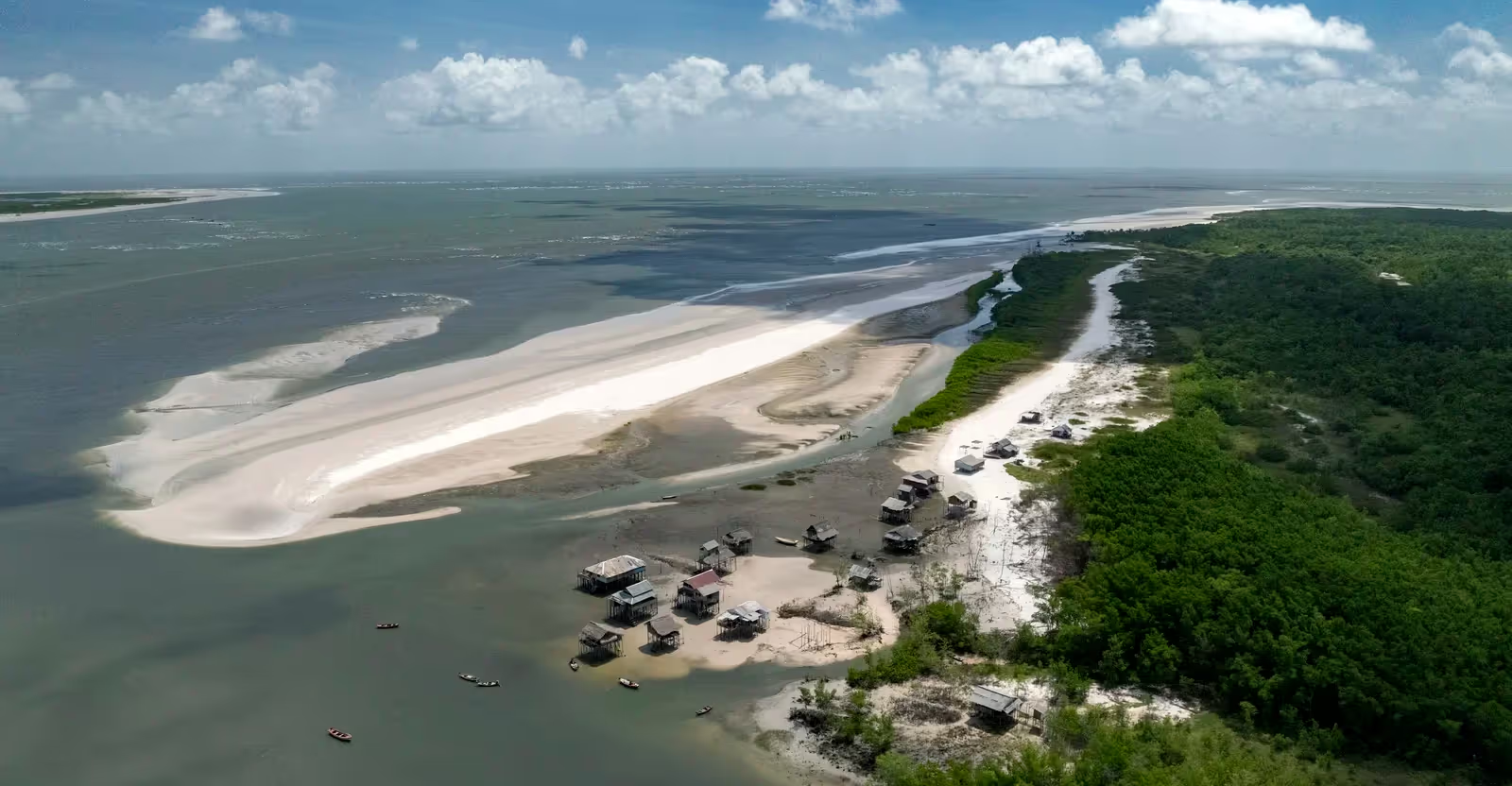
I was born and raised in Curuçá, a coastal municipality nestled between the Amazon forest and long mangrove stretches, where the rhythm of the river sets the rhythm of our lives. Curuçá is where I built my dreams and learned the values of simplicity, faith, and hard work — values that guide my life and my role as its mayor today.
I vividly remember the afternoons at Porto Grande, in my community of Nazaré do Tijoca, where, as a child, I would accompany my parents and friends through the rivers and mangroves to fish and collect crabs. This wasn’t just about sustenance — it was a time of togetherness, learning, and respect for nature. Those memories fuel my deep connection to this land and drive my fight for its preservation.
For me and my people, our mangroves, estuaries, and oceans are not abstract. They feed our families, shape our culture, and hold back rising tides. They are the frontline of the climate crisis, and where I learned the true meaning of resilience.
The challenges we face
Over the decades, I have watched our environment change significantly. The tides and climate no longer follow the same patterns, and certain species of fish, crabs, and shrimp have declined noticeably. Erosion eats away at our coastline while rising seas threaten our mangroves and watersheds.
These shifts, in turn, threaten the livelihoods of those who rely most directly on nature. Fishers, crab gatherers, and shellfish harvesters struggle with fewer catches and must look for alternative ways to make a living. Farmers must also adapt to shifting seasons. This not only affects our local economy but also the traditions of families who have depended on these coastal ecosystems for generations.
And we are not alone. Across Pará and coastal communities worldwide, from Mozambique to Palau, families like those in Curuçá are experiencing similar realities. Climate change is no longer a distant threat: it is here, reshaping our coasts, culture, and future.
But there is hope
Yet even in the face of these challenges, I’m hopeful. In Curuçá, we have young leaders, women, and local producer associations preserving our coastal ecosystems through the cultivation of oysters, sustainable tourism, and contributions to effective local mangrove management, including those within our reserve. These actions may seem small compared to the scale of the climate crisis, but they matter. Each mangrove protected, each sustainable practice advanced, and each young person engaged is a step toward resilience.
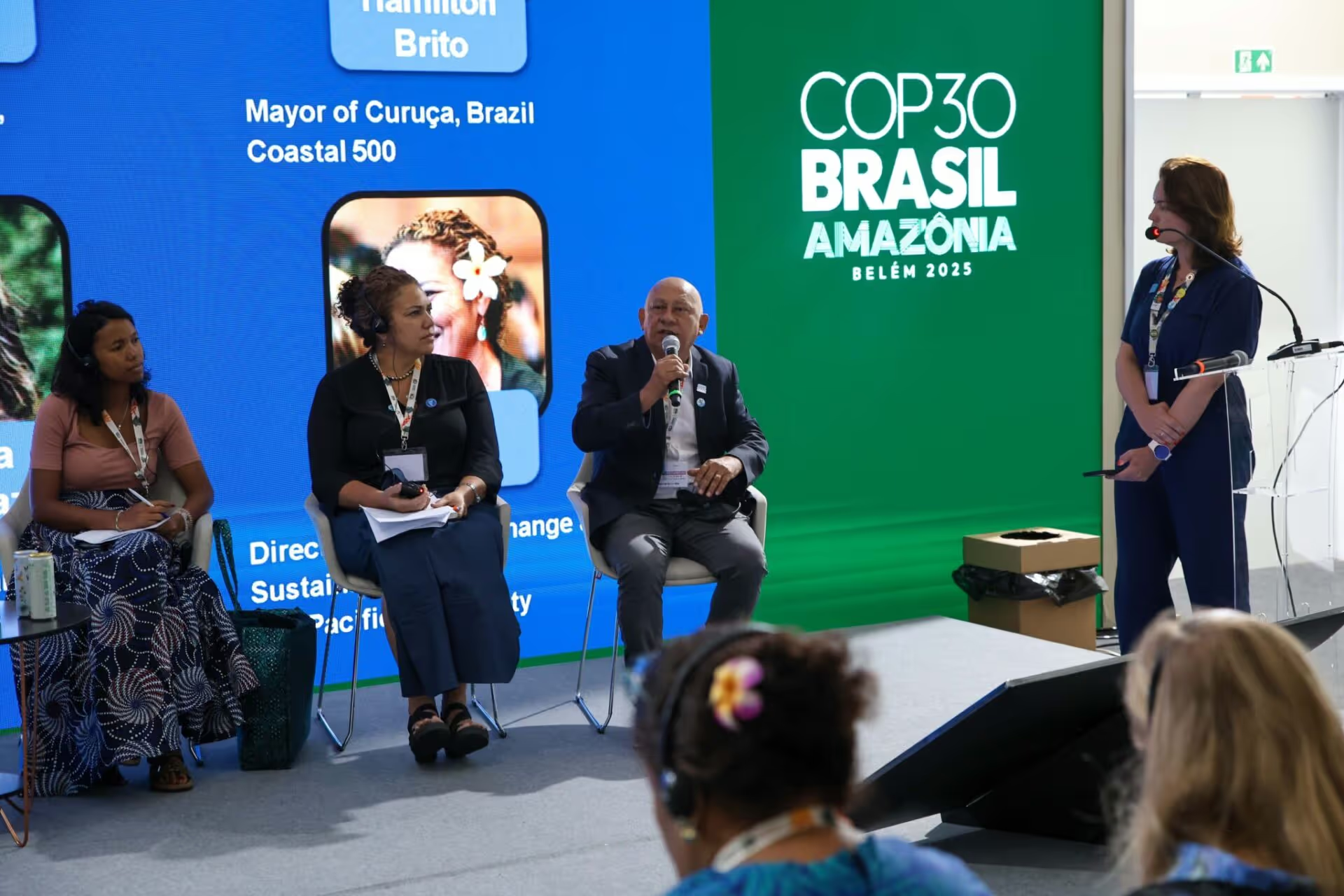
I am also encouraged by what I see beyond our shores. Through the Coastal 500 network, I have met mayors and local leaders from around the world facing similar challenges with courage and creativity. At the United Nations Ocean Conference and the COP30 Local Leaders Forum, I heard stories of how coastal villages in Indonesia, the Philippines, and Honduras are fighting back, protecting coral reefs, restoring fisheries, and demanding a seat at the table of global forums. Knowing that our struggles and solutions connect us is a continuous source of inspiration.
My call to action for local leaders
More so than any previous COP, COP30 was shaped by the frontline communities who know these challenges best. Indigenous Peoples, local communities, fishers, farmers, civil society and local governments made their voices heard, helping turn this into a People’s COP. Beyond the negotiation halls, Coastal 500 and many partners advanced a first-of-its-kind Global Climate Action Agenda, demonstrating to the world what we already know in places like Curuçá: the solutions are here, communities are taking action, and progress accelerates when we work together.
But even with this momentum, COP30 fell short of the commitments that matter most for our future. We still lack a clear pathway to transition away from fossil fuels, to reverse deforestation, and to fully recognize the ocean as a key component in climate action. These are not small omissions, and they will have a lasting impact on our communities.
As world leaders reflect on their time in Belém, I urge them to remember that the Amazon is more than a rainforest. It is its coasts, rivers, mangroves, and the millions of people who call it home and whose fate is deeply intertwined with the region. If we fail to act with urgency and justice, communities like mine will pay the highest price.
Yet we are not victims; we are the fiercest guardians of our territory. The coastal people of the Amazon are already adapting, restoring, cultivating, and defending their home. Supporting and elevating our leadership is crucial to preserving the Amazon for the benefit of the entire world.
Now that the negotiations have ended, the real work begins. We have shown what is possible. It is time for global leaders to match our resolve and turn reflection into action — so that the rising tide lifts not only our hopes, but our future.
A maré está subindo – e nós também
O litoral Amazônico e eu
Neste último novembro, os olhos do mundo se voltaram para o Pará, Brasil enquanto líderes globais se reuniram em Belém para a 30ª Conferência das Partes da Convenção-Quadro das Nações Unidas sobre Mudança do Clima (COP30). Para mim, o Pará é muito mais que o estado-sede da COP30. O Pará é meu lar. É o coração da Amazônia. É identidade, cultura e a força do nosso povo.
Nasci e cresci em Curuçá, um município costeiro situado entre a floresta amazônica e extensos manguezais, onde o ritmo do rio ditava o ritmo das nossas vidas. Curuçá é onde construí meus sonhos e aprendi os valores da simplicidade, fé e trabalho – que hoje guiam a minha vida e a minha gestão como prefeito.
Lembro muito das tardes no Porto Grande, na minha comunidade Nazaré do Tijoca, onde acompanhava meus pais e amigos pelos rios e manguezais e íamos pescar e colher caranguejo, além de outros frutos do mar. Era mais do que sustento. Era convivência, aprendizado e respeito pela natureza. Essas memórias alimentam, até hoje, minha conexão profunda com este território e motivam a minha luta por sua preservação. Para mim e para o meu povo, nossos manguezais, estuários e oceanos não são algo abstrato. Eles alimentam nossas famílias, moldam nossa cultura e seguram as marés que insistem em subir. São a linha de frente da crise climática e o lugar onde aprendi o verdadeiro significado de resiliência.
Os desafio que enfrentamos
Ao longo das décadas, observei nosso meio ambiente mudar significativamente. As marés e o clima já não seguem os mesmos padrões, e há uma diminuição perceptível em certas espécies de peixes, caranguejos e camarões. A erosão corrói nossa linha costeira, enquanto a elevação do nível do mar ameaça nossos manguezais e bacias hidrográficas.
Essas mudanças, por sua vez, ameaçam os meios de vida locais, pois pescadores, catadores de caranguejo e marisqueiras precisam lidar com a redução das capturas e buscar outras formas de sustento. Os agricultores também precisam se adaptar às mudanças das estações. Os mais vulneráveis entre nós — aqueles que dependem diretamente da natureza — são os mais afetados. Isso mexe não só com a economia local, mas também com a cultura e a tradição de famílias, que dependem do mangue e do rio há gerações.
E não estamos sozinhos. Em todo o Pará e em comunidades costeiras de todo o mundo, de Moçambique a Palau, famílias como as de Curuçá vivem realidades semelhantes. As mudanças climáticas deixaram de ser uma ameaça distante: elas estão aqui, redesenhando nossas costas, nossa cultura e o nosso futuro.
Mas há esperança
Mesmo diante desses desafios, estou esperançoso. Em Curuçá, temos jovens, mulheres e associações, como, por exemplo, a Associação Aquavila de Lauro Sodré, que estão conservando nossos ecossistemas costeiros por meio do cultivo de ostras, do turismo sustentável e da contribuição para o . Podem parecer ações pequenas diante da escala da crise climática, mas elas têm importância. Cada manguezal protegido, cada prática sustentável fortalecida, e cada jovem engajado representa um passo em direção à resiliência.
Também me inspiro no que vejo além das nossas fronteiras. Por meio da rede Coastal 500, conheci prefeitos e líderes de todo o mundo que enfrentam desafios semelhantes com coragem e criatividade. Na Conferência das Nações Unidas sobre os Oceanos, no Fórum de Líderes Locais e na COP30, ouvi histórias de como vilas costeiras na Indonésia, nas Filipinas, e em Honduras estão reagindo — protegendo recifes de corais, restaurando pescarias e exigindo um lugar à mesa dos fóruns globais. Saber que nossas lutas e soluções se conectam é uma fonte contínua de inspiração.
Mau chamado à açāo para os líderes globais
Mais do que em qualquer COP anterior, a COP30 foi moldada pelas comunidades da linha de frente, que conhecem esses desafios melhor do que ninguém. Povos Indígenas, comunidades locais, pescadores, agricultores, sociedade civil e governos locais fizeram suas vozes ecoar, ajudando a transformar esta COP na COP do Povo.
Fora das salas de negociação, a Coastal 500 e muitos parceiros avançaram uma Agenda Global de Ação Climática inédita, demonstrando ao mundo aquilo que já sabemos em lugares como Curuçá: as soluções estão aqui, as comunidades estão agindo e o progresso acelera quando trabalhamos juntos.
Mas, mesmo com esse avanço, a COP30 deixou lacunas importantes. Ainda não temos um caminho claro para a transição para longe dos combustíveis fósseis, para reverter o desmatamento e para reconhecer plenamente o oceano como componente fundamental da ação climática. Não são omissões pequenas — e elas terão impacto duradouro em nossas comunidades.
À medida que os líderes mundiais refletem sobre seu tempo em Belém, peço que se lembrem de que a Amazônia é mais do que sua floresta. Ela é também suas costas, rios, manguezais e estuários e as milhões de pessoas que aqui vivem e cujo destino está profundamente entrelaçado com esta região. Se falharmos em agir com urgência e justiça, comunidades como a minha pagarão o preço mais alto.
Ainda assim, não somos vítimas; somos os guardiões mais dedicados do nosso território. Os povos costeiros da Amazônia já estão se adaptando, restaurando, cultivando e defendendo seu lar. Apoiar e fortalecer nossa liderança é garantir a preservação da Amazônia para o mundo inteiro.
Agora que as negociações terminaram, começa o trabalho real. Já mostramos o que é possível. É hora de os líderes globais corresponderem à nossa determinação e transformarem reflexão em ação — para que a maré que sobe eleve não apenas nossas esperanças, mas o nosso futuro.

Accelerating coastal community resilience: From the frontlines to the global stage
Coastal 500 welcomes 54 new local leaders from Indonesia into its global network
Gulir ke bawah untuk Bahasa Indonesia
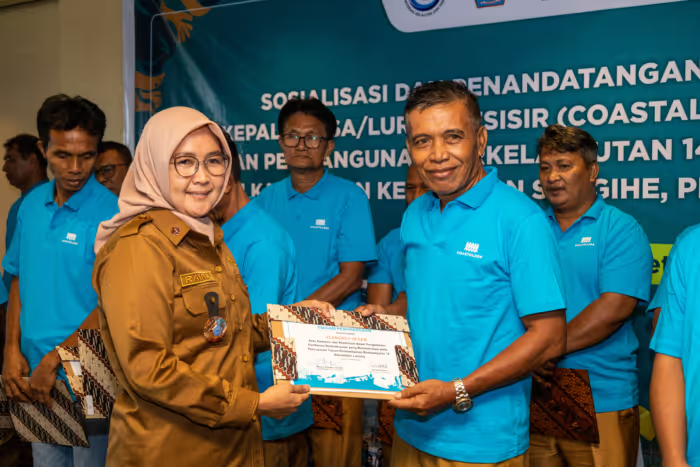
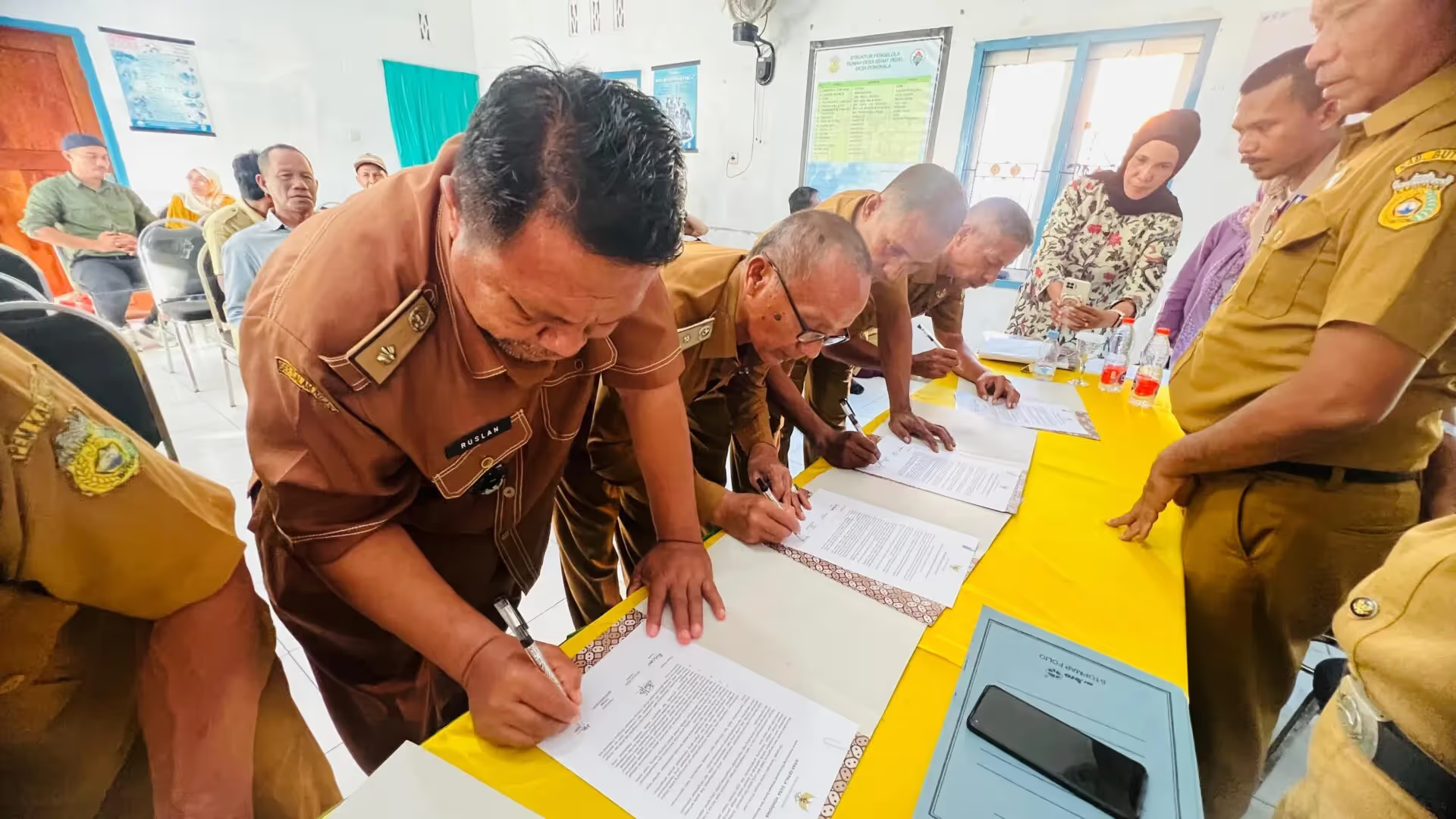
AUGUST 26, 2025 (S.E. SULAWESI, INDONESIA) On August 6, 2025, 54 coastal village leaders in the Buton District of Southeast Sulawesi, Indonesia, came together for the official launch of the Village Head Partnership with Coastal 500, a global network of mayors and local government leaders committed to working towards thriving and prosperous coastal communities.
In the weeks leading up to the announcement, the Buton District Government and Rare Indonesia conducted a series of discussions with Coastal Village Heads in Buton to discuss the vital role coastal village heads play in protecting the area’s oceans. Buton is home to more than 4,500 fishers whose livelihoods depend directly on healthy marine resources.
“Village leaders are an integral part of life in Indonesia—they are the true frontline leaders,” says Diana Chaidir, Senior Manager of Policy in Indonesia at Rare. “Their inclusion in Coastal 500 helps to solidify the role that local leaders play in the protection of vital marine ecosystems and resources.”
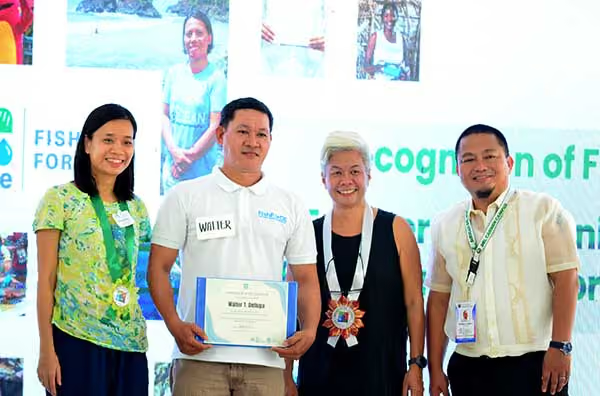
The event featured a Coastal Village Head Award Ceremony and an inspiring talk show with local leaders — including the Head of the Planning Bureau, Fisheries Office, and Community Empowerment Office, the Rector of Marine Technology of Buton, and two village head champions. They all spoke about how working together is the only way to create lasting change. Village leaders read the local leader Pledge to signal their commitment to safeguarding the ocean and ensuring prosperity for their communities.
As one village head put it, “We can’t do this alone, we have to work together.”
Regent of Buton, Mr. Alvin Akawijaya Putra, welcomed the partnership with excitement, adding, “We hope that Coastal 500 will help develop our fisheries and marine sector soar to new heights.”
In 2014, Indonesia adopted a new Village Law to reinforce local self-government, which recognized the importance of the village as the governmental unit closest to the community. The establishment of this partnership in Buton, following a similar achievement in the neighboring district of Muna in early 2025, signals growing momentum for Coastal 500 and demonstrates how it can inspire collective action, fuel shared learning, and empower communities and local leaders to protect marine resources.
“We know from experience that a motivated and inspired local leader can move a community to action,”said Rocky Sanchez Tirona, Managing Director of Fish Forever at Rare. “We’re excited to see Coastal 500 grow and support these leaders in strengthening coastal governance, protecting the seas that sustain them, and inspiring a movement of coastal champions across Indonesia and the globe.”
When local leaders pledge to join the Coastal 500, they commit to leading their constituencies toward practices that empower communities to have clear access rights to their fisheries, while promoting sustainable fishing practices and good governance. Coastal 500 is made possible with generous support from Bloomberg Philanthropies’ Bloomberg Ocean Initiative and others.
The addition of these 54 local leaders brings the Coastal 500’s global growing network within reach of its 500-member goal, to over 400 members.
###
About Coastal 500
With over 400 members across 8 countries, Coastal 500 is the largest global network of local government leaders with a goal to drive action towards thriving, prosperous, and climate resilient coastal communities. These leaders represent coastal communities across Brazil, Guatemala, Honduras, Indonesia, Micronesia, Mozambique, Palau, and the Philippines, places rich in biodiversity and home to critical habitats that face enormous pressure from climate change, overfishing, and other human activities. When joining the network, Coastal 500 leaders commit to protecting and restoring coastal ecosystems to safeguard ocean biodiversity, while improving the livelihoods, food security and climate resilience for half a billion people worldwide. Learn more at coastal500.org.
About Rare
Rare is an international non-profit organization specializing in social change for people and the planet. For nearly 50 years, Rare has partnered with individuals, communities, and local leaders on the frontlines of conservation to promote the adoption of sustainable practices. With a behavior-based approach, Rare empowers individuals and communities to better manage and protect nature, on which all of us depend. Learn more at rare.org.
26 AGUSTUS 2025 (SULAWESI TENGGARA, INDONESIA) Pada tanggal 6 Agustus 2025, 54 pemimpin desa pesisir di Kabupaten Buton, Sulawesi Tenggara, Indonesia, berkumpul untuk menghadiri peluncuran resmi Kemitraan Kepala Desa dengan Pesisir 500, sebuah jaringan global walikota dan pemimpin pemerintah daerah yang berkomitmen untuk bekerja sama dalam mewujudkan masyarakat pesisir yang berkembang dan sejahtera.
Dalam beberapa minggu menjelang pengumuman tersebut, Pemerintah Kabupaten Buton dan Rare Indonesia melakukan serangkaian diskusi dengan para Kepala Desa Pesisir di Buton untuk membahas peran penting yang dimainkan oleh para kepala desa pesisir dalam melindungi lautan di daerah tersebut. Buton adalah rumah bagi lebih dari 4.500 nelayan yang mata pencahariannya bergantung langsung pada sumber daya laut yang sehat.
“Kepala desa merupakan bagian yang tidak terpisahkan dari kehidupan di Indonesia-mereka adalah pemimpin garda terdepan yang sesungguhnya,” ujar Diana Chaidir, Manajer Senior Kebijakan Indonesia di Rare. “Keikutsertaan mereka dalam Coastal 500 membantu memperkuat peran yang dimainkan oleh para pemimpin lokal dalam melindungi ekosistem dan sumber daya laut yang vital.”
Acara ini menampilkan Upacara Penghargaan Kepala Desa Pesisir dan talkshow yang menginspirasi dengan para pemimpin lokal – termasuk Kepala Biro Perencanaan, Dinas Perikanan, dan Dinas Pemberdayaan Masyarakat, Rektor Teknologi Kelautan Buton, dan dua kepala desa yang berprestasi. Mereka semua berbicara tentang bagaimana bekerja sama adalah satu-satunya cara untuk menciptakan perubahan yang berkelanjutan. Para pemimpin desa membacakan Ikrar Pemimpin Lokal sebagai bentuk komitmen mereka untuk menjaga laut dan memastikan kesejahteraan bagi masyarakat.
Seperti yang dikatakan oleh salah satu kepala desa, “Kita tidak bisa melakukan ini sendirian, kita harus bekerja sama.”
Bupati Buton, Bapak Alvin Akawijaya Putra, menyambut baik kemitraan ini dengan penuh semangat, dan menambahkan, “Kami berharap Coastal 500 dapat membantu mengembangkan sektor perikanan dan kelautan kami ke tingkat yang lebih tinggi.”
Pada tahun 2014, Indonesia mengadopsi Undang-Undang Desa yang baru untuk memperkuat pemerintahan lokal, yang mengakui pentingnya desa sebagai unit pemerintahan yang paling dekat dengan masyarakat. Pembentukan kemitraan di Buton ini, menyusul pencapaian serupa di kabupaten tetangga, Muna, pada awal tahun 2025, menandakan momentum yang berkembang untuk Pesisir 500 dan menunjukkan bagaimana kemitraan ini dapat menginspirasi tindakan kolektif, mendorong pembelajaran bersama, dan memberdayakan masyarakat dan pemimpin lokal untuk melindungi sumber daya laut.
“Kami tahu dari pengalaman bahwa pemimpin lokal yang termotivasi dan terinspirasi dapat menggerakkan masyarakat untuk bertindak,” kata Rocky Sanchez Tirona, Managing Director Fish Forever di Rare. “Kami sangat senang melihat Coastal 500 berkembang dan mendukung para pemimpin ini dalam memperkuat tata kelola pesisir, melindungi laut yang menopang kehidupan mereka, dan menginspirasi gerakan para pejuang pesisir di seluruh Indonesia dan dunia.”
Ketika para pemimpin lokal berjanji untuk bergabung dengan Coastal 500, mereka berkomitmen untuk memimpin konstituen mereka menuju praktik-praktik yang memberdayakan masyarakat untuk memiliki hak akses yang jelas terhadap perikanan mereka, sambil mempromosikan praktik-praktik penangkapan ikan yang berkelanjutan dan tata kelola yang baik. Coastal 500 dapat terlaksana berkat dukungan yang besar dari Bloomberg Philanthropies’ Bloomberg Ocean Initiative dan pihak-pihak lainnya.
Bergabungnya 54 pemimpin lokal ini membuat jaringan global Coastal 500 semakin berkembang dan mencapai target 500 anggota, menjadi lebih dari 400 anggota.
###
Tentang Coastal 500
Dengan lebih dari 400 anggota di 8 negara, Coastal 500 merupakan jaringan global terbesar yang beranggotakan para pemimpin pemerintah daerah yang bertujuan untuk mendorong aksi menuju masyarakat pesisir yang berkembang, sejahtera, dan tahan terhadap perubahan iklim. Para pemimpin ini mewakili masyarakat pesisir di Brasil, Guatemala, Honduras, Indonesia, Mikronesia, Mozambik, Palau, dan Filipina, tempat-tempat yang kaya akan keanekaragaman hayati dan merupakan rumah bagi habitat penting yang menghadapi tekanan besar dari perubahan iklim, penangkapan ikan yang berlebihan, dan aktivitas manusia lainnya. Ketika bergabung dengan jaringan ini, para pemimpin Coastal 500 berkomitmen untuk melindungi dan memulihkan ekosistem pesisir untuk melindungi keanekaragaman hayati laut, sekaligus meningkatkan mata pencaharian, ketahanan pangan, dan ketahanan iklim bagi setengah miliar orang di seluruh dunia. Pelajari lebih lanjut di coastal500.org.
Tentang Rare
Rare adalah organisasi nirlaba internasional yang berspesialisasi dalam perubahan sosial bagi manusia dan planet ini. Selama hampir 50 tahun, Rare telah bermitra dengan individu, komunitas, dan pemimpin lokal di garis depan konservasi untuk mempromosikan adopsi praktik-praktik berkelanjutan. Dengan pendekatan berbasis perilaku, Rare memberdayakan individu dan masyarakat untuk mengelola dan melindungi alam dengan lebih baik, yang menjadi tempat kita semua bergantung. Pelajari lebih lanjut di rare.org.
Accelerating Local Action for SDG14
At the 3rd UN Ocean Conference, in a week full of global political commitments for ocean action, a coalition of eight mayors and 22 local leaders from 12 countries and territories met to share and highlight the role of local action for UN Sustainable Development Goal 14: Life Below Water (SDG 14). Following their meeting, the local leaders released the following statement:
“The effective protection and conservation of our ocean will not be possible without dedicated investment in local leadership and effective local coastal governance. Our inclusion in decision making in setting national targets, as well as their financing, design and implementation, is critical for success. National leaders and funders at the UN Ocean Conference must:
- Recognize the critical role of local leaders and customary authorities in advancing solutions to achieve SDG 13 (Climate Action) and SDG 14. National priorities must be co-developed through the integration of local & indigenous knowledge and needs, and subsequently implemented through local government, civil society, and community actions.
- Integrate and prioritize effective and collaborative local governance, including coordination across national and local policy targets. Policy can create incentives for positive change and stewardship, when local needs are not just considered but prioritized.
- Develop diverse, long-term financing streams and build local capacity to access, absorb & utilize funding across local governments, civil society, and frontline communities.
- Build and foster collaborative partnerships to ensure alignment across scales of governance including national governments, municipalities, coastal communities, and fisherfolk.
- Facilitate local access to data for science-based decision making and the implementation of national ocean and climate targets. A combination of traditional knowledge and scientific data is required for setting appropriate local targets, planning on-ground implementation using best practices and subsequent monitoring and evaluation.
- Prioritize peer to peer learning and exchange at national and international levels. Local leaders & customary authorities need a space to identify commonalities, share successes, learn from previous mistakes, and inspire each other.
- Invest in trust-building and tolerate risk. Shared implementation across levels of governance and civil society fosters confidence, allowing us to achieve ambitious targets that build resilient communities and ecosystems in the face of unprecedented change.”
The workshop “Accelerating Local Action for SDG14” was organized at the 3rd UN Ocean Conference by Rare, the Global Island Partnership, Coastal 500, Local2030 Islands Network, and Bloomberg Philanthropies. We thank the local leaders from Brazil, the Canary Islands, the Cook Islands, Guatemala, Hawai‘i, Honduras, India, Indonesia, New Caledonia, the Philippines, Puerto Rico, and Tunisia who offered their time, energy and expertise to the development of this statement.
“Our municipality is deeply committed to balancing the conservation of our precious mangroves and marine ecosystems with the essential economic and cultural needs of our people. This commitment is embodied in our 62,035-hectare (153,290-acre) marine protected area, a testament to genuine community-led conservation, where local members guide all decisions and management efforts. Despite this, we face the harsh reality of declining fish and shellfish stocks, compounded by population growth and illegal activities. Therefore, consistent monitoring and rigorous enforcement are essential to the continued health and productivity of our protected area.” – Mayor Francisco Queiroz de Oliveira, Augusto Corrêa, Pará, Brazil
“The Muna district in Southwest Sulawesi has abundant marine resources, including vast coral reefs, mangroves, and seagrass beds. But this bounty faces significant degradation from human activities and climate change, leading to declining fish stocks and harder lives for our fishers. Recognizing that local governments often lack direct authority over marine areas, Muna has taken a proactive, community-led approach, empowering local communities to manage and protect their fisheries and ecosystems. Our efforts, including the new Coastal Village Head Partnership that pools resources for patrols and surveillance, are not just policy but real, on-the-ground action, contributing to national and global 30×30 targets and inspiring other districts to embrace a sustainable and resilient future where ocean health and community well-being go hand in hand.” – Mayor Bachrun Labuta, Bupati, Muna District, Southeast Sulawesi, Indonesia

Marine Protected Areas Explained: The Role of MPAs in achieving 30×30
.avif)
FOLLOW OUR MOVEMENt
Keep up with the leaders, ideas, and innovations advancing resilient coastal futures.